Tag: S&P 500

  • Long-term, what does the S&P chart suggest

    The S&P 500 is, I think, a reasonable guide for us when considering our long-term FTSE 350 top ten.

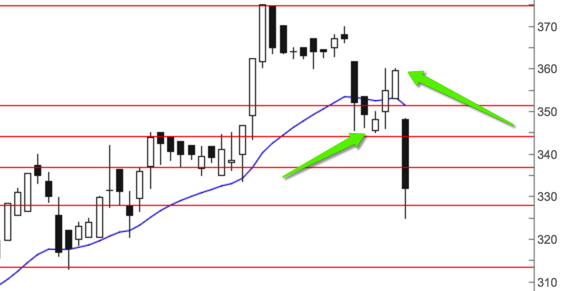
    The chart we are considering is the monthly chart, and this snip covers the last few years. The month just gone finished with what is known, technically, as a doji. This is an indecision or a trading range bar.

    The chart has been strong, having now completed a measured move up from the last pull back at about 1800. Also, the chart is currently at a big number, being 2400.

    The big number, completion of a measured move and finishing the month as a doji all point to a probable pull back at this stage. Albeit a small (in monthly chart terms) pull back; what the technical analyst would call an anticipated bear flag.

    Any small pull back will, in all likelihood, be bought and the chart pushed back up to 2400 or higher. However, if the pull back is stronger than anticipated (…the possible government shutdown crisis and the congressional fight over the continuing resolution that expires on April 28 is a factor) then we could see the chart coming back down to the 1800 level. As we’re on the monthly chart such a scenario would take one to two years.

    The bottom line is that the chart is at a measured high with a doji and significant news on the way. I would hold for a time and see where this leads. A pull back to 1800 would provide a good buy point – but, of course, in holding we may miss (and possibly the more probable) further move up.

  • Do it (trade) like a casino

    I day trade the currency pairing GBP/JPY with 5-minute bars as the primary chart. My edge for these trades includes: the recognition of context, or where the chart is in regard to a trend or a trading range; my strict minimum trade requirements (as I’m a retail trader I have to pay and, therefore, consider the spread); and, finally, my Green Line Entry Measure (GLEM).

    Each of these points are contained within a strategy that I’ve proven through ‘live’ trading and rely upon to provide consistency over time for all of my trades; a strategy – because of the nature of the game – that is always open for amendment. A strategy that makes us more like a casino; the management of the casino rather than the gambler.

    A casino – after taking into consideration all the big winners, the big losers and everyone in between – will consistently take 4.5% in profit from all takings, over time. That is because they too (the casino) are working to a tried and tested strategy. My volume is, of course, nothing like a casino, so I need to take trades that are 60% probability or better. If less than 60%, on the rare occasion that I select low probability trades, I need to have a consistent reward/risk that makes the trade worthwhile.

    Moreover, I also trade the Slow Trader Fund in several currency pairings, the commodities of gold and oil and Nick’s top FTSE 350 companies. These are all traded with the 4-hour bars as the primary chart. I’ve chosen 4-hours as this provides multiple trading opportunities a week. Moreover, with my day trading my charts need to be linked to my broker as I require an accuracy here of 0.1 of a pip. These charts (British broker) do not provide the important New York close bars which would be required if I were to select entries from daily bars. Hence, another reason for 4-hour instead of daily bars.

    With regard to Nick’s top FTSE 350 companies, please do not miss read me here, they are, for investors, a long-term consideration. They came to the fore because of their strong fundamentals and ‘value’. Because of their strength, fundamentally, these companies could ‘weather’ a market turn down (or two) better than many. I have placed them in the 4-hour trade cycle but: with my context, probability and price action strategy, it could almost be any ten companies.

    As an aside, the best index for technical judgment of the longer-term market cycle, I consider, is the weekly or even monthly bars of the S&P 500 index. Yes, even for companies within the FTSE 350. Movement on the S&P is generally followed by the FTSE. I’ll provide a S&P synopsis soon.

    To finish, we have detail on short-term trading (my day-trading and 4-hour chart work) and information on the very long-term investment considerations (Nick’s top ten). However, we do not have information on the mid-term investment/trading opportunities. This is not my area.

    Steve, however, has a great track record in this regard, and one that is just getting better and better. A key member in a ‘high energy’ company, Steve is responsible for a budget that annually goes into the multiple millions. Therefore, not a full-time analyst but someone who has put his working skills to good use in selecting mid-term investments. From many examples is his purchase of Sky PLC in early December, and before Sky made a 25% positive jump.

    I will ask Steve, if he’d make a contribution to this blog and share with us his mid-term ideas and thoughts. I hope he will agree.

  • A bigger list needs a higher timeframe

    Traded on behalf of friends and family, the ‘slow trader’ fund has taken on a few changes over its time. We have achieved a gain of over 15% a year, reasonable but short of my ambition for the fund. Over 30% a year is acceptable. We had ventured into equities, taken on the commodities and, more recently, we mixed with the currency markets. Yet, what is more important is the system by which we trade. That is the area that has seen the biggest change. And rightly so, these things don’t develop overnight. Therefore it’s not so much the ‘what’ but more about the ‘how’. The how is already in our ‘how we trade’ page. This page gives a glimpse only and is meaningless to anyone that is not a price action trader, and even ‘they’ differ wildly in approach. It is understanding charts through context, set-ups and price action. And it works.

    My own trading time has been delayed over the last 12 months as James and I traded very small for many hours a day learning the ropes of this form of trading. Pop-in a major renovation of our family business and, well no excuses, but time goes. Moreover, I trade three accounts. A small account for grandchildren, a payment account and the slow trader fund. I trade the grand kids account at the beginning of the month until I achieve the return I’m after and then do the same with the payment account. Only then do I move onto the fund. This may or may not leave much of the month left for the fund. This is not making best use of our trading time. Being only so many trading hours in the day.  The best way to provide more trading time for the fund is to trade a higher timeframe. Obvious, but I didn’t want the distraction of this as I was developing and remodeling my price action system.

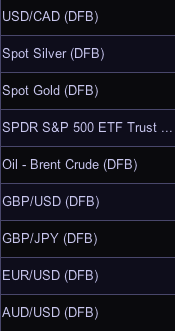
    Currently we trade a 5-minute chart and on one item. This provides several trades a day on average. I scale-in on some of the trades which increases entries but, nonetheless, is essentially within the umbrella of one trade. If we trade the fund on a higher time frame – a daily chart being our most sensible option – then we will need more items to trade. Price action can trade anything. Using daily charts our in-trade duration would be a few days to the extreme of a few weeks. Equities would require the consideration of annual results and other business calendar events. I’m therefore favouring a commodity, S&P and currency trading list. As follows:

    snip20161214_2

    These provide us with enough items to give ample trading opportunities from a daily perspective. More importantly, through this higher chart we are not jostling for trading time with the other accounts. Our risk, probability and reward criteria will not change. I think we are ready for this, and look forward to its introduction at the start of the New Year, 2017.

    Merry Christmas and a happy (which for us means prosperous) New Year

  • Price action or fundamentals

    As previously mentioned, I’m presently focused on trading 5-minute charts EUR USD. To master price action trading, and with a low time chart such as the 5 minute, takes all my undistracted concentration. I think that, most, professional traders use price action. Some may voice that they also use fundamentals and certain indicators, but when it comes down to the profits it’s usually price action, in some form, that’s responsible.

    My trades on the 5 minute charts last from a few minutes to usually no more than an hour. Therefore, fundamentals have no influence. Although some traders consider fundamentals, they are generally the ‘go to’ consideration of the investor rather than the trader. An investor can be considered as a longer-term commitment, a duration where the fundamentals have time to take effect – many months to years. I studied fundamentals for several years. However, I now feel that even the highest term charts, such as weekly’s or monthly’s, are (primarily) influenced by price action and therefore ‘technical’ rather than ‘fundamental’ reasons. That is because price action is a measure of psychology in the market – such as: fear, greed and confidence.

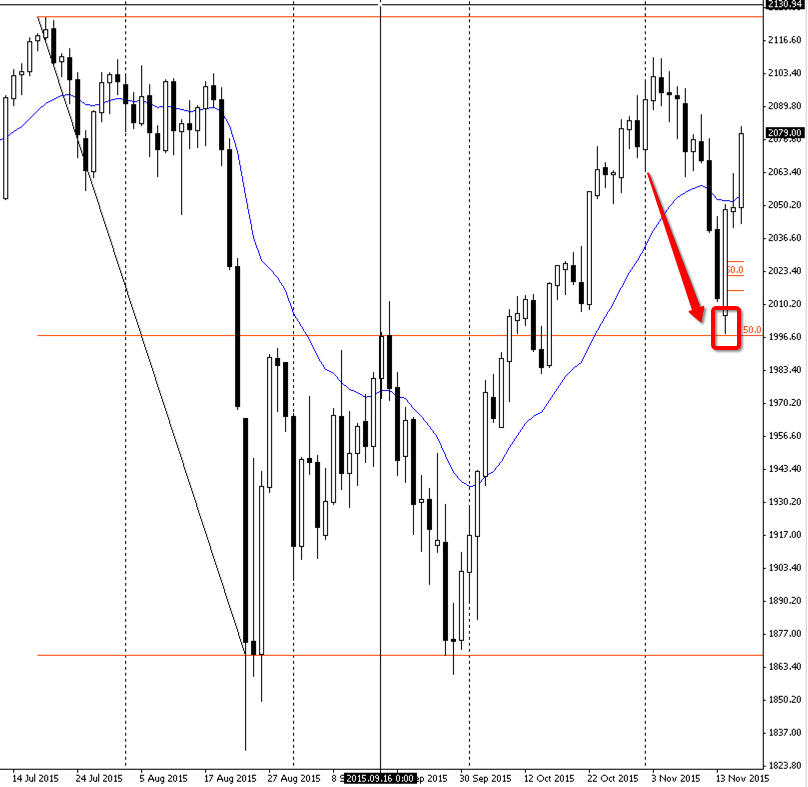
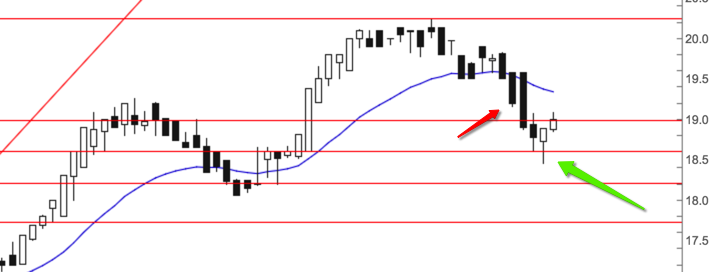
    Notice below how the recent attacks in France effected the S&P 500. Notice also that the drop, before the S&P’s quick recovery, bounced off a 50% retrace line. A line that I had drawn on the chart several weeks ago. This is a part of price action, the context, and is known as a measured move. Often this measured move is exact – whether it’s a 5 minute chart or a daily chart as the one below. The news (France) moved the market, but price action told it where to go too.

    Snip20151118_22

  • Slow Trader Diary

    Slow Trader fund up this week to + 5%.

    To report the fund each week encourages trades to be cashed too early to show a profit. That is silly. Therefore, I propose that the fund be reported, whenever possible, the first Saturday of each month.

    The diary of trades taken, good and bad, and those trades that are on the radar, will be discussed each week as usual.

    These are considerations coming up:

    Crude oil (WTI)

    Snip20151017_8

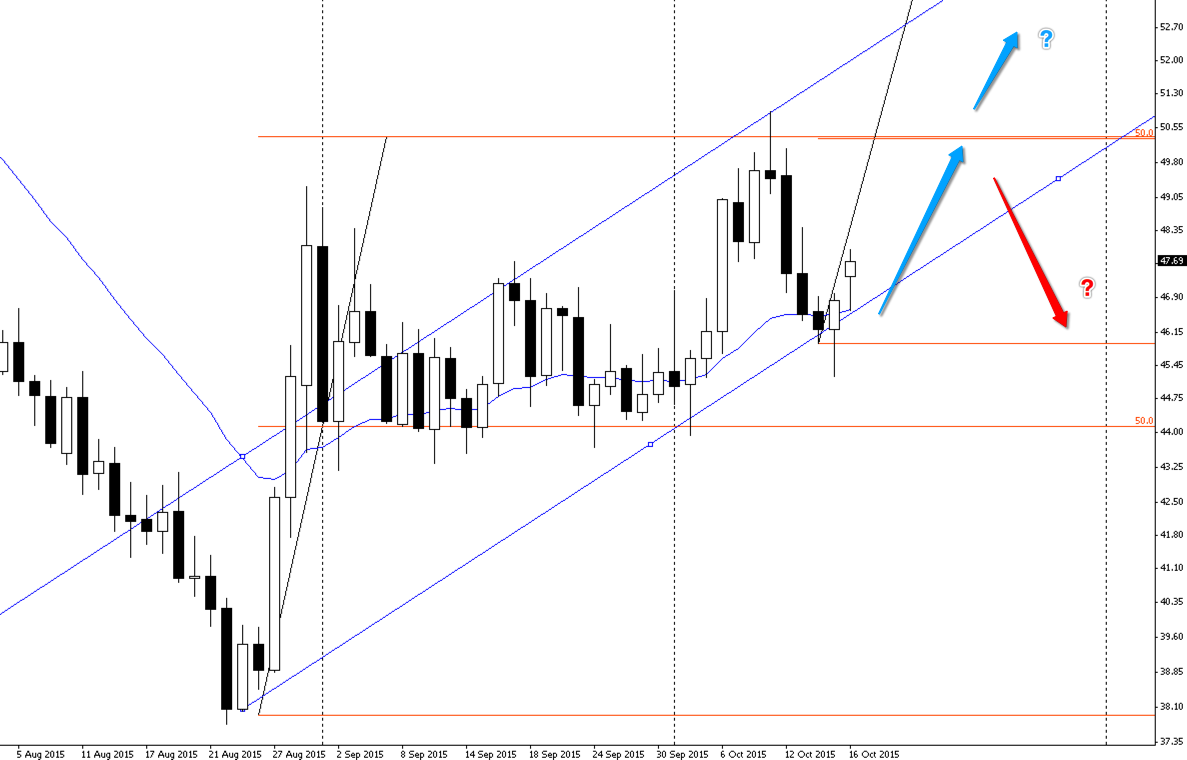
    We have a buy signal on the daily chart shown above. A 60% probability of WTI climbing to $50. After that the price may descend into a trading range, or may continue climbing for a measured move up to about $55. Whether we hold or not at the $50 line will depend on price action and momentum when, and if, we get there. Also, the COT is in our favour for this trade.

    Gold

    Snip20151017_11

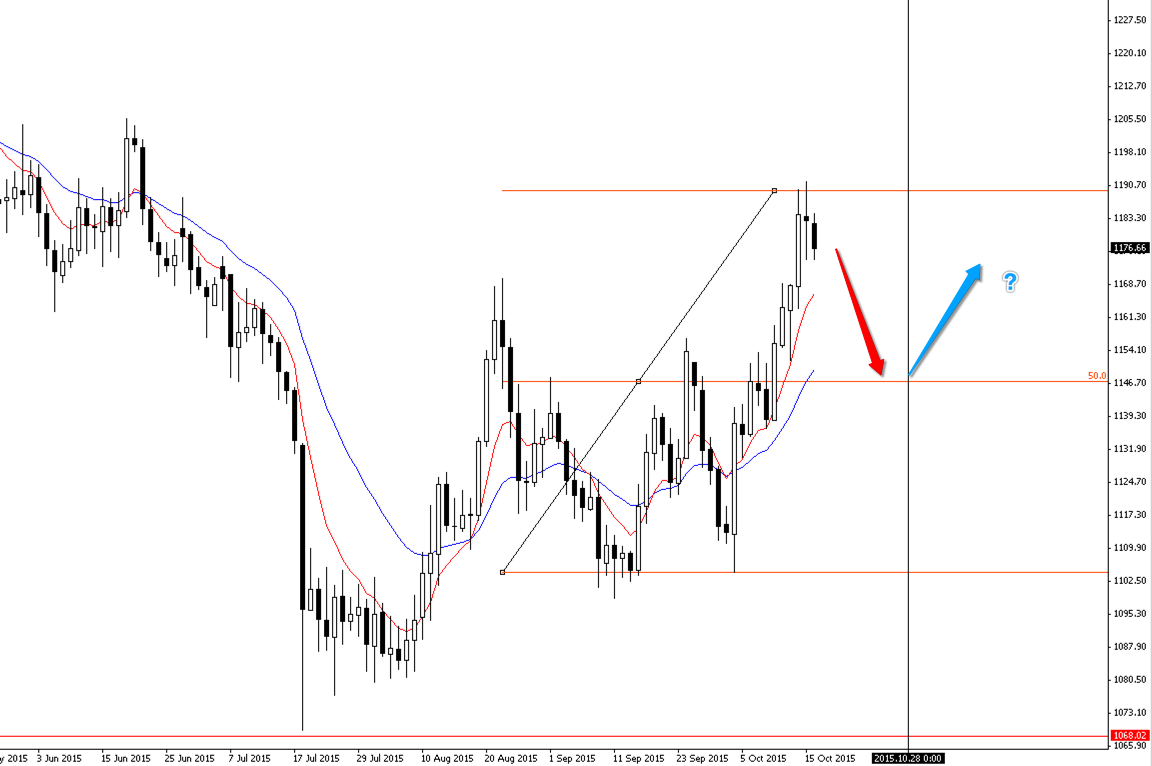
    Gold has provided a measured move up, in agreement with the COT. After a breakout on 2nd October, gold is now in a short term bull trend (a bull channel on the daily chart). It has reached a resistance level, however, and the likelihood is that price will fall back slightly (XAU USD) to $1150. Possibly forming a trading range just above its 5-year low. If this happens, we will look for a buy opportunity if price action and the COT agree.

    S&P 500

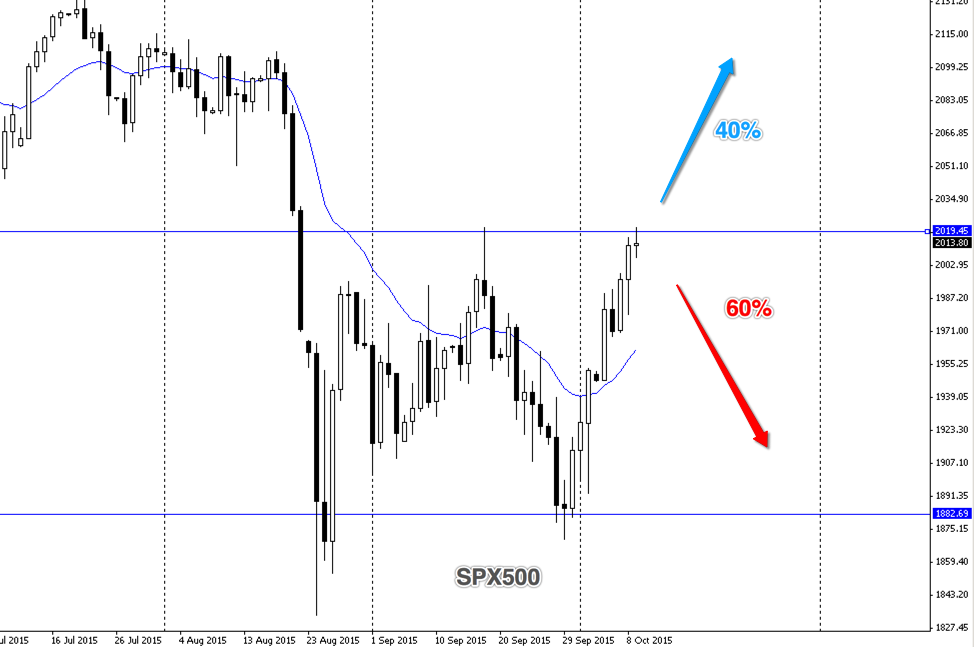
    The S&P 500 has broken above the resistance level that we discussed last week. The ratio has now swapped to 60% probability to the price climbing. Indeed, a new high could result in the coming weeks.

    This positiveness in the S&P puts a good light on stocks within the index. We will look for opportunities to buy ‘fundamentally’ good stocks as and when they provide price action buy opportunities.

  • Slow Trader Diary – week 40

    A small move in the right direction, we’re now up by a total of 3%.

    I won’t break this down into broker costs as I think you’ve got the idea of broker costs now. Also, I will only show the percentage gain as a whole number (rather than its actual of 3.74%, as we have trades open and therefore the percentage is only a snapshot).

    Again, this month has been light on trading as the S&P, on the daily charts, is at a junction. Let me explain:

    Snip20151010_4

    The S&P 500 is at a trading range turning point. From here the S&P is statistically more likely to go down and stay within the price range of the last few weeks.

    This is reflected, to some degree, in individual shares within the S&P. And here’s the trading dilemma. We have to be patient and wait for the next move to show itself before we commit.

    Fake moves may also occur that dummy one way and go another. Part of the joy of trading.

    80% of trading range moves will stay within the trading range. Therefore, statistically, we favour a down move at this point. However, a breakout of the range, and a move up, is clearly a probability. A 40% to 50% probability.

    There are many price action techniques that will guide us as to the next move as it develops.

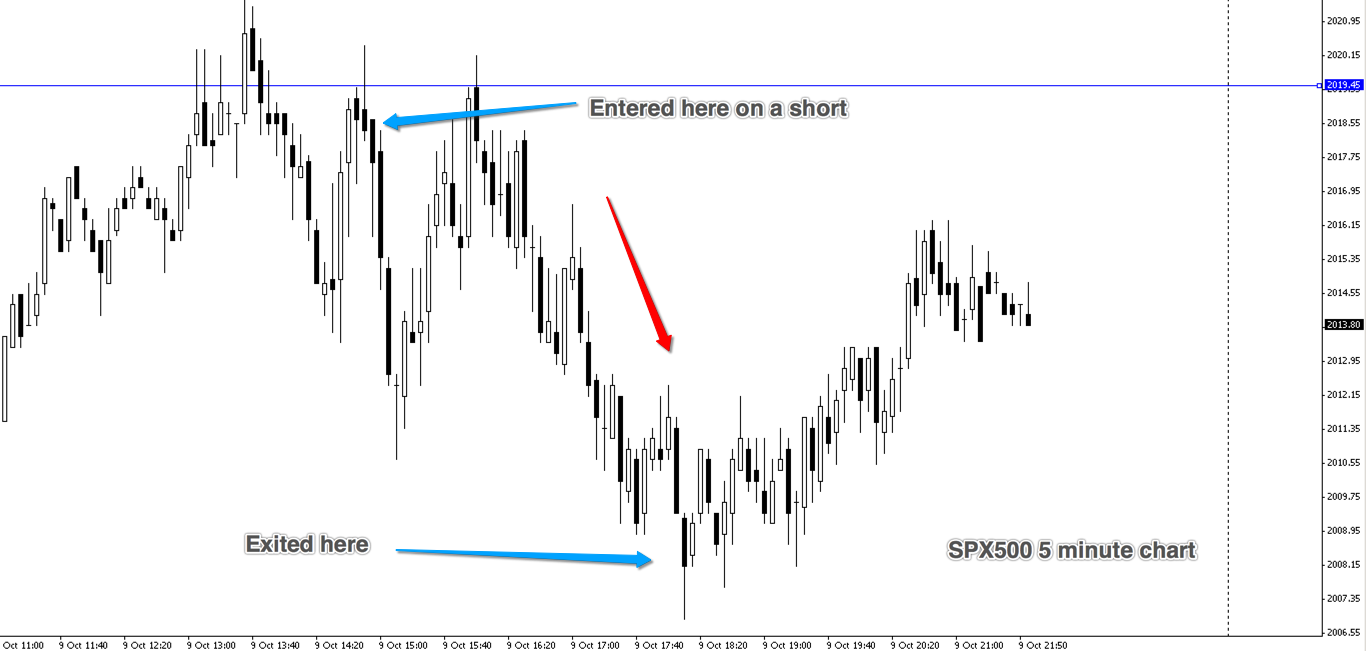
    Returning to the week already traded, here’s where we got our gain. It’s a trade, taken unusually for the Slow Trader fund, on the 5 minute chart. As there was nothing on the daily charts I took a day trade similar to one in my personal fund. Here it is:

    Snip20151010_7

    For those not familiar with charts in different time frames this can be odd. The 5 minute chart immediately above is the S&P price movement throughout a single day shown in 5 minute bars. In other words, the chart immediately above is the price movement within the very last, rather small, bar of the top chart above.

    We made money from the market going down. I’m not saying from this that I’m favouring the S&P market going down, just that for that part of the day we had a 60% chance of the market dropping. So we took it. Our exit was (in this time frame) at a major support level.

    You will notice from the chart above that after we took the trade we dropped to, what I would call, a minor support level. We were in nice profit, and then the market turned back up again.

    This is a swing, and is something an inexperienced trader finds hard to manage. An inexperienced trader jumps ship too soon. Our target was the major support, however, we had to see our profits build – go back to zero – and then build again, as we roller coaster our way to our target exit point.

  • Wonderful opportunities

    Difficult times in the trading business for the longer-term investor.

    Wonderful opportunities for short-term swing traders, if we get it right.

    I sat on the side lines as the markets slipped recently. Unable to take advantage of shorts (trading the market to go down) as it all happened so suddenly. The large dips in FX (foreign exchange pairings) occurred, in those I monitor, within a minute.

    There are after shocks, so timing any recovery is interesting. Those that I will consider are:

    Snip20150826_35

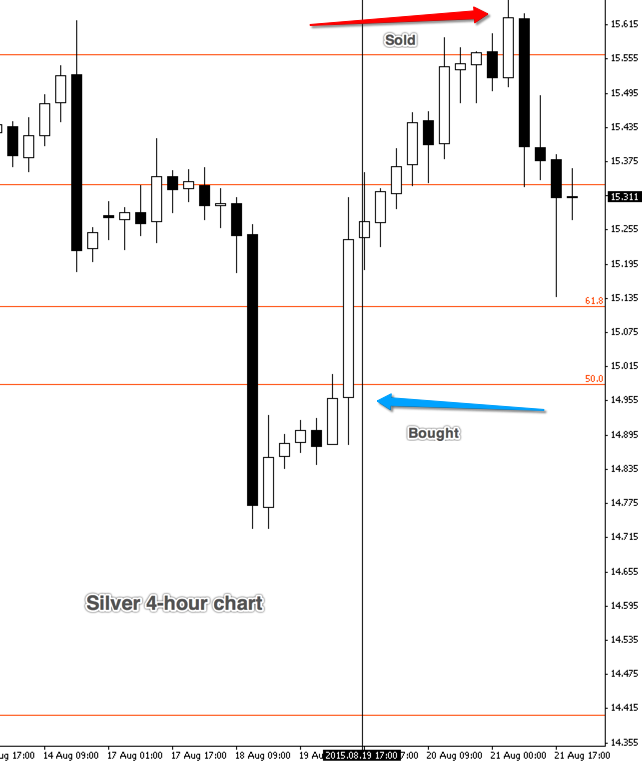
    Silver. At some point soon I consider Silver will rally, short term. However, recent Up (or recent trend) is against us so a buy to go up becomes an advanced move, meaning the buy signal needs to be clear.

    Snip20150826_36

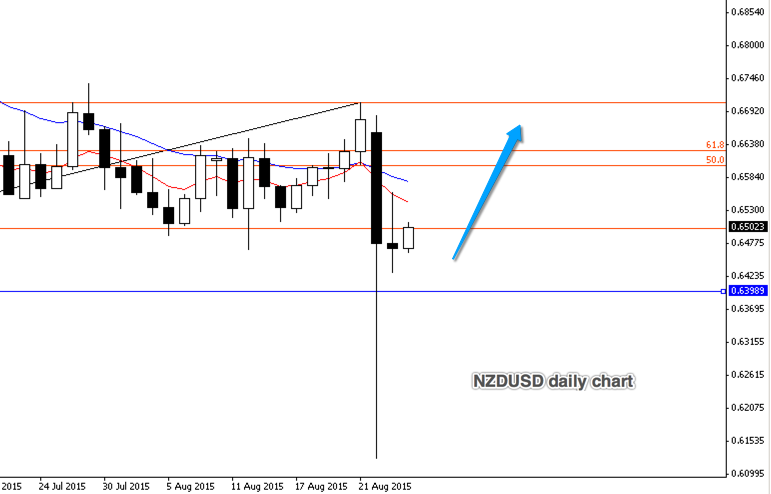
    NZDUSD is firmly down on the long trend. The COT is a buy, but we have to be careful with the COT signals when the COT is going against the longer trend; the COT, in this instance, still often works but can be short lived. Having said that, there is a (possible) short term buy opportunity here.

    Snip20150826_37

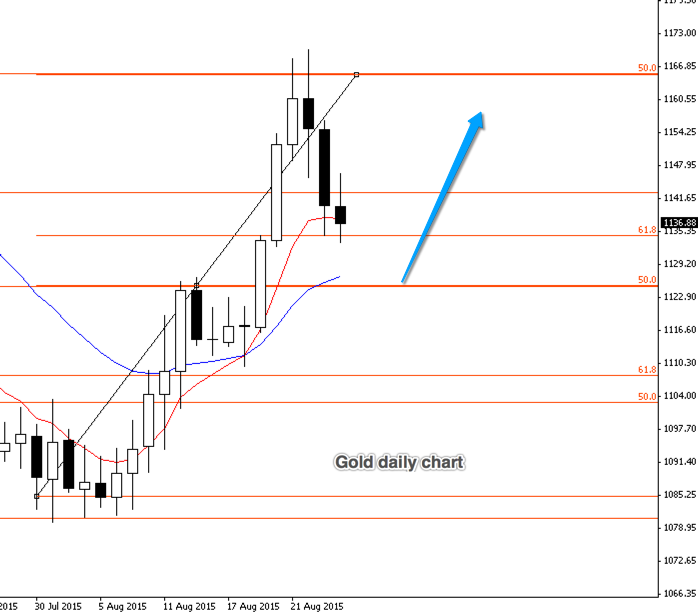
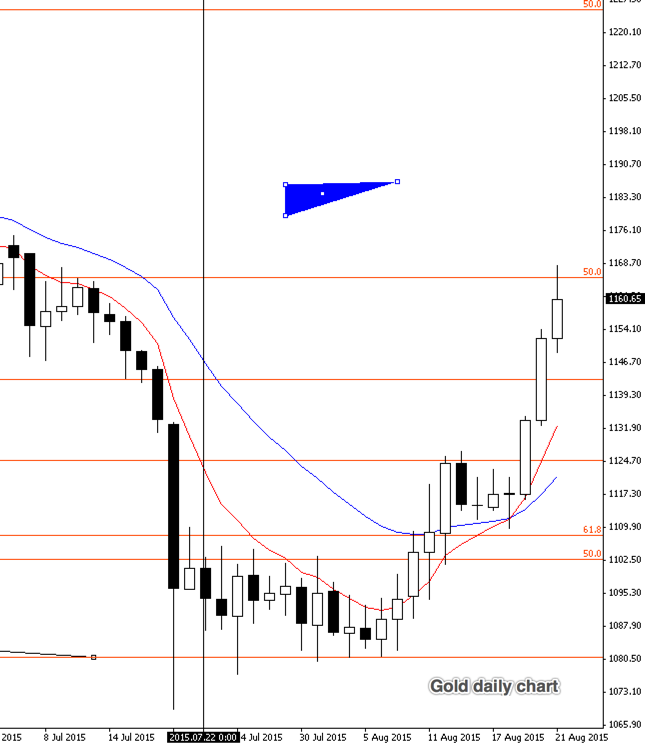
    I’m looking for a buy in gold at about 1125 price with a good buy signal. Catching the signal with the correct buy: on-market, on-limit or on-stop is key.

    Snip20150826_40

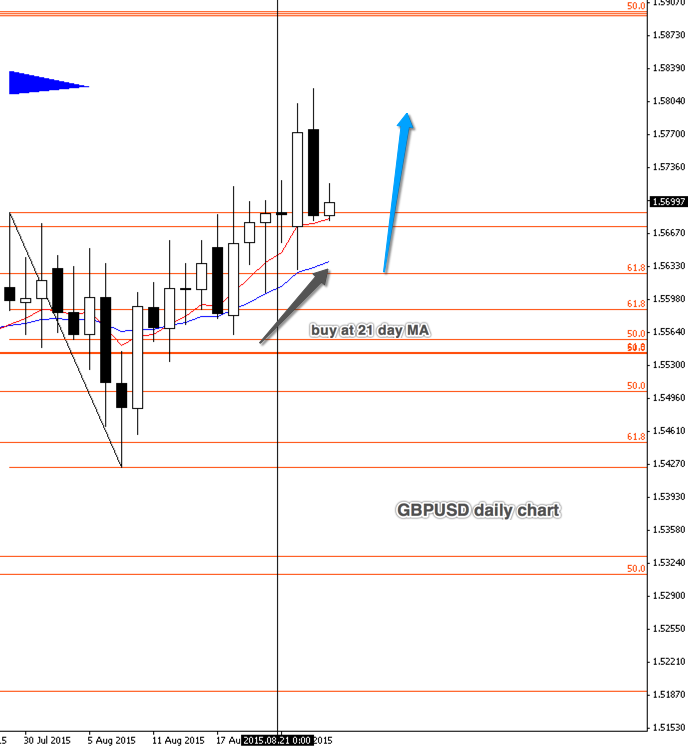
    GBPUSD has been relatively stable over the last few days. A retrace to the 21-day moving average (MA) is worthy of consideration. It may happen quickly, if at all.

    Snip20150826_41

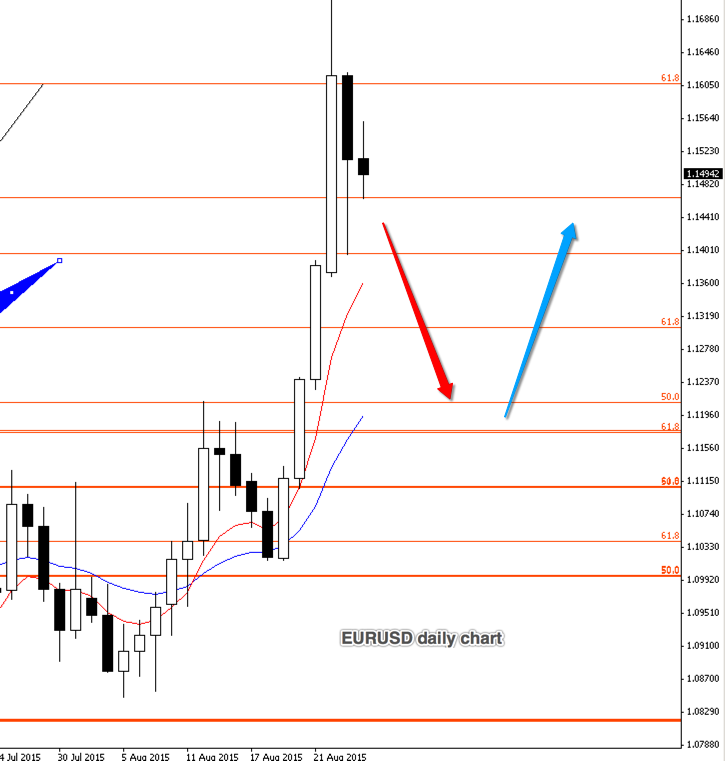
    EUR might strengthen again soon against the USD. Unless I get (daily, or, at a pinch, 4-hour) price action at a support level I will not take this until about the 1120 level.

    Snip20150826_44

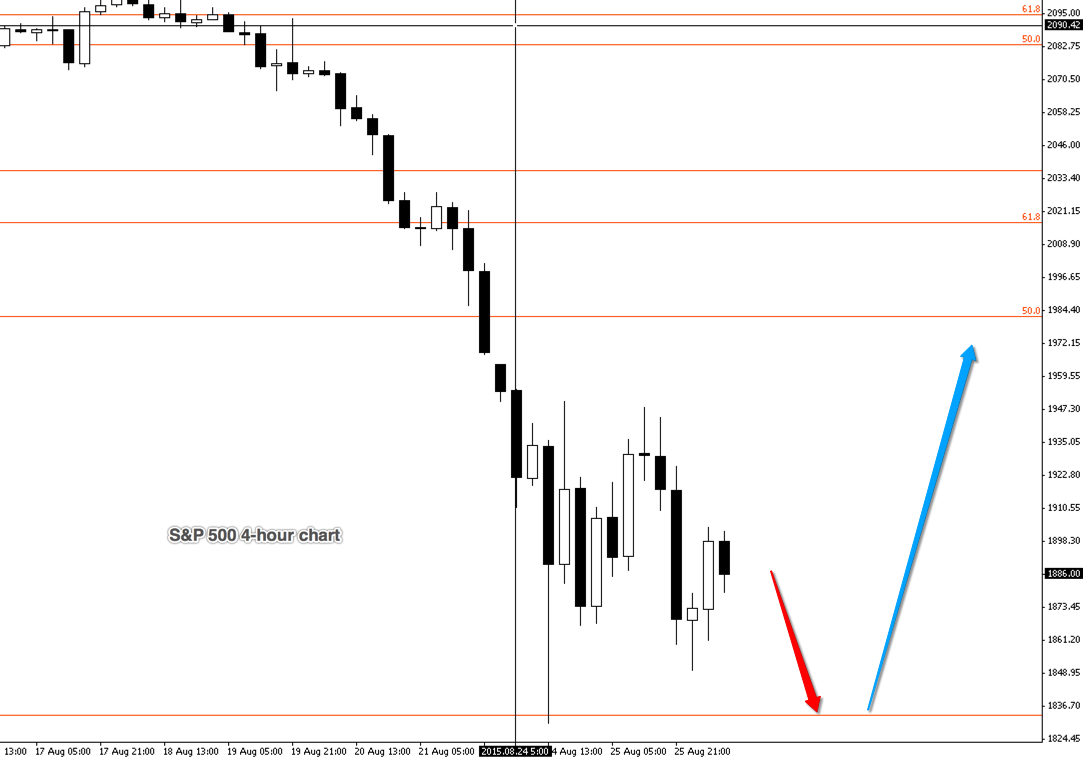
    Finally, the S&P 500. This, I find, is possibly the most difficult to judge. With the recent dip the S&P could provide a good gain on a bounce. A buy in the region of 1836, but could go down further to the 1770 region. Good price action, or whatever is your chosen price criteria, is important here.

    Lower trade values and generous stop positions are considerations when volatility is high.

  • Slow Trader Diary – week 34

    Here are the ups and downs of this week:

    Pace PLC lose £294. AUD/JPY lose £770. Silver gain £363. USD/JPY gain £115. EUR/GBP gain £523. Broker cost was a gain of £18 (the gain was interest earned as we were up with USD/JPY for several days).

    Net for the week was a lose of £45.

    The (unexpected) last minute strength of JPY took away a potential two grand gain for this week. That is how it stood financially. In ‘how well we traded’ terms I was pleased with this week. We called the market correctly in everything but a late dip against JPY. That is the nature of the business.

    The main area for improvement is the risk/reward amounts. We didn’t manage better than 1 to 1. To make money consistently, this needs to improve to an average of 1 to 3. Or, as we term it, 3R. That is: wins need to be, on average, three times bigger than the losses.

    Take AUD/JPY above for example. Our stop was 110 points (often called pips) away. That means I felt that the trade had the possibility of going up at least 330 pips. Three times the risk. Or, 3R. If I didn’t, I more than likely would not have taken the trade. Its a necessary filter to keep the risk reward balanced in our favour.

    The important reason for this is simple. At 3R we can lose some 60% of the time and still take a profit. Okay, it will make it hard work, but a profit non the less. We aim to have the statistic the other way round and win 60% of the time. Importantly, however, if we are not achieving an average win of 3R – we lose longer term.

    So keep an eye out in future for the ‘R’ which I will post after each actual win/loss. If you see 1R consistently on the wins you will know (nice as it is to have a win) that we are not cracking it. However, an average of 3R is plain sailing.

    From this weeks charts:

    Snip20150822_26

    We know from the COT (commitment of traders) report that gold and silver were ready to buy. We had to be careful however of the long term trend against both of these commodities. Therefore we waited until, in this instance, silver went up and retraced to provide a buy opportunity in the direction of the COT, but also with a recent Up (a recent trend up).

    Very nicely done. I came out – correctly – at only 1R because the overall trend was still too strong on Silver. We may get another buy opportunity this coming week.

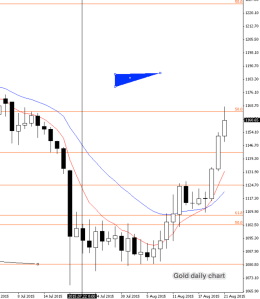
    Gold, on the other hand, did not retrace and I was left watching it go up – even though I knew it was going up. There are strategies to jump onto the train and, influenced possibly by Silvers retracement and thinking gold will do the same, I missed one. Still watching.
    Snip20150822_28

    There are clear buy signals above. And signals to jump on board. Hindsight remains wonderful!
    Snip20150822_30

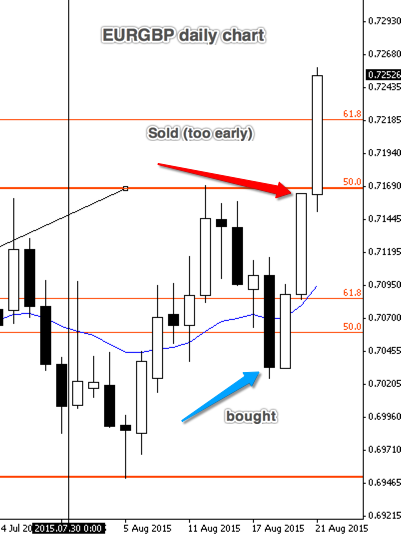
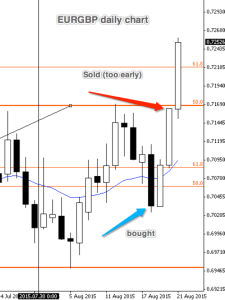
    Sometimes we can just plainly do better. I’m pleased with that EURGBP buy above. It was an excellent call, if I say so myself, however, I came out way too early. At only 1R. You get the picture. Why did I come out at 1R when the market for EURGBP was going so strong? that, as we have already mentioned, is the area for improvement.

    I had a buy order in place with EURUSD and missed a great buy by only a few pips, the chart then zoomed up. But I’m happy with that as the trade (although missed marginally) was correct.
    Snip20150822_32

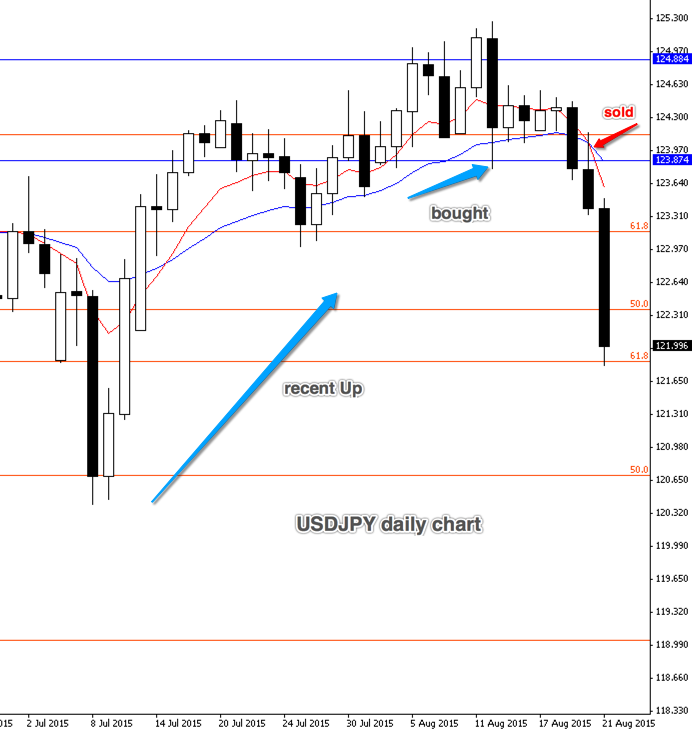
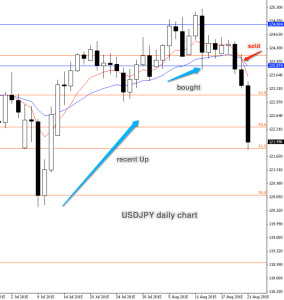
    USDJPY above, was this sell instinct? I bought USDJPY on a retrace, from a recent Up, on the one hour chart (chart above is the daily chart to show the week). I was looking for a 3R with this one and we sat at 1R all week. I noticed the move down (unexpected strengthening of JPY) and sold with a small profit of £115 (all week the profit had been £600).

    The interesting thing about trading is the necessity to detach yourself from profit. Personally (although I’m background aware, of course, of the profit) I never look at ‘up or down’ in terms of money (I don’t even have the money amount showing on my broker page) but only in terms of ‘pips’. If we’re emotionally attached to money amounts – up and down – we cannot trade emotionally detached or to the best of our abilities, consistently, over the longer period.

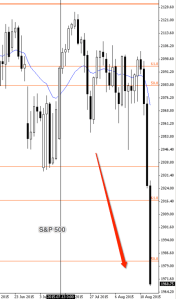
    Worth a mention about S&P below and FTSE.
    Snip20150822_34

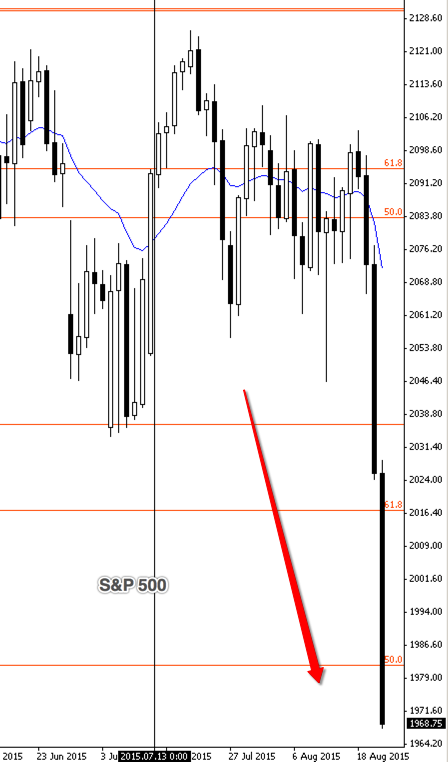
    For those in traditional funds they would have taken a battering this week. The FTSE is a similar picture. I realise that those in managed funds, for the long term, then this is only a 20% blip downwards. However, I would like to take the 20% back up, without having suffered the down bit.

  • Slow Trader Diary – week 31

    Here are our cashed-in trades for week 31: Healthcare Partners Inc + £89, GBP/USD + £687

    IG is our broker, costs for the week were – £25.17

    Lets take a look at GBP/USD.

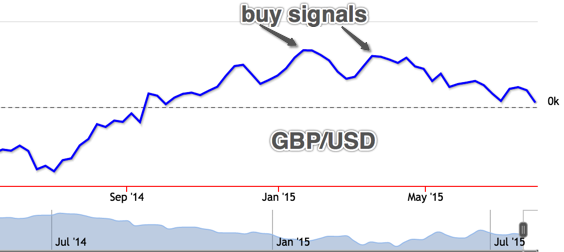
    Conditional: this is a graphed COT (commitment of traders) report giving us a buy condition.

    Snip20150801_2

    This graph represents several months so gives us the condition only, important as that is. From left to right, the first arrow is against the trend. Therefore we would not take that as a positive buy opportunity. However, the second arrow, and second buy indication, is good as it is with the recent trend. The buy condition should remain if the blue line on the chart continues to descend to a new low.

    The COT report is completed for the previous week on the following Tuesday and is published on Friday. It is therefore about two weeks old by the time we get it. However, it is like the oil tanker analogy where you move the rudder but it takes several miles to turn. Often that is the case with the COT. Even though it is old information it gives us a solid hint at the conditional.

    Once we have the conditional we need a matching recent trend. I’ll talk more on the (elusive) trend in follow up blogs.

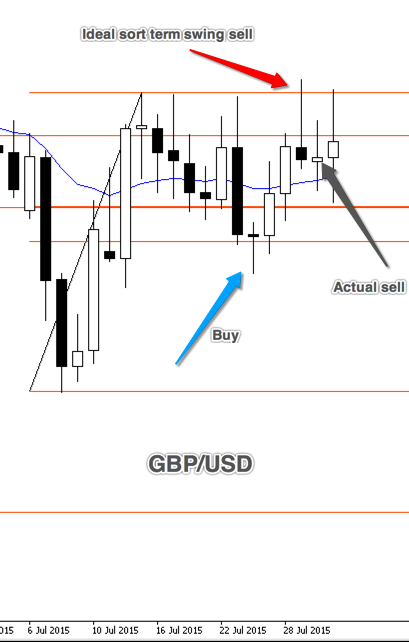
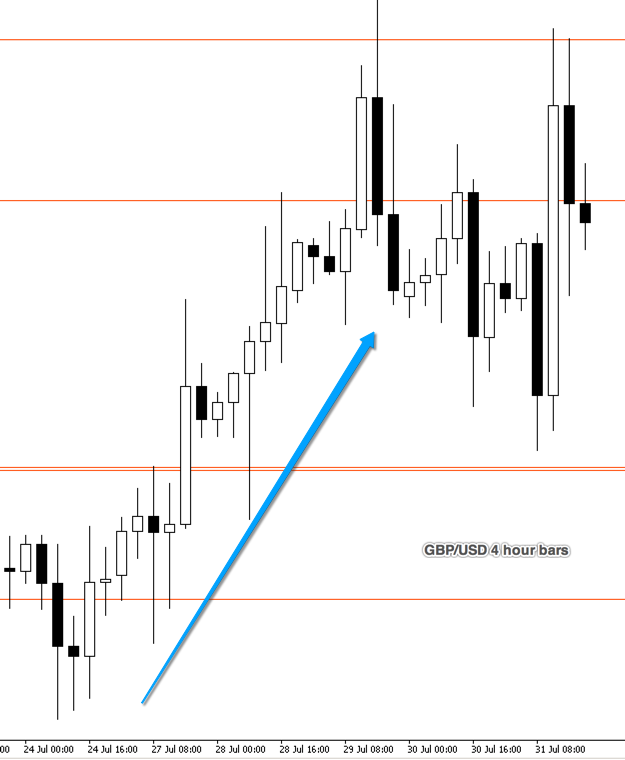
    After trend we concentrate on price – in other words a buy signal. Here is our buy signal for GBP/USD this week. The first graph is in daily bars and the second is the same trade from bottom to top but in 4-hour bars. The second chart gives us a different view as to the dynamic of the trade.

    Snip20150801_3Snip20150801_4

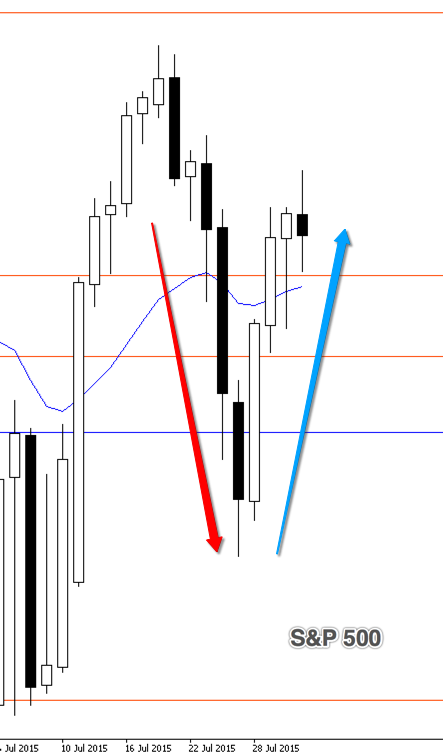
    Moving on. You may have noticed the S&P. Here it is today:

    Snip20150801_7

    Knowing what the S&P is doing is not a trading conditional for individual stocks (or shares in the case of the FTSE). That would be too broad a statement. Interestingly, the movement however of the S&P was more or less mirrored by the stocks on my short list. Even being confident of the future movement of my selected stocks I still missed most of them. ‘How is this possible, B’? I hear you say.

    This is an example of what happened.

    Snip20150801_8

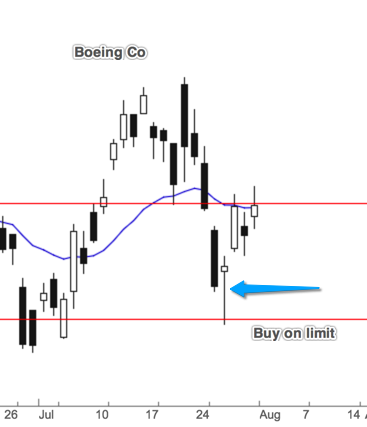
    This is Boeing, We notice by the date that the bottom (blue arrow) coincides with the predicted bottom of the S&P. This pin, at a 50% retrace, is a great buy signal. (Again, we will cover price in more detail in future blogs for those that are interested).

    If we choose to: buy on market, that is buy now at current price – or buy on stop, that is buy at a higher future price – or buy on limit, that is wait and buy at a lower price – is a judgment call. And one, on this occasion, I got wrong. You will notice that the bounce was so hard that after the pin the next days opening price gapped up. Only a buy on market would have worked. I went for buy on limit and missed it. “C’est la vie.”

    This was the same this week for four trades that I set.

    For the coming week we are keeping a sharp eye on gold. The commercials (that is the COT report) are warming up nicely to a buy signal. Beware of the trend however and remember, as well as recent trend, we also need price or more accurately price action. But more on this later.

  • Slow Trader Diary – week 30

    Remember from the last diary that we had missed the swing up (hesitancy over Greece) and that we would not take further trades until the swing was right.

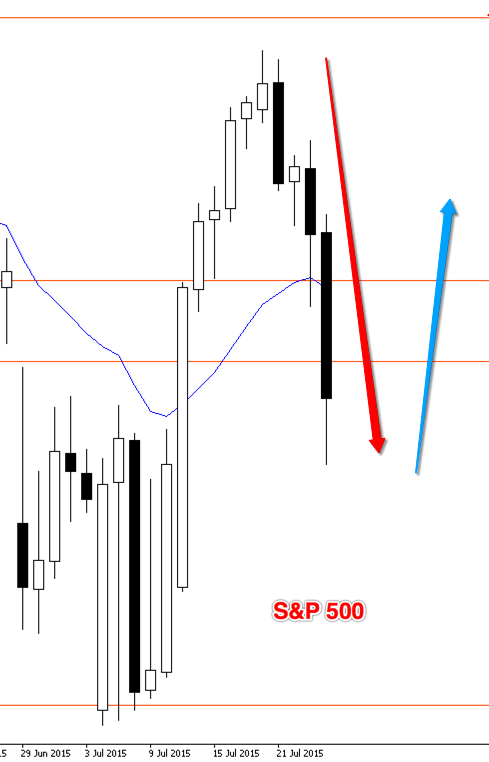
    You will also recall that we showed the S&P 500, and broadly where it would drop. Here is the S&P today. As predicted.

    Snip20150726_1

    We are not sure as yet how far the S&P will drop. However, we can now look for excellent buy opportunities in the S&P and FTSE companies.

    It is, of course, not the case that when an index falls (the S&P above is an index) that each company share associated with the index will fall. But in this case it was a good decision to wait.

    I will not show you points up or down of those shares that we are currently trading, as we have done previously, because until we cash out of those trades the points are relatively meaningless. I will therefore only show you cashed in shares during the reported week with profit/loss on those shares. (When I say shares I also refer to stocks and FX).

    To do otherwise, reminds me of the comment “the operation went brilliantly, up until the moment the patient died”. The same is true of trading. How well the trade is going – or how many points up or down –  counts for little until a trade is concluded (sold).

  • Slow Trader Diary – week 29

    An early diary entry as I’m going away for a few days to where there is no internet and probably no mobile signal.

    Lets take a look at short term swings.

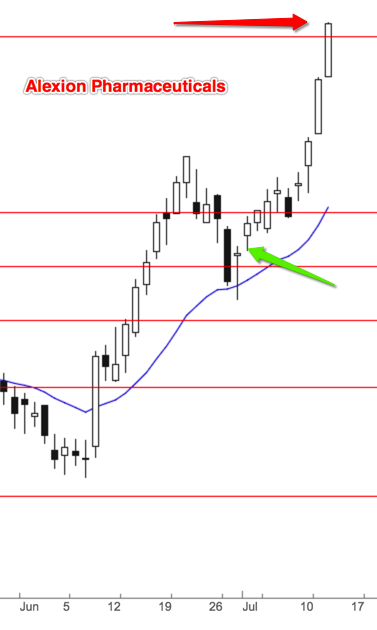
    Snip20150715_5

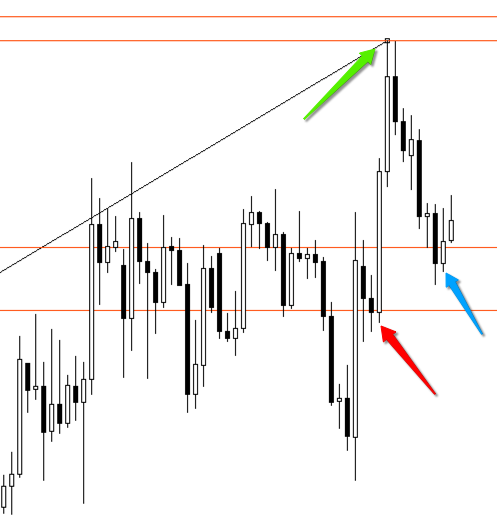
    We mentioned Alexion Pharmaceuticals in the last blog. The green arrow represents the buy point. This is because the share price has pulled back, in this case to a 50% retrace of a previous move, and provided a buy signal – the pin pointing down is a clear buy signal.

    The red arrow represents my sell point. The horizontal lines are drawn using the fibonacci retracement tool provided with most software and were drawn weeks before. This does not mean we can look into the future with share price but if certain things happen it does give us an advantage in determining probability.

    The catch is if you miss the move – which I did being too concerned about Greece – then there are signals that allow you to get into the swing once it has started. But another concern is the index, in this case the S&P 500 index.

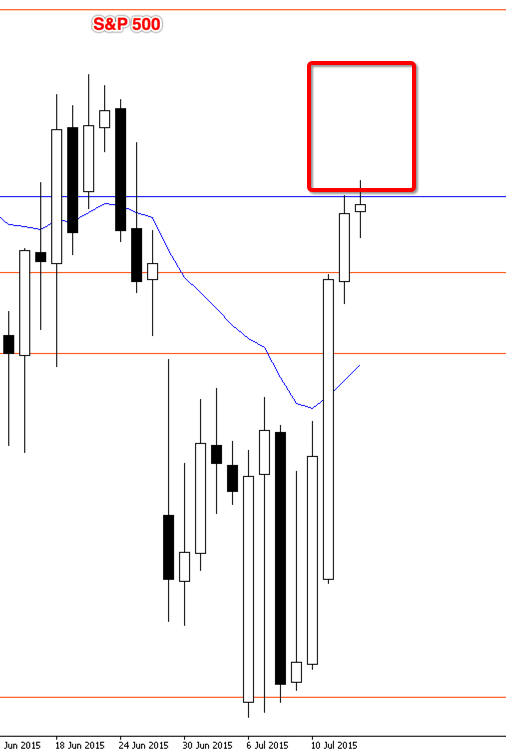
    Snip20150715_7

    The index is of course an average price of all the stocks within the index. Some stocks being much larger than others means that the price change to individual stocks is not well defined but its a handy guide. If the index goes up, by definition, many of the stocks go up – and vice versa.

    There is a good probability that the S&P index will bounce down when price reaches somewhere within the red box. Not long therefore. So to take a buy now from one of our stocks would be the wrong time for a short term swing trader. Or any trader. Better to be patient and wait for the index to swing back down again and provide a more profitable entry point.

    I don’t use the index as a buy/sell signal, the individual stocks do that for us. Price swings are a factor in all charts to some extent: be it stocks, shares, FX or commodities. Reading those swings is the art.


  • How goes it? Week 25

    For simplification, I’ve combined Slow Trader and Ferrari into one fund which we will refer to as Slow Trader Fund.

    Our strategy in Slow Trader is to short term trade (using, primarily, daily close bars rather than intra day bars) shares in the FTSE 350, stocks in the S&P 500 and major foreign exchange (FX) currency pairings.

    Arm Holdings. We came out at a little over break even. I moved our stop as I was not happy with the possible trend change of this share price. The share price did move below our buy point but has subsequently moved up again. We are out for the time being.

    Halliburton Co. We set this share stop also to a little over break even. This took us out without lose and the share price has continued to drop. A good move on our part.

    BT Group. Moving the stop too early is usually not a good thing. I feel that the stop  should only be moved if something happens to make you change your mind about the share or the share price has climbed sufficiently to put you into a different price bracket. I got this wrong with BT. I moved the stop and got stopped out for £17 profit but the share turned and continued up!

    Ashtead Group. – £311 lose. On reflection, not a good share to take. A ranging share price, rather than my strategy of taking trending prices, this share dropped well below my entry price – but has subsequently turned up again.

    CLS Holdings.  – £325 lose. I made fundamental mistakes with this one. Incorrect retracement level without price action. If I had waited (patience is the virtue of a good trader) and measured the retrace correctly this could have been a winner.

    Snip20150620_7I bought at the red arrow, the green arrow was of course the correct buy point.

    Card Factory. – £311 lose. This is a relatively new share. Only 5 years of fundamental information, I prefer 10 years.

    Snip20150620_8

    We were in credit – having bought at the lower green arrow – but a sharp drop took us out. You will notice that I sell a share for a lose (or more accurately, I’m stopped out if a share price drops below what I think is acceptable).

    FX AUD/USD. + £394. This is the first time you have been introduced to FX. This is on an intra day 4-hour chart so you can see the move.

    Snip20150620_9

    We bought at the red arrow, we sold at the green arrow and we bought again (and we are still in) at the blue arrow. Easy! Okay, sometimes it goes ideally like this.

    We also had interest charges (mostly for carrying shares over the weekend) of – £32.

    We are currently in:

    CLS Holdings. We bought again at the green arrow on the CLS chart above. Although the price has moved up we are still -3.7 points as this is the spread. The spread is how the broker (in our case IG) make their money. It is the same as when you go on holiday and change your sterling for euros, you have a buy and a sell rate.

    ITV PLC. + 2.6 points.

    Money supermarket. + 12.1 points.

    Monster Beverage. + 568 points.

    Underarmour. + 464 points.

    WPP PLC. – 9 points.

    FX AUS/USD. – 20.9 points.

    Finally, anyone wishing to short term trade for themselves I am trialling a notification system to help you. You will get my information direct to your smart phone so you will need an account that you can action through your phone. More later.

    B

  • Shares traded this week

    Non of our shares reached their price targets this week.

    We usually only trade shares long (unlike the FX market which we trade long and short).

    The FTSE 350 and S&P 500 markets were generally down this week. Certain sectors like Home Construction had a good week.

    However, the general down periods in the market present us with buy signals.

    The one I got wrong was Southwestern Energy Co. A higher risk share for us as it was early in an up cycle following a large down cycle. It retraced more than I wanted.

    On the plus side, we entered:

    Arm Holdings which we got for a good price and is up a few points.

    BT Group, this is a weak growth share but a positive growth non the less. We are at even on this.

    Halliburton Co, we had a buy limit set on this company for most of the week. We recently got it and it immediately moved nicely up. An oil equipment company but very much dependent on the oil commodity price.

    Monster Beverage had a good buy signal but has moved lower. We are still in this share although my stop position will not allow it to move much lower. Hopefully we’ll get a nice recover in the market and Monster next week.

    Under Armour Inc. was bought early in the week and stayed low throughout. Yesterday however it moved very sharply up in our favour – still some way to go to our sell target.

    A reminder not to use this as recommendations as the buy time on most has probably passed. You would end up buying as I’m selling!

    You can get early information via WhatsApp – more on this later.

    Regards

    B

  • How are the funds doing?

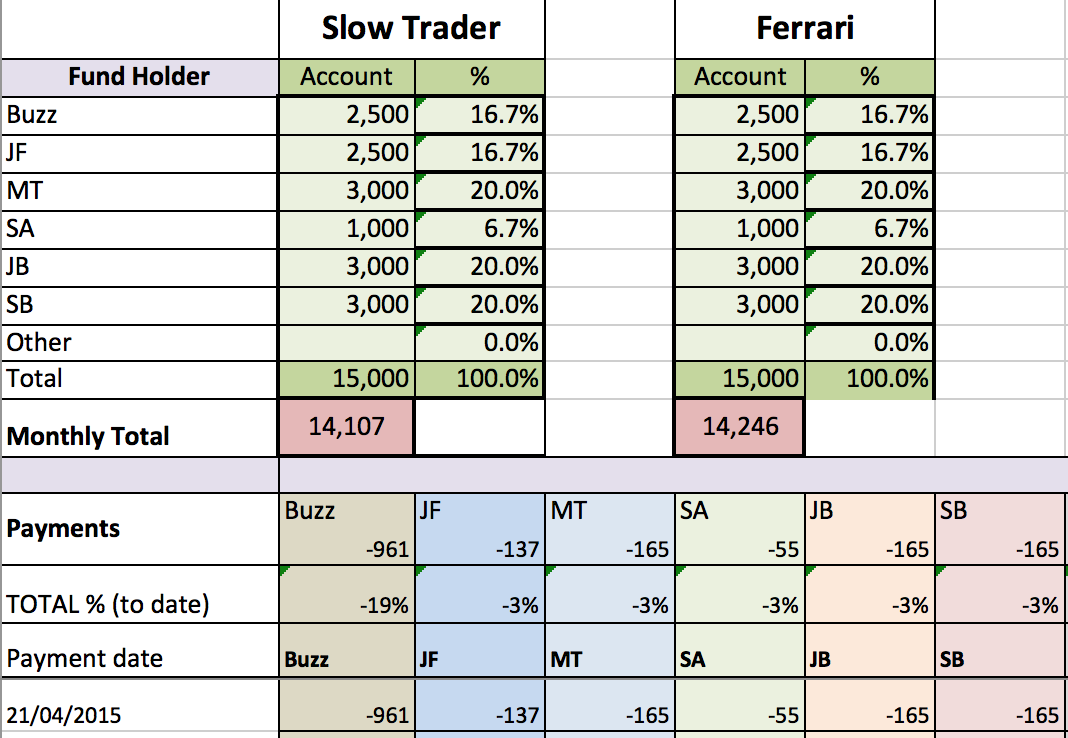
    As I’ve said, our trading approach has changed a lot. Your funds are now income rather than growth. But we still have two funds:

    1. SlowTrader – trades the FX (foreign exchange pairings) gold, silver, WTI (light crude oil) and S&P index. This fund takes short term trades both long and short using daily, 4-hour and 1-hour charts.

    2. Ferrari – trades Nick’s top shares in FT 350 and S&P 500. This fund also takes short term trades but is primarily long using daily charts only.

    Your monies have been split equally between each fund. If you have an overriding preference on a certain fund just let me know.

    Here’s a snap shot of the funds:

    Screen Shot 2015-04-21 at 07.49.51

    The running P&L still has a share in both funds from my old system. The share is down and expires mid May. I’m hoping between now and then this share will come back up.

    Remember this is a snap shot only. The running P&L could be in the green this afternoon.

    Even – for both funds – is £15,000. Anything over this amount, at this time each month, you will get half your percentage profit. Those that have the maximum of £6,000 in their fund will receive the profit as tax free income. Those with a fund that is less than £6,000 will have their profit reinvested until their fund is at £6,000.

    Here’s how it stands:

    Screen Shot 2015-04-21 at 08.32.55


    What I can now do in my short term trading has taken hard work, (dedication to the point of obsession really!) money and time. Anyone that tries to sell you a trading system and tells you its easy don’t believe them!

    Anyone can withdraw their funds at any time. But please don’t miss on the good time, you’ve come this far.

    Talk soon – B


  • My S&P 500 top buy tips 2015

    Again, from Nick’s spreadsheet, I have selected a few S&P 500 shares to buy as part of your go-get-em portion of your money.

    Google Inc (either GOOG or GOOGL), Priceline Group Inc, Green Mountain Coffee Roasters Inc, Michael Kors Holdings Ltd, Qualcomm Incorporated.

    These are based on the company showing above 80% consistency of growth, a present value that Nick has as less than 55% of potential, and no, or insignificant, debt. P/E has to be representative of the companies sector and certainly not above 40. There are lots of other criteria, but these cover the main ones.

    They are also based on a medium term buy signal about to show. Probably within a couple of weeks.

    Be aware, however, that you need to understand the company too. Blackberry, for example, would have qualified for a few years in the above category – but at that point Blackberry also had no future market.

    B