Category: Slow Trader Hedge Fund

  • Probability

    Most are aware that I took losses at the end of Trump week. No blame to the US president-elect, the responsibility is all mine. Ironically, it came after my boastful ‘fulfilment’ blog. Hey-ho.

    Losses always take ten times longer to make back. But they’re lessons we’ve paid for so we should heed them. To that end, the basics of what we do have not changed; however, entries and targets most certainly have changed.

    We’re all familiar with the concept of risk and reward. However, we rarely consider the third equal partner – probability. In general, the smaller the risk the smaller the probability.

    Therefore, we’ve increased managed risk but also increased probability by taking trades that meet our “always in” criteria. This is not simply trend but a trade taken with context in the direction of a trend bar that has broken a premise point.

    Here’s an example from yesterday of what I mean:

    snip20161203_1

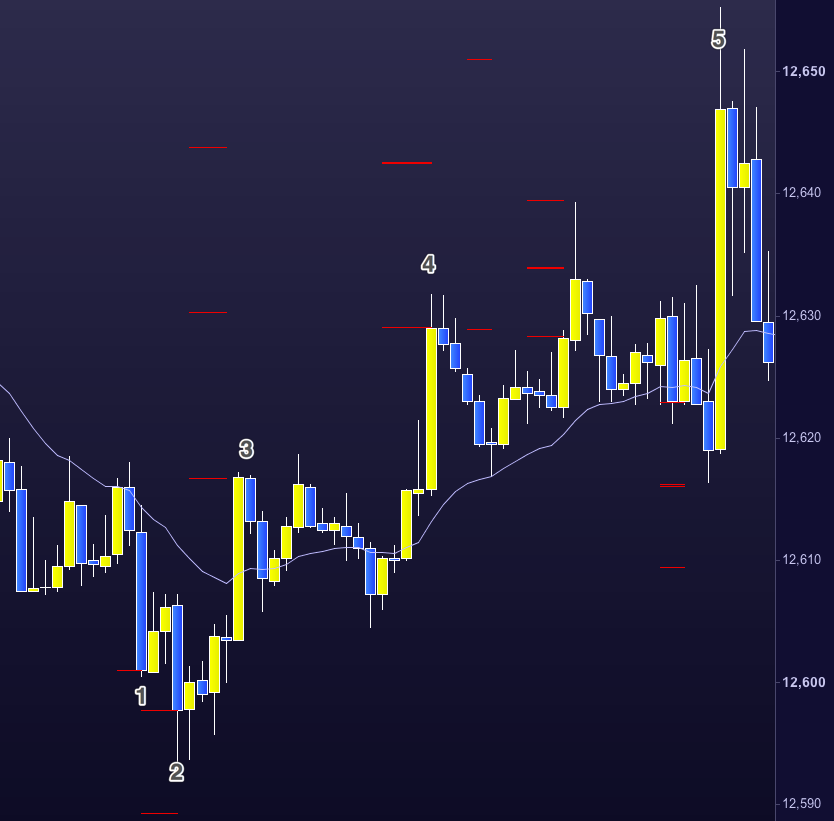
    Left of frame is a down trend with a classic 3 push down. Three measured pushes usually means a reversal. Previously we’d be looking to take the bottom of bar number 1 long, as it’s the third leg down. However, bar number 2 was a ‘final flag’ or a final extension down. Our stop may have previously been set close below bar number 1. Thereby providing a low risk but also a low probability trade. In this example we’d have been stopped out at bar number 2.

    We now, as we did yesterday, enter the trade long at the top of bar number 3. This is arguably a higher risk but higher probability entry. We can see that this bar has also closed above a line of premise. Meaning above the previous high bars to the left.

    The red dashes are my measured targets. My target was close to the top of bar number 5. However, in this instance I came out earlier as bar number 5 was a news based US monthly non-farm payroll announcement – and they can be quite another thing.

  • Good trade management is key

    Probably due to the US holiday it was a slow market for the latter part of last week for the sterling/dollar pairing. The UK Autumn Statement had little effect.

    This coming week has the anticipation of the Italian referendum. A certain result here could alter the euro/dollar chart but may also have implications for stirling.

    During such times, brokers tend to increase spreads. Which is fine if average bar size increases, but not so good, as is quite often the case, if they do not.

    A thought from my trading last week is that, as in any skill, confidence (not arrogance) plays a considerable part. I think confidence in trading comes from profitability. Which in turn requires timely, decisive decisions.

    Panicked, after the event, entries don’t count.

    I feel, however, that true trading confidence comes from good trade management. This, for my money, is more important than the ability to choose an entry.

    I often find that in my own daily debrief, that any losses are the result of my trade management -rather than anything else.

  • Trading time is valuable, but some things are important

    Sometimes I have to knuckle down and get the basics done.

    For me, this week, that has included a rewrite of my strategies. Relatively meaningless, I hasten to add, to anyone else that is not a price action trader.

    On a similar note, it occurred to me that a reason that losses take many times longer to make back – than they did to lose in the first place – is down to not modifying price per pip timely and correctly. I’ve reviewed this and put in place what I feel is a reactive but practicable risk management adjustment.

    Moreover, short-term trading demands consistent long-term screen time. I have to say ‘no’ to almost everything else. Otherwise valuable trading time disappears. This week I lost three days, Tuesday to Thursday (which means the whole week because isolated trading days are not ideal). This was to travel and support an old friend at his mother’s funeral. Saying ‘no’ is okay, but some things are important.

  • Not recognising the bull trend took my edge

    I was wary of trading last week – and with the unpredictable effect the US election could have on the market. The trades I did take were disappointing.

    Looking now, at the end of the week, at the rise in the sterling/dollar price it looks like a great opportunity. It always does.

    However, at the time, the market provided signals that supported a reversal (that is for me to short) only for the market to turn and climb rapidly. Recognition of the bull trend is an area that I can improve. (Not to get too technical, but this is done by being aware of ‘gap bars’ and only to take trades in the direction that correlates with these gaps).

    Moreover, I decided to not trade Tuesday and Wednesday as I considered a sharp, unreadable, Brexit type move was possible. Again, I was wrong. On back test the market on these days provided good signals.

    It was the Thursday bull that caught me out, Friday too to a certain degree.

    But I’m open to learning from this week. Positives are already in place.

  • Why do I trade?

    At dinner a couple of weeks back, JB asked me ‘why did I trade, is it about money’?

    My answer agreed: that it’s about money. However, the question subsequently got me thinking.

    Al Brooks, whom I regard as my mentor, says that the aim (of short-term trading) is to make money – so I suppose I copied Al’s answer.

    To consider the question further, the aim for me is not about the joy of trading. That is too much like hard work. It’s also not the gratification of correctly calling a good trade. Because without money on the trade it’s like.. well, like going to bed with my socks on, it does nothing for me.

    Many beginners start with a dummy account. They make trades without committing cash and the dummy account records potential gains and losses. Many do exceptionally well at this because they are trading without emotion. The real account, the beginner finds, is a different thing altogether.

    So, it’s not the pure thrill of trading that does it for me either, and, therefore, we’re back to the money as the reason.

    I spoke with my son, Nick, about the question when I visited him in Bristol. Nick’s good at this sort of stuff. He mentioned a podcast he’d heard between Tony Robbins and Tim Ferriss. (Robbins is a popular motivational speaker in the States, and Ferriss is an author, notably of the 4-hour Workweek).

    Robbins mentioned ‘achievement’ and ‘fulfilment’ – which, Nick says, might help me to analyse my ‘why’ question.

    With that prompt I understood that for me my ‘achievement’ in trading is the making money bit; however, my ‘fulfilment’ is that I’ve got to the point in my trading that I can, with, I guess, some degree of consistency, actually regularly make money trading.

    …..For those interested, here are my trade statistics for the past week: 54 trades made in total, of which 25 were losing trades amounting to £5,982 and 29 were winning trades amounting to £11,295 making a total profit for the week of £5,313.

    That was over four days. We didn’t trade Friday due to the potential volatility of the US non-farm payroll announcement; which turned out to be a missed excellent chart readable day! We won’t trade this coming Monday or Tuesday either, to any great extent, due to the potential volatility the US election provides.
  • The Chimp Paradox

    To be a short-term trader is also to be a aware of how the mind works. We have to blame someone, right.

    I’ve previously mentioned ‘Thinking, fast and slow’ by Daniel Kahneman. A detailed, and in parts, academic book covering decades of his life. Within which Kahneman refers to our thinking as two modes: system 1 which is fast, instinctive and emotional; system 2 which is slower, more deliberative, and more logical.

    System 2, the slow system, is the mode we need when trading.

    Prof./ Dr Steve Peters book ‘The Chimp Paradox’ uses a simple analogy to explain system 1 and 2.

    Peters describes ‘system 1’ as the chimp and ‘system 2’ as the human. These are easy to grasp explanations of our subconscious and conscious mind.

    If we take a moment to observe ourselves, particularly during times of stress, then we notice the chimp clearly. Peters explains that the chimp is several times faster and stronger than the human. All to do with millennium of developed fight or flight instinct.

    The point is, I recognise this all the time in short-term trading. It is powerful indeed and without being aware of the paradox can lead to a good deal of poor trading decisions.

    As I’m preparing to take a trade my ‘chimp’ is saying ‘buy it, buy it, buy it….  My chimp is fearful that it will miss the trade if it waits too long. Oddly, if I then take the trade (more often than not too early because the chimp is working from emotion) then the chimp immediately sees the error of its ways and, fearful that it will have a loss, says ’sell it, sell it, sell it….

    And this is all before the ‘human’ (system 2) has had a look in.

    How we pacify the chimp and keep it controlled is by trading via strict, practised rules. Rules that we accept don’t always work but work more often than not. This calms the chimp and allows the ‘human’ to get a look in and trade rationally.

    Thank you to Dr Peters and Kahneman for clarifying this for me.

  • Day trading is only for the full timers

    There are so many ways to trade – choosing a way can take forever.

    Broadly speaking, the forms of trading include positional, swing and day trading:

    Most investors through investment banks, pension funds and mutual funds have their savings with positional traders. Positional trading takes the longer term view and is, if not exclusively, based on fundamental information.

    Swing trading, on the other hand, is broadly considered to be trades that take a few days to a few weeks to complete and can be a mix of fundamental and technical.

    Day-trading, by simple definition, is a trade that is completed before the end of a day.  It is based on technical information only. I prefer the term ‘short-term’ trader.

    Some years ago I started with positional trading, fundamental information and how to read financial reports. I then moved onto swing trading and used a combination of fundamental and technical.

    It was only more recently, a couple of years, I made a slow transition over to short-term trading and now find myself exclusively in this area of trading.

    Within each of the above broad categories there are a limitless number of styles, methods and systems to choose from. It is indeed a minefield.

    Many starting out go straight for the ‘day-trading’ category of trading and most don’t last long. If fundamental information is not their bag, then newbie’s should at least start with swing trading. Taking the medium term view. Its more stable than short-term trading simply because of the effect that short-term news has on price and therefore the chart.

    Swing trading can be profitable for the part-time trader, day trading however is only for the full timers.

  • How to learn from trading mistakes

    Three weeks ago was a good trading week. Two weeks ago I tried to catch a ‘falling knife’ (a no-no in trading. But, again… hindsight). And then this week we almost made back for the falling knife thing.

    The old trading saying is ‘don’t try to catch a falling knife, wait until it sticks into the floor and all the wobbles stop’. Well, I know this, but when we don’t see it as a falling knife but rather as an extension of a wedge we feel correct in taking it. It’s only soon afterwards that we realise that it’s an oops trade.

    Okay, I’m starting to lose you in the terms. The thing for me to get from this is that I can learn from it. I take responsibility and I take the lesson. Last week we had a couple more falling knives, one of which I ignored as couldn’t get a traders equation trade from it, and another I took correctly for a profit.

    How did I get around my error? By back testing. I simplified by going back to a maximum of 120 bars on the main screen and that has worked an absolute treat.

    Okay, inevitably these trading lessons happen from time to time, to all traders. ‘Take responsibility, embrace the lesson and come out stronger’…  that’s what I said to myself, and it worked. The wrong way would have been to ignore the lesson, trade more and try too hard to immediately make amends.

  • Sterling’s spike down – from a traders perspective

    You will probably have heard on the news that Sterling (GBP) spiked down massively.

    This happened 5 minutes after midnight yesterday morning. The reason is speculated.

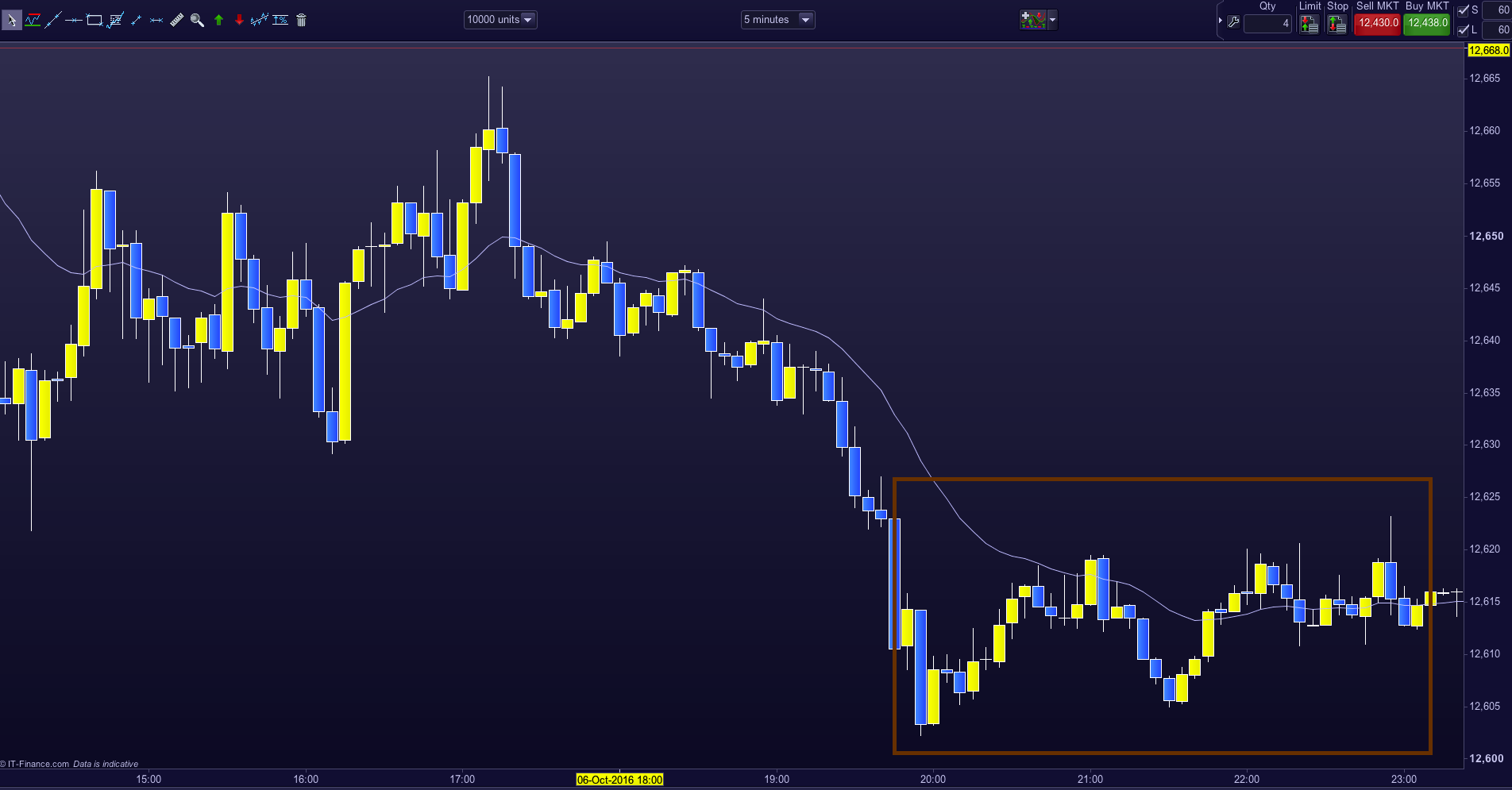
    Technically, from a 50 year – or so – chart it is entirely expected for sterling to drop at this point. Indeed, we would consider a drop down to 1076, rather than 1118 that it did reach, appropriate. But it’s easy for the technical trader (or anyone) to say that after the event. And certainly it wouldn’t have been expected within a 2 minute period.

    Here’s how it looked on a short-term chart for GBP USD.

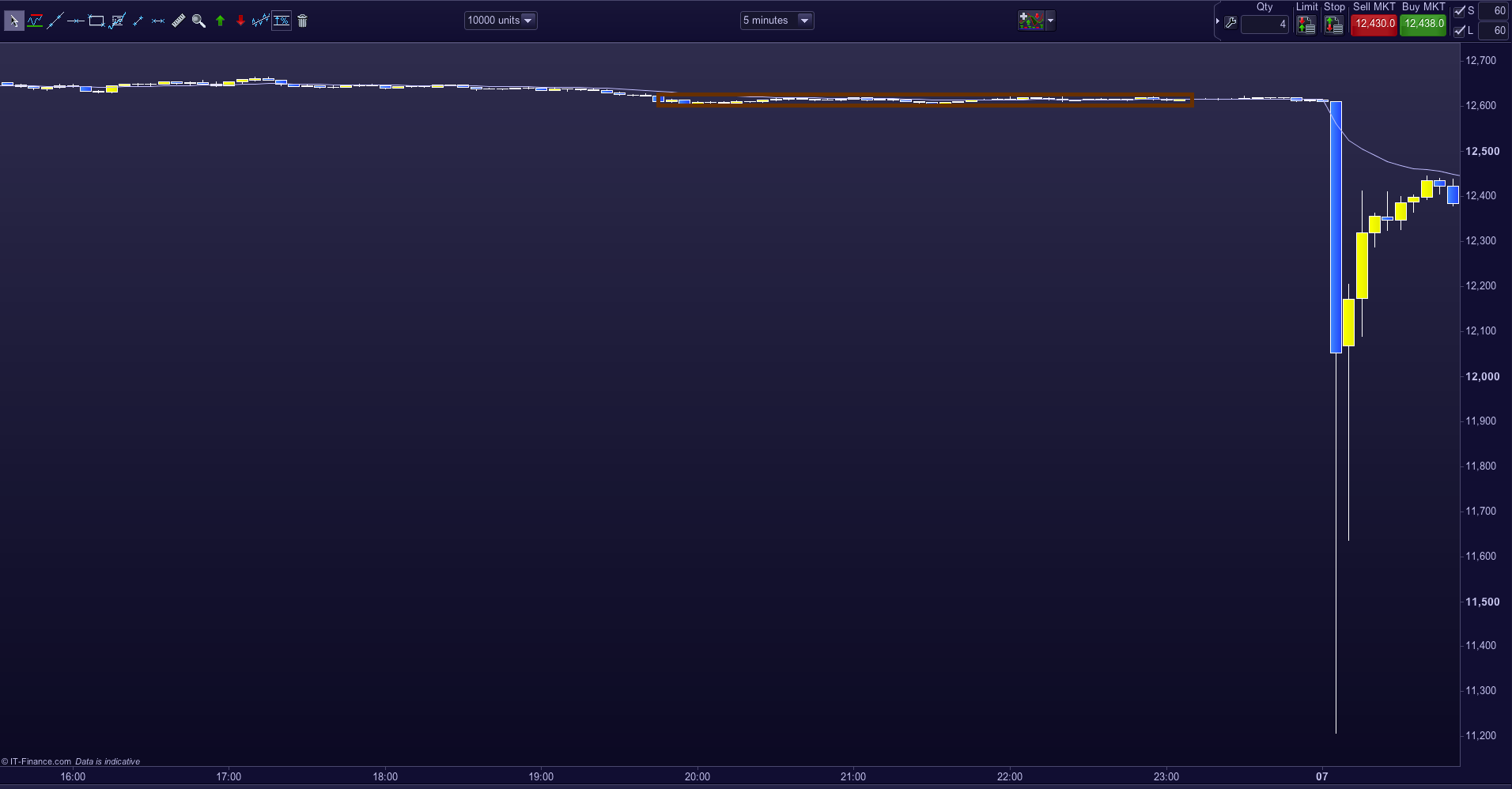
    Bars on a chart are normally represented relative to the biggest bar. Here we can see the 5-minute bar chart before the dip.

    snip20161008_1

    In contrast, here is the same chart moved forward in time by about an hour. The bars in the reddish box are the same bars on both charts – and provides an idea of how far the dip extended from the perspective of the short-term trader.

    snip20161008_3

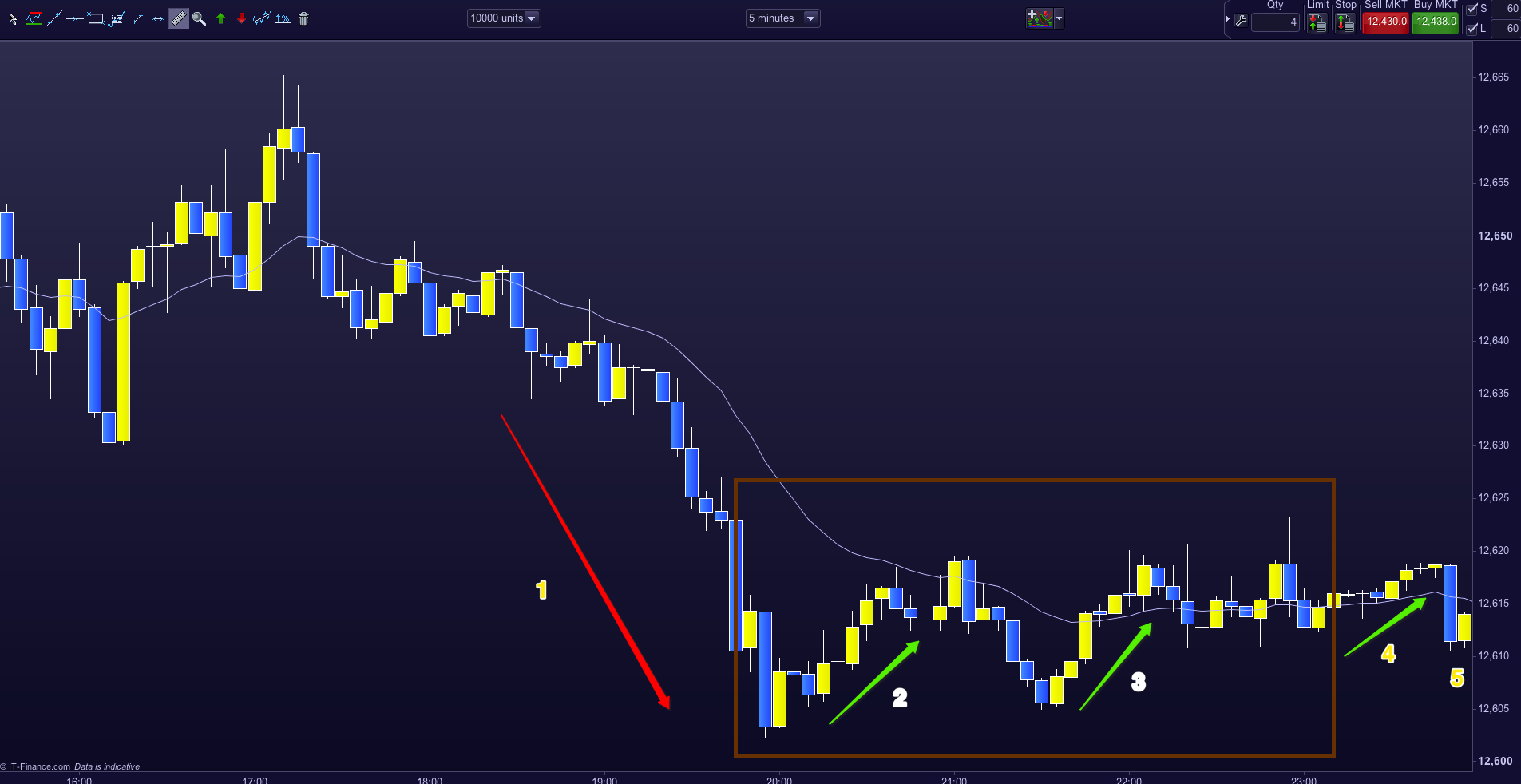
    If a (competent) short-term trader were trading this chart at the time how would the trader have fared? Okay, I think. here’s why:

    snip20161008_4

    The red arrow (1) indicates a clear downtrend and therefore only shorts (price going down) should be considered. Without going into price action talk the green arrows 2, 3 and 4 show that any significant attempt at a pull back is weak. The blue bar (5) is a definite trend bar short, not least of which it closes strongly down and lower than the previous two dozen bars. I would enter short here, or more likely, because of prior price action, before bar 5 formed.

    Ten minutes later price dropped 1,400 pips in 2 minutes. However, it’s all meaningless because if I had traded the drop I’d have made 30 pips (60 pips at the most) as short-term trading is precise and that is where my pre set target would have been.

  • Trading is about dealing with contradictions

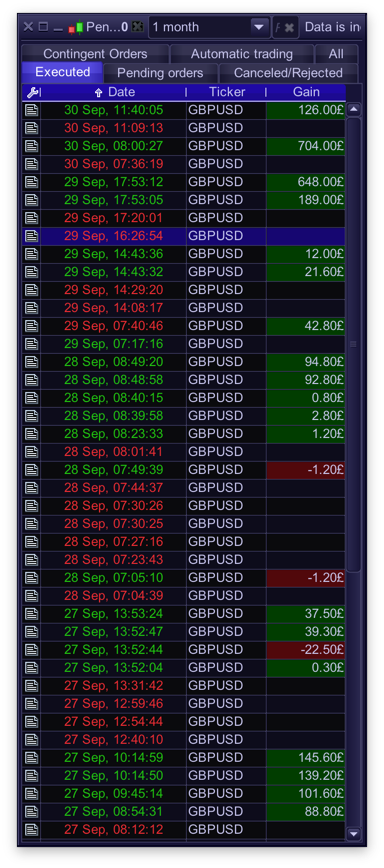
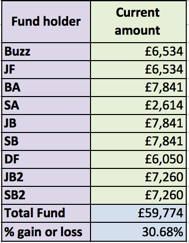
    Here’s the results of the trading week. Something I don’t normally show as it’s a distraction. It would be a distraction to try to make the figures each week. However, a good start and finish to the trading week.snip20161001_3It is not wise to trade if we have distractions. And some distractions are important, so I didn’t trade much mid-week.

    On a different note, something obvious to me this week is that trading is largely about dealing with contradictions. No wonder it’s not easy.

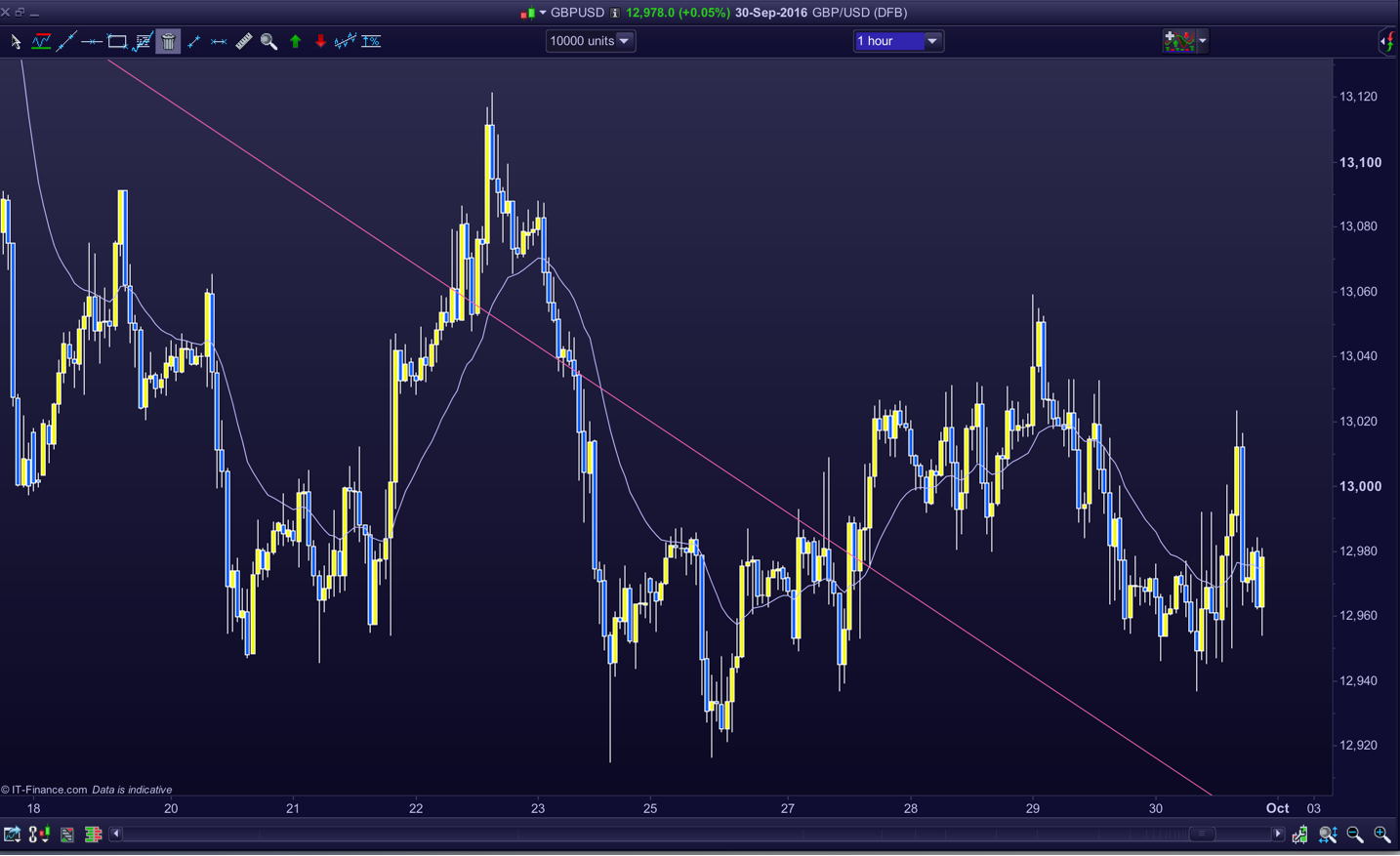
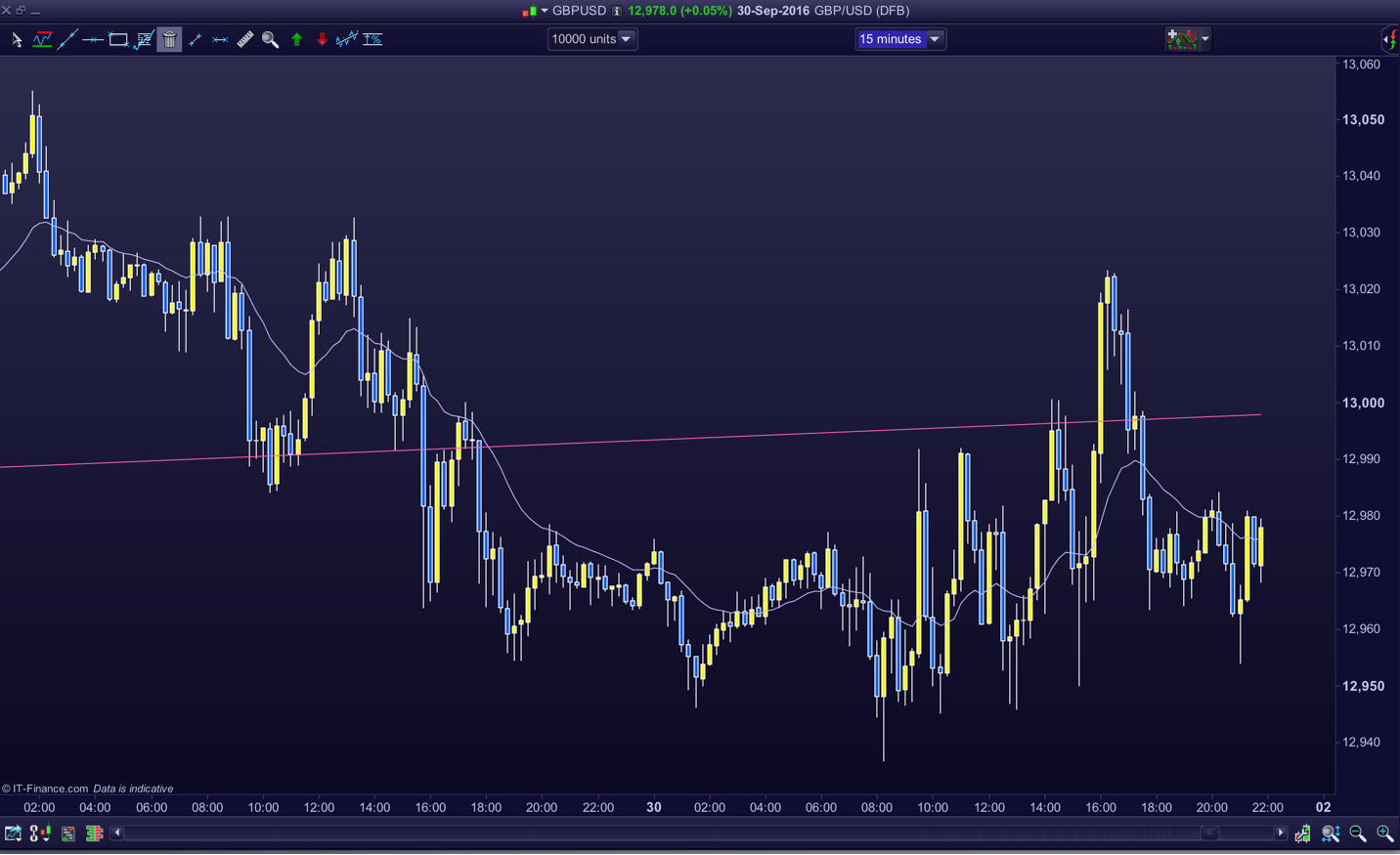
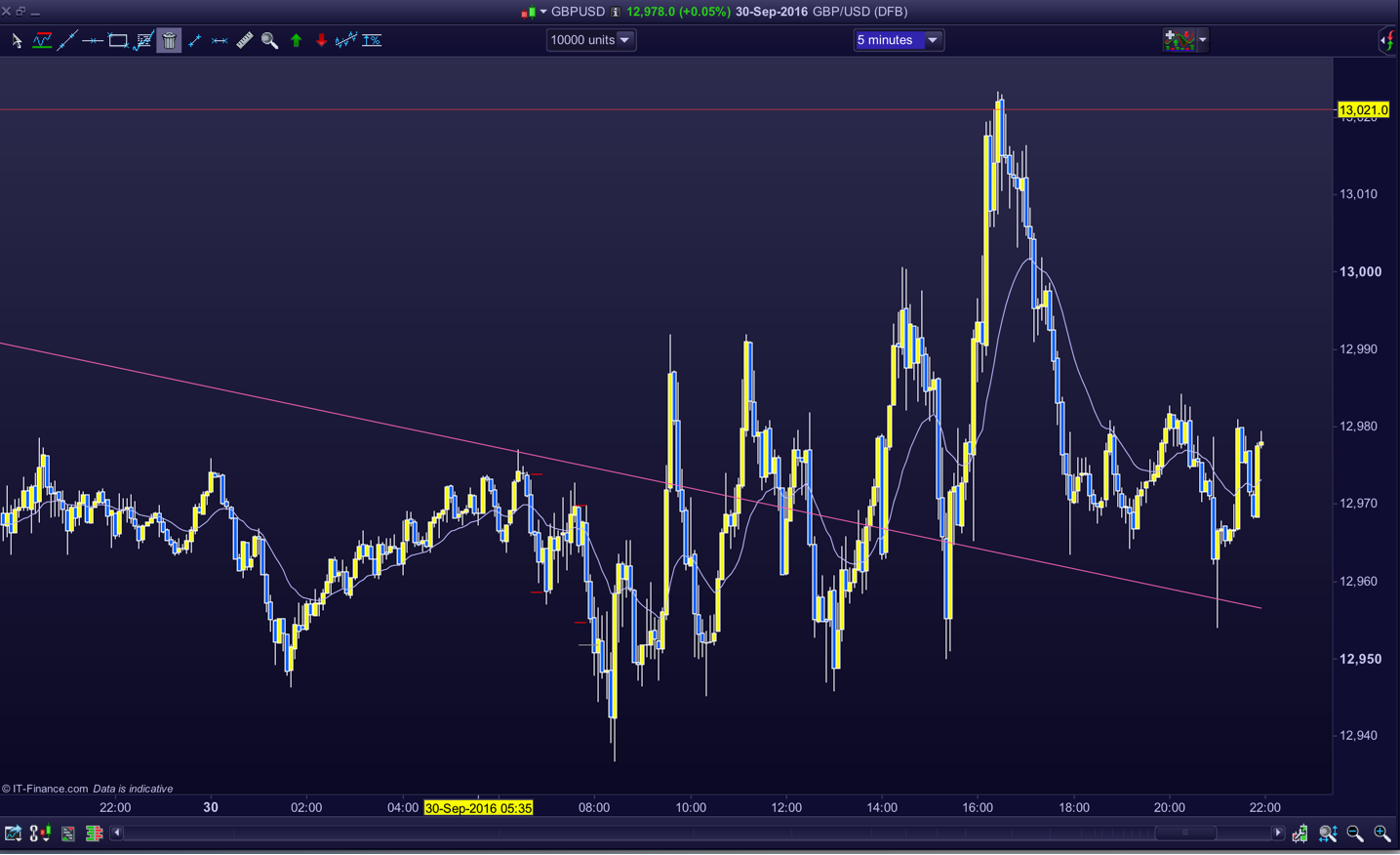
    Below: 1-hour chart, 15-minute chart and 5-minute chart. Each chart is of the GBP/USD pairing and for the same current time. You will notice the purplish line through the middle of each chart which is a ‘value’ line. (or linear regression). Price tries to get back to value. However, value depends on the criteria taken into consideration. The trader trading the 5-minute chart is looking for a different value to say – the trader trading a daily chart. They contradict.

    And it is a traders skill to determine which timeframe they wish to trade and which higher value line may have an influence over them for the timeframe they have chosen.

    snip20161001_7

    snip20161001_8

    snip20161001_9

  • Keep it simple and adapt

    We are up 30% since the start and 21% so far this year.

    snip20160924_2

    Over my holidays I read all eight trading books by Laurentiu Damir. Seven of which are short e-books written about four years ago. He teaches simple, conservative trades. His more recent book ‘Price Action Breakdown’ provides a good trading concept.

    Laurentiu recommends the higher timeframe charts – such as 4-hour or daily charts. This, as he explains, is because of the effect that multiple news events throughout most days has on the lower (such as 5 minutes) time frame charts.

    Laurentiu teaches reading a chart that is a time frame appropriately above your price action chart. For example, He would take the ‘bigger picture’ from the daily chart but use the 4-hour chart for price action set-ups.

    We use (and reading between the lines I think Laurentiu does too because trading is what he does) the 1-hour chart for market cycle and the 5-minute chart for our price action – and we keep a good eye on the news events that can affect us.

    As Laurentiu explains: the thing with trading is that all of this is a guide. Flexibility based around a solid concept is key. It may be the 1-hour chart but on the day it may be the 30-minute chart. Price action may be 5-minutes but again this may be from the 15-minute or even the 3-minute chart. It’s whatever fits.

    We cannot trade by numbers and be successful, we have to know and understand a lot and, of course, practise a lot – then keep it simple and adapt.


  • Don’t add anything until it’s been practised, briefed and you know it works

    Watched a BBC 2 recording of Skies above Britain 3/5 yesterday. Featured an aviator I knew from my RAF days who now flies weekends as part of a “Wildcat” Pitt Special duo public display team.

    He has a couple of decades of RAF fast jet experience behind him, and looks more like the present day Martin Shaw with his silver hair than when I knew him; but the Wildcat clarity of purpose and professionalism was clear when compared to a few of the other aviators that featured.

    At a stretch, there is a cross over from this to trading. The Wildcat’s preparation, maneuvers and sequence of execution were clear, defined and practised; they never, it seemed, added anything that had not been properly considered beforehand.

    In trading our fund, we are adding profit now week after week. That, I feel, is because we are applying a similar discipline to that of the Wildcat display team. We don’t add anything in until it’s been practised, briefed and we know it works.

    Next blog 24th September, see you then.

  • The retail traders advantage

    As with many areas, the financial market is not as active during much of the month of August. Nevertheless, for those trading, good opportunities still present themselves.

    We traded fewer times this week. Trading opportunities and trading time being the reasons. However, it was a good week. Out of the several trades we managed a couple were break even and the remainder were profitable adding nicely to our Slow Trader fund.

    As I explained previously, this coming week will see us taking few (if any) trades. Trading, however, is like flying in the sense that we must remain current. Therefore, finding time for a few hours of trading will be beneficial. Importantly, any trading must be without distraction.

    On return to full-time trading mid September, and after ‘hols’ in Majorca, I’m going to trade from home. Most retail traders trade from home. That’s the advantage of being a retail trader. It requires a different discipline – with me it’s making sure I don’t over trade.

    This decision to trade from home will save a 50 minute each way commute and allow me more flexibility to be ready for key trading times. Between 6.30am and 8.30am on the opening of the UK market; early afternoon on the opening of the US market; and late afternoon to early evening where good opportunities can also be provided.

    James and I will continue to share trade talk throughout much of the trading day, but now via Skype and a headset.  We’ve traded together, side by side, for so long now that we feel we can communicate trade information (and two heads are better than one) without seeing each others screen.

    When I’m back in the trading chair, and current in the market, we’re ready to move up our usual trading amount a few notches.

  • What we call a ‘controlled trading technique’

    Slow Trader fund up over 10% for the year.

    We’ve moved away from the trade and hold philosophy. A philosophy that ambitiously has the account gaining 30% in a month (sometimes a few days) but worryingly has the ability to go the other way even quicker.

    We’ve moved to what we consider to be a controlled trading technique.  The gains so far with this technique have not been so great as it’s a reflection, clearly, of successful trades and then a reflection of the amount traded.

    Previously we would set a trade and let it ride for days or weeks. That gives the trade good opportunity to profit within a trend. The issue with our new ‘controlled’ trading system is that we only hold a trade for as long as we’re sitting watching the trade.

    However, controlled trading for us wins hands down over the ‘hold and hope’ system.

    What we will do now is increase our amount per trade. We’re confident (and it’s all about confidence) to do this. As we move into October (more of why October next) we will double the amount placed on each trade.

    I’m needed to manage the Hotel for a couple of weeks, as key staff are away, and then I’m away myself thereafter for a couple of weeks in Majorca. That brings us to mid September whereby we’ll start back with a few days of back-testing. We will then have a week of trading at our present risk per trade and to then trade with the more substantial amounts as we move into October.

    This is an exciting (controlled) stage of trading that we are about to embark upon. Thank you for staying aboard.

  • Market cycle

    With my previous styles of trading I had some great years, and the occasional shocker.

    The great years were linked to trending years, that’s where the market consistently moves in one direction.

    However, the market spends about 80% of the time in a trading range. This is where the market bounces up and down, seemingly erratically, between levels.

    A trending strategy, used when the market cycle is in a trading range, does not work.

    The market cycle of trend and trading range is evident in all timeframes.

    Understanding the market cycle, and applying a strategy for the part of the cycle that we are in, is the first key to consistent profitable trading, or more accurately the control of losses.

    Some traders will trade many markets and watch for one to provide the cycle that they prefer. Momentum traders are an example.

    Other traders, like us at present, watch one market (or a few) and have strategies to trade that market no matter what its cycle.

    It does not matter which method is used. What is important is understanding the market cycle and using the appropriate trading strategy.

    That understanding, I have to say from personal experience, is the only time the ‘shocker’ can be eliminated.