Author: Buzz Lightyear

  • Copper, Gold, Silver, Crude Oil and USD/CAD this week

    Copper has had a strong week and finished high. Silver in particular has spiked up. Gold also increased but finished the week more or less even. Crude oil has finished the week reasonably strong. USD/CAD is still some way from turning up and will need careful management.

    Here they are in slightly more detail:

    Snip20160423_2

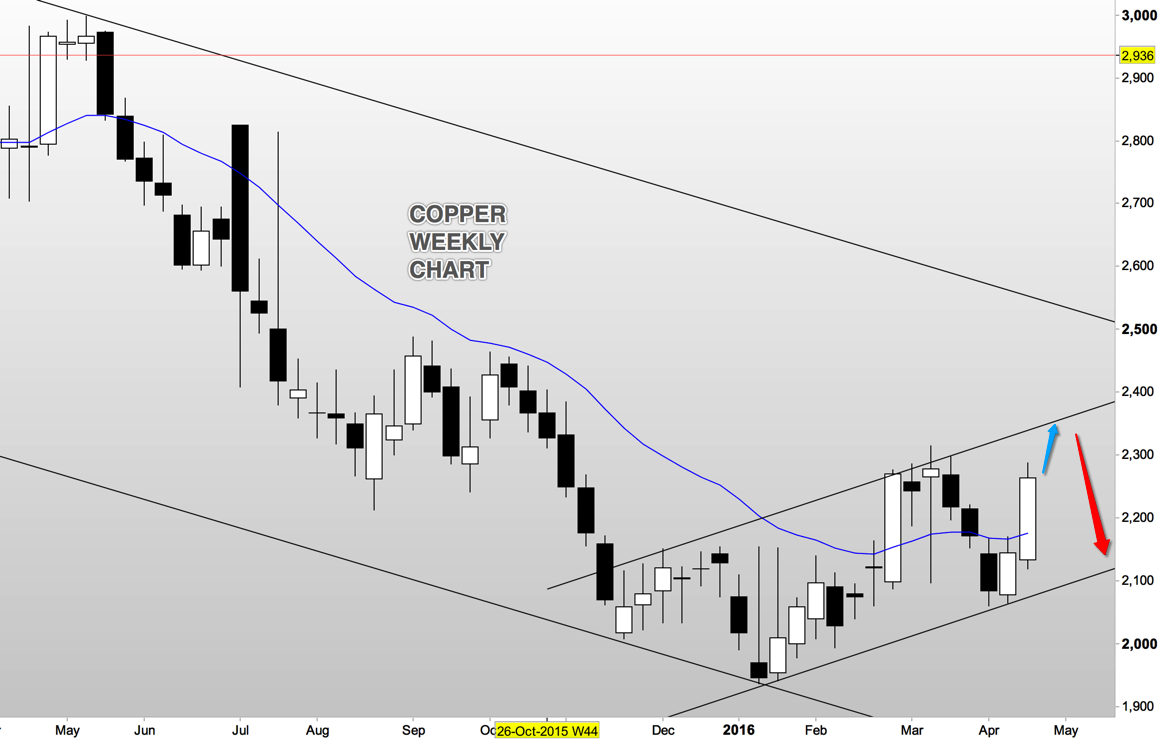
    My premise on Copper has changed. Copper, I feel, is some way from a big turn down. I would consider a small increase in price before a drop to our low 2 weeks previously – and then a possible climb. We will look for the best price to exit our copper trade.

    Snip20160423_4

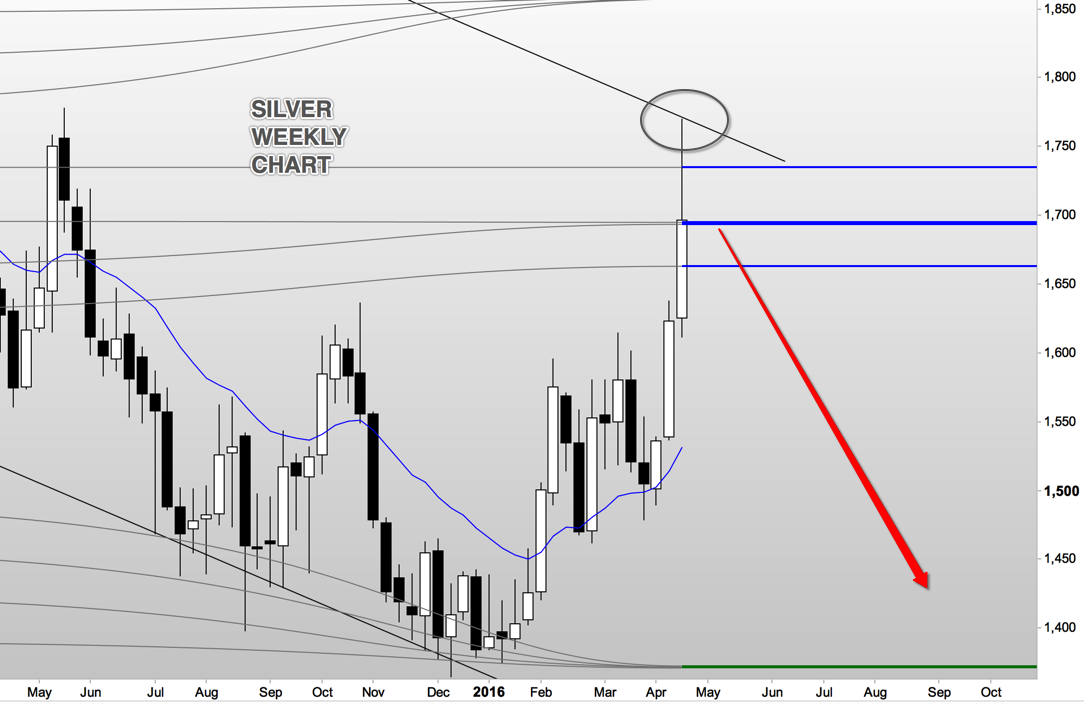
    Silver has had a dramatic couple of weeks. Two strong weekly moves up taking silver from the one year trend line to the, higher, 10-year trend line; indeed, the price of silver bounced exactly off this line – marked with a circle. Always difficult to short when everyone else is long. But that is exactly what we did. Of importance, and supporting our case, the COT for silver shows commercials at an 8-year record with the number of shorts compared to longs. Hold onto your hat!

    Snip20160423_5

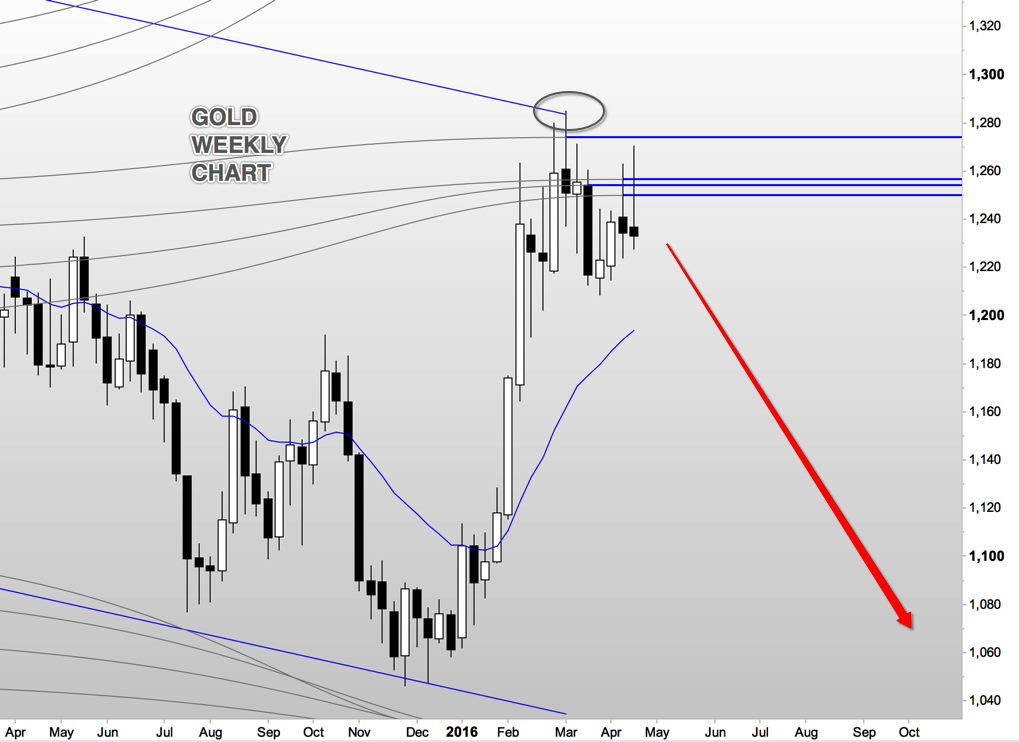
    Gold has not been as dramatic as silver. Up in price all week, gold finished low for the week supporting our prediction of gold progressing further down in price over the coming weeks.

    Snip20160423_6

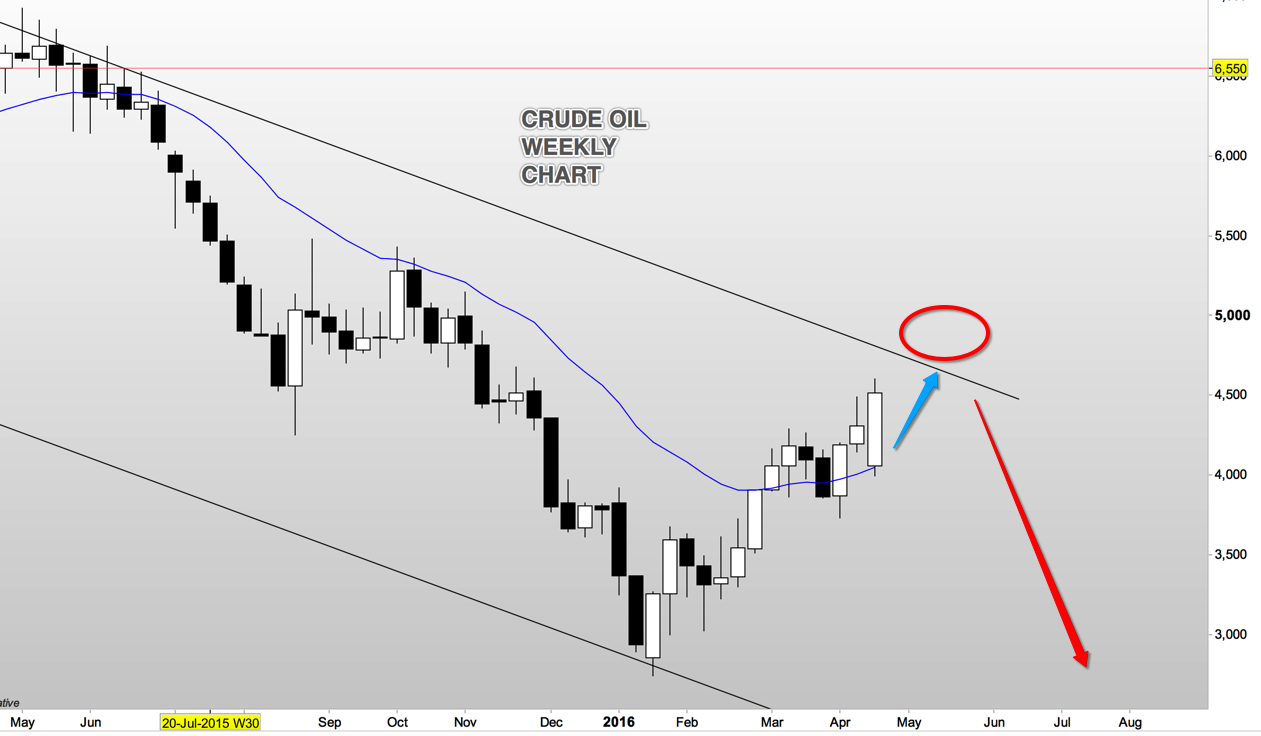
    I’m a supporter of a drop in price again in crude oil, but it may take its time. Price possibly getting to somewhere marked by the red circle. For now, we remain on the sidelines.

    Snip20160423_8

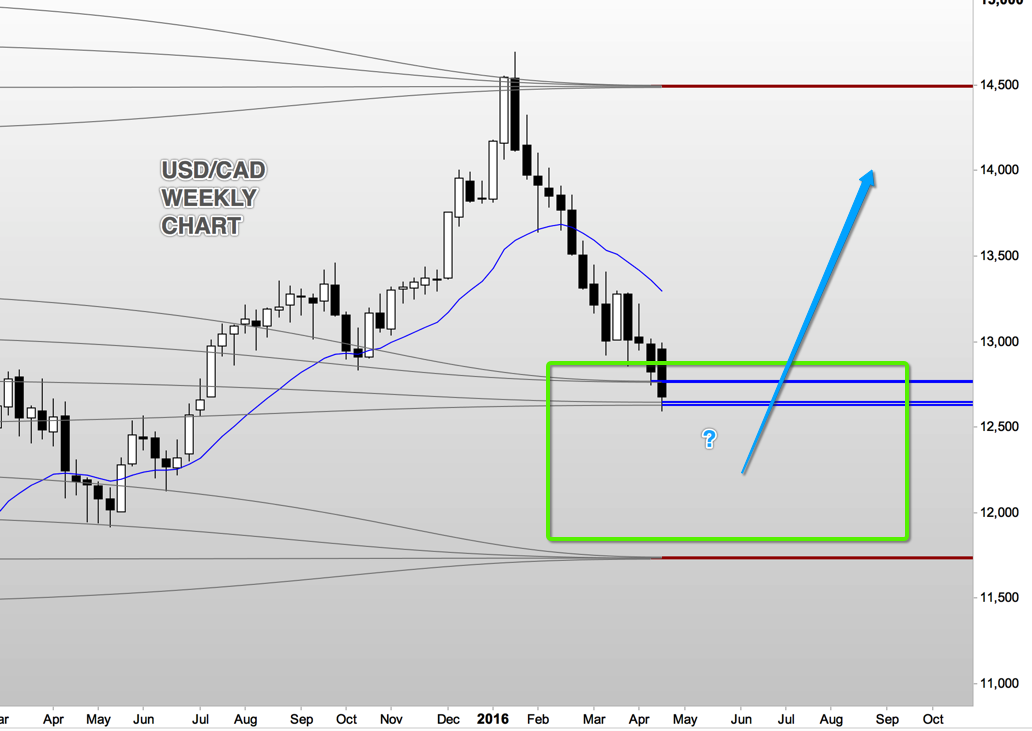
    USD/CAD price mirrors that of crude oil. Therefore, a trade on both is double the risk and a significant consideration. As with crude oil short, it is early days to consider USD/CAD long. A turn somewhere in the green box however is a good probability. But risk reward is excellent when we catch a trade early. Probability is the other major player in the traders equation; moreover, good management of early trades is essential.

  • Achieving excellent trade entries helps alot

    How our trades have progressed this week:

    Snip20160415_3

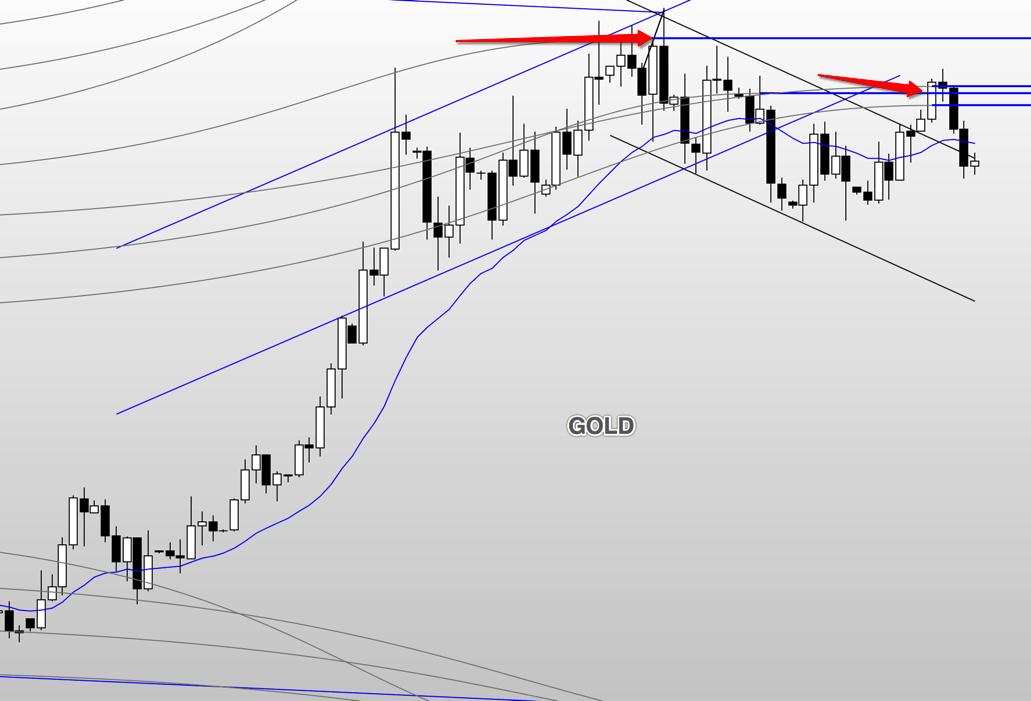
    We are short Gold. We shorted at the red arrows. That is, we expect the price to go down. If Gold goes down in price we gain. It is always difficult to find the best price and often it is simply ‘good is good enough’. But our first take here seemed excellent. Price this week had risen giving us a chance to add to our short. Again, this seems to be at a near top. We now have a lower high (the difference in height between the first and second arrow) and, therefore, the possibility of a continued drop in the price of gold, at least for a few weeks.

    Snip20160415_4

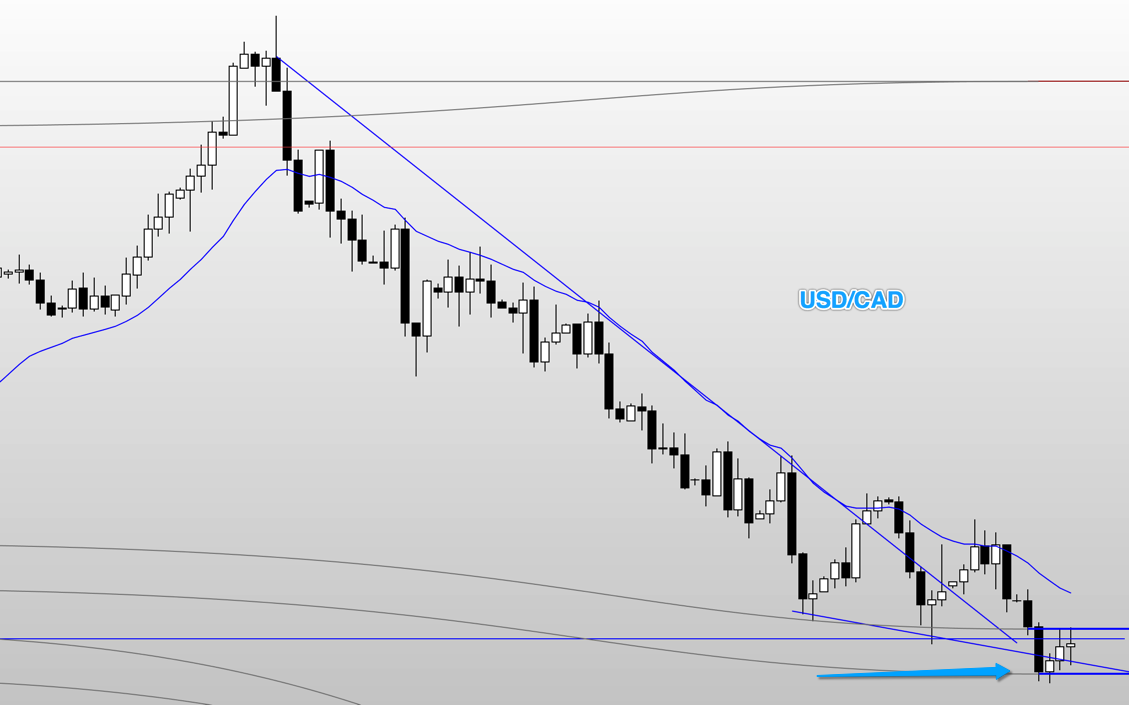
    We went long USD/CAD at the blue arrow. That is we want the price to increase. Our strategy starts with a major trend reversal, and that is often a difficult call. Probability of success is low at this stage, but reward, if it goes our way (up), is worth a trade. Our target is near the top of the screen shot.

    Snip20160415_5

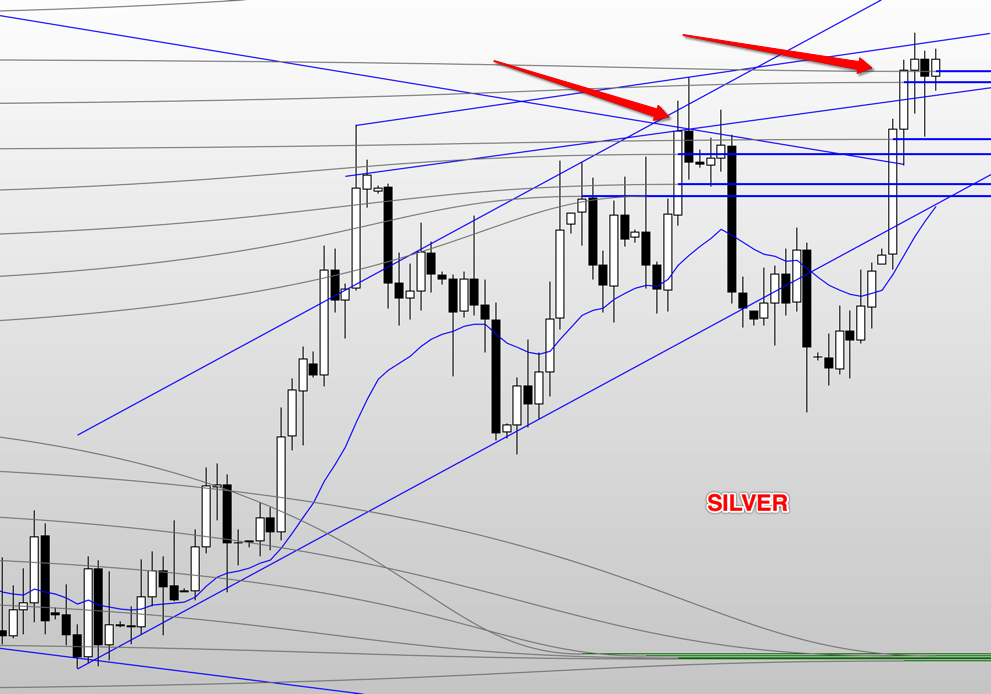
    We first took Silver short at the left red arrow. Price went nicely our way – down. This week, however, has seen a good recovery in price. We entered again, short, at the second red arrow. This is a higher high – often not ideal for a short – but the three pushes up is good context for a trend reversal. From being nicely in the money, to out of the money, is part and parcel of our strategy. We hold until something tells us different, or until we get to, or near, our target. Our target is at the bottom of the screen shot.

    Snip20160415_6

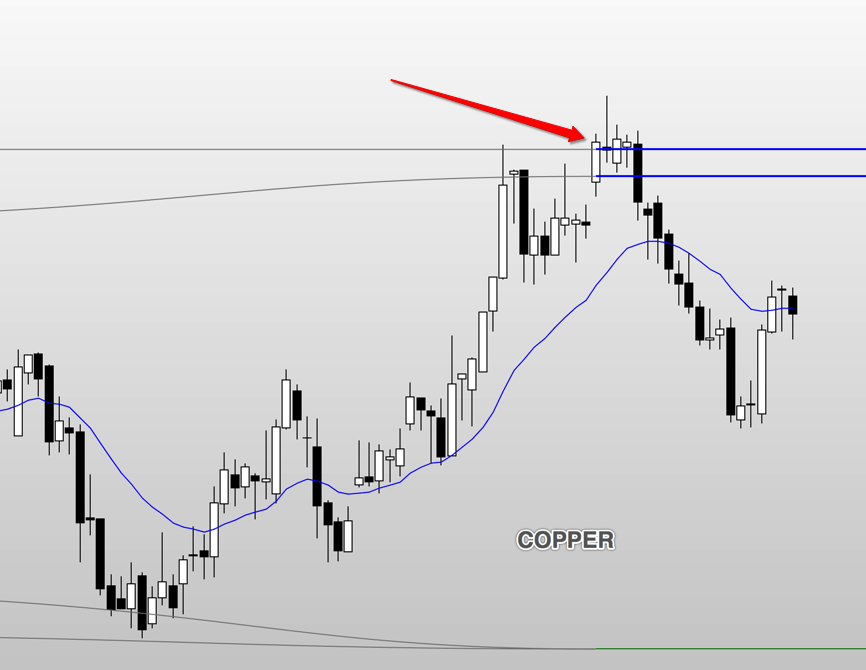
    We shorted Copper at the red arrow position. That is we want the price to go down, and so far, Copper has obliged. We continue to hold until target. The recent retrace in price this week was not sufficient for us to add to our short trade.

  • Trading methods that suit

    A serious trader or investor has to use a method that they understand and that gives them an advantage, an edge – no matter how small.

    That method, or way of trading, has to suit the traders personality. The method could be fast-moving, lower time frame, or slow-moving, higher timeframe. Or a combination of both.

    Emotionally, the method has to suit too. For example, most traders are comfortable trading relatively large positions on slower moving, higher time frame trades such as daily, weekly or monthly charts; however, are less objective with such trades on lower time frame situations such as intraday (day-trading) opportunities.

    Once we sort our emotional tolerance we then need to consider our ability to manage such trades. Do we have the time and the skills necessary to trade lower time frame situations. This is where a trade entry and exit on say a ‘swing’ trade can play out in 10 chart bars or less – which on a 2-minute chart is 20 minutes. The same trade using a daily chart would take some 2 weeks.

    I use three clear trading methods with clear time frames. I feel that in each of the methods I have a small edge, and that is vital. The methods are:

    1. 30-year investing using detailed fundamental analysis of company figures. I’m primarily looking here at finding a company that is selling at half price or less and one that has been consistently excellent for many years (usually 10 years). The company, importantly, needs to be a company that will still be here, and profitable, in 30 years. The calculations took Nick and me over 9-months to develop.
    2. I trade gold, silver, copper, crude oil, treasury bonds and USD/CAD both long and short, and only trade on very specific signals. Each trade is held for several weeks. This is where I mainly trade the Slow Trader fund. The strategy here is sound, tested and profitable.
    3. Intraday trading of any stock, commodity, index or FX that suits – my favourite is GBP/USD. Skilfully, managerially and emotionally intraday trades are the most difficult. Intra day is also immensely time-consuming and takes many years to become consistently profitable.

    You will notice that each method avoids the market crash timeframe of 5 to 15 years. Where most investment and pension portfolios are positioned. Yes, the 30-year method will go through a few crashes during its investment period, but over 30 years the crashes simply provide a ‘dollar-cost-averaging’ opportunity to invest more. The only important crash in the 30-year method that is of concern is the last one. I appreciate that as its 30-years it may not be me making this decision!

  • Our medium term strategy holds good, for now

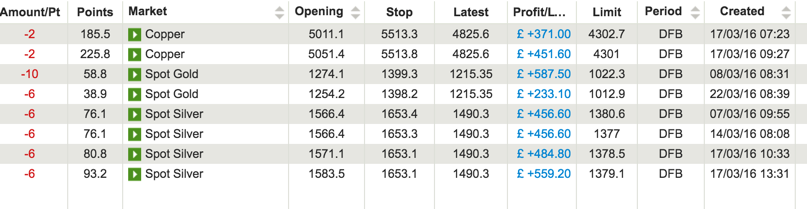
    Here is a snapshot of  our (open) results for the last week. I won’t normally show this detail as it can be misleading when we have a mix of recent and longer term open trades. But as all our trades have similar creation dates, I felt it was okay to include.

    Snip20160401_2

    We have a medium term strategy for these trades. Meaning from 6 to 12 weeks, we are 10 or so days in. Part of the strategy is to open the trade early. If an early trade is not close enough to the extreme (a top or bottom) then we will manage the trade to achieve better entries. Being early is difficult for many as it is nearly always contrary to popular opinion. Also, being early can provide excellent gains only to see those gains retrace to a loss – which is emotionally difficult and the reason why many traders cash-in too soon.

    By early trade, I should mention that we should also not be unreasonably early (it’s never that easy!). Patience is still key. For example, I think, a short in crude oil, currently, is too early. Crude has started to decrease in price this week from a recent up; but to take crude short now is premature. The picture is Similar for long-term treasury bonds that have a potential near term short opportunity.

  • Current short trades in Gold, Silver and Copper.

    We have open trades short with Gold, Silver and Copper.

    Our strategy here shows promise. The aggregate of these trades has seen us in the money by some £1,000. Soon followed by us being out of the money by about £900. The latter was a consequence of the last FOMC meeting and interest rate announcements.

    Higher prices, however, allowed us to add to our short trades more favourably and, later, as the price dropped again, to break-even on a our lower priced, original, trades.

    Our open trades (taken from eleven days ago) currently stand at over £3,000 in profit reasonably distributed between each of the commodities. Early days, however,  as we hold through (as long as our premise remains the same) to somewhere near our targets.

    The following is an update of our trade watch list for Slow Trader fund:

    No change in – Gold, Silver, Copper and Crude Oil.

    In preference to the S&P, I’ve included the 20+ Treasury Bond ETF.

    Moreover, in preference to the currency EUR/USD we will take GBP/USD.

  • Slow Trader Trades

    In our fund (Slow Trader) we recently invested short – that is to say, we want the price to go down – in Gold, Silver and Copper. (This strategy is a one to three-month trade, but varies slightly for each commodity). 

    Fund exposure is currently £70,738 (we are leveraged)

    Silver stop risk is £1,953 – between 4 trades.

    Silver target is £4,633 – between 4 trades.

    Gold stop risk is £1,252 – on one trade. (A limit order is in place to short more if gold price rises).

    Gold target £2,518 – on one trade.

    Copper stop risk is £1,929 – between 2 trades.

    Copper target £2,918 – between 2 trades.

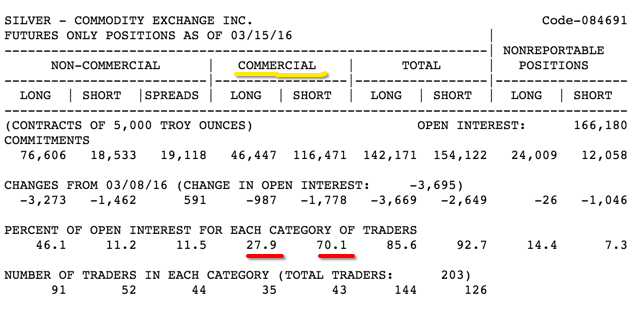
    We use the Commitments of Traders (COT) report to give us a small edge. The COT is, other than cyclical analysis, probably the only indicator that is not price based. And, therefore, an independent view-point. We combine the COT with our own technical analysis of each commodity.

    Here is an example of the COT released last night. The same information is available for each of our commodities. My attention is on what Commercial is doing.

    Snip20160319_6

    The importance of getting the technical analysis right is due to the COT being in lag by nearly 2-weeks. Which, based on our strategy, is between a half and a quarter of the expected trade duration. In other words, we need to use a good amount of interpretation (and rely on technical analysis) for a significant chunk of the trade time.

    More specifically, COT figures are from each Tuesday but are not available until late evening (UK time) on the following Friday (i.e. 10 days). As the markets are closed till Sunday night (UK time) it puts the COT information nearly 2 weeks old. But even with that considered it’s still the best, broad, indicative information we have – other than our own technical analysis.

  • Slow Trader Fund Update

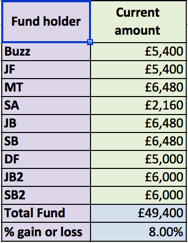
    Slow Trader is now closed to any new funds until next year. Here are the amounts:

    Snip20160305_1

    For the sake of simplicity, percentage gain or loss refers to original funded amounts.

    We are now ready for 2016. Our attention this year is on gold, silver, copper and crude oil. We will also trade from time-to-time the SPDR S&P 500 ETF fund (all sessions) and currency: namely the Euro against the US dollar. We may trade the occasional stock.

    We have an excellent short signal developing for silver. That is, we consider silver will drop again in price. Signals for each of our commodities happen no more than a couple of times a year. Therefore, when we get them we need to take full advantage.

    The S&P and EUR/USD are not cyclical like the commodities – therefore we will trade these via lower time frame charts (one or four-hour chart and, occasionally, as low as the 15 minute chart).

    Commodities are traded through daily charts and in conjunction with the COT report.

    For those building funds for grand kids, or simply looking to buy the Aston Martin DB11 – then here we go!

  • A brief overview of how we did last year.

    We finished the year with only a 8% gain, but that does not tell the whole story. You will recall that 12 months ago I was using a daily trading system that relied heavily on several indicators. I won’t go into detail as to which indicators because it is now irrelevant.

    I also employed a mix of fundamentals, that is finding great stocks that are undervalued and trading them long in accordance with my indicators. This worked very well over several previous years, primarily because the market was raising steadily.

    Around about this time last year I got it wrong. The market had a relatively sharp 15% fall closely followed soon after by a similar rise. The fund at the time was heavily committed and my indicators lagged the fall and rise by just the right amount for me to be invested in the wrong direction on both occasions. The fund was nearly halved.

    It may be odd to learn that I now consider this to be a blessing! This loss forced me to make the jump from indicator and fundamental mix reliance to a system I had been noticing for some time. Price action trading. Indicators are all well and good in a trending market but they provide conflicting messages when the market transitions.

    On the other hand, Price action, or bar by bar trading, is immediate. Of course the down side is that price action takes a lot of work to master. We moved over to price action trading and tentatively built the fund back up by the end of the year to a small profit. In other words, if we accept the loss, and the new fund value at the time of the loss, we actually doubled the fund. I know as a fund contributor that does not sit well but it was a goal and a task that I had to face over the last 9 months.

    Coming into the new year I have taken stock and not traded the fund to any extent. The fund amount remains unchanged at 8% up. This has given me the time for several weeks of back testing, which I hope I have kept you informed about, and the introduction of a new charting system. New software and charts always take some time to master but the change we have made, as the charts are now linked directly to our broker, is a major improvement.

    I was planning to be trading the fund by now but have been delayed a week or two. A trip away and a tummy bug on return didn’t help.

    Finally, this is not a fund that you will find easily elsewhere. It is an aggressive fund but, importantly, where all trades are reasonable trades. That is, all trades have a reasonable measure of risk, reward and probability. I could trade the fund tomorrow against a 60% probability trade to double the entire fund. That, however, would be a long way short of reasonable.

    The goal of the fund is to make money, and make money at a rate that I’m able to do, progressively, and with emotional detachment. (I’ll explain this more fully in a future blog) That emotional detachment (my personal risk aversion) will build with experience.

    We have some new money being introduced to the fund from a current contributor. This money will dovetail into the fund at the present fund level and will have no effect on your profits. The fund remains flexible in the sense that moneys can be withdrawn partially or fully anytime within reasonable trading timeframes. However, as this would be a distraction I would be grateful for any notice that’s possible. I make no charge on the fund, however, once I have doubled your original investment amount I may reconsider this.

    Thank you for your trust and patience. Here’s to a good trading year.

  • Do fundamental and technical analysis mix?

    Of my fifteen years of trading the first ten years were spent on reading fundamentals. I don’t regret this one bit. Fundamentals are what drive the price of a stock over the longer period; and I do mean longer period. Fundamentals to me are great if we’re talking more than 20 years, and I prefer 30 years plus.

    However, for clarity over the near term (presumably from my thought above, near term is anything less than 20 years) technical traders hold the key. That is a bold statement as every magazine or commercial pundit tells us its fundamentals all the way.

    Can we combine both technical and fundamental? Yes, of course, and some traders report to be doing this successfully. To some degree, I do this with the Slow Trader Fund when I trade from daily charts. In this case I will take commodity trades when the COT report is in agreement with the trade. However, the fundamentals of a stock do not mix well with technical analysis over the shorter period. One simply confuses the other, and that is never a good basis for a successful trade.

  • To master the game takes time

    IBM’s computer “DeepBlue” has been beating the very best chess players for some time. Now Google’s computer “DeepMind” is beating professional players in the ancient Chinese game of Go.

    We have likened chess to trading before. In his book “think, fast and slow” Daniel Kahneman explains how chess is like learning a language, but more so. There are a good deal more chess moves than there are letters in any alphabet.

    Trading, and the number of trading signals, is another level again. Also institutional traders can afford the very best computers, and more importantly, the very best programmers of algorithms. The big difference, however, is that, unlike Chess or Go, in trading we are not competing against the computers, but with them. With them we win, against them, we lose. We need to think in terms of algorithms, we need to be very precise. That involves our system two (logical) thinking not our system one (instinctive) thinking.

    Kahneman explains that it takes about 6 – 10 years, 5 hours a day amounting to about 10,000 hours, to become a master chess player. We know that this is true for other skills: a junior doctor about 7 years, a tennis player takes a similar time (the 17 year old that wins Wimbledon started at age 7, or earlier) and as a fighter pilot I considered myself no more than competent after 7 years.

    Trading has three distinct areas that need to be mastered: trade knowledge (is price to go up or down and over what time frame), the management of a trade and the emotion of trading. Each of which need to be mastered equally.

  • Think like a trader

    A Trader, unlike an investor, will calculate very clearly how much they are prepared to lose; and that has to be an amount that does not alter a traders objectivity.

    All trades are somewhere between a 40% to 60% probability. There is no certainty in trading.

    However, the lower probability trades need at least double the reward to risk. In such a trade if our trade amount is say £200 we would expect to achieve a reward of at least £400. If not, we don’t take the trade. In such trades, however, a reward many times the risk is possible. If managed consistently well such trades can be profitable with only 30% of trades being winners.

    In the higher 60% probability trades we need a reward at least one times the risk. Therefore, if our trade amount is again £200 then we would need to achieve at least a £200 reward. Even if managed well, such trades still require better than a 70% success rate to be profitable.

    Achieving a profitable traders equation is vital. And determining what is a low or high probability trade, and therefore determining the reward required, is a necessary skill.

    How do I decide the trade amount? I simply use a 44th of the fund amount and trade half that amount on intraday chart trades and the full amount on daily chart trades. I would consider 3 to 9 trades a day on intraday charts, and 1 to 3 trades a week on daily charts, to be an average.

    I have traded the last month with a low risk amount of £20 per trade. This I find is a good amount to prove back tested strategies and still remain objective. The results are exciting and we are ready now for a gradual increase again to full amount trades.

  • Trading is logical not intuitive

    An essential lesson to learn, as a trader, is not to use instinct.

    Beginners (traders and investors) rely almost entirely on intuition. We buy stocks based on the image we have of a company, or we take a trade based on a chart pattern; a pattern that has poor context.

    In his book, “Think Fast and Slow”, by Nobel Prize-winner Daniel Kahneman, he explains the two systems that drive our way of thinking, system one and system two. System one being fast and intuitive and system two being lazy, slow and logical.

    The intuitive trader, the beginner, will interpret trades from patterns that merely feel right –  but they are patterns not based on contextual logic and not based on system two thinking. A profitable trader, however, will look at a trade through system two, a trade based on “good old” slow logic.

    To overcome system one we need to force ourselves to employ lazy system two.

  • New Money

    New money: Some of you (investors in the slow trader fund) have asked about adding to your fund.

    This is a good time if you wish to do so, and before the end of next month. I’m away for a week soon so anticipate that it will be the end of February before our trades are again proportional to the fund amount.

    Additional funds will have no effect on the investments of those not adding in. Our amount risked per trade is a simple (moving) percentage of the total fund. Therefore your percentage gain on a trade is much the same regardless of the size of the fund. Moreover, combining our funds allows us to trade more fully than we would otherwise be able to do with the amounts we have invested individually in the fund.

    Costs: The only measurable cost to us is a small interest charge by the broker for each consecutive day that we hold a trade. There are no charges from me.

    What to do with your medium term stocks: consider holding for a while. Stocks have taken a battering recently, particularly the banks, but a recovery over the next few weeks is a reasonable probability. Whether we see a new high – or, just as probable, a retrace in a few months to a lower low – is too early to tell.

    New software: I explained in a previous blog my need to backtest, that is now coupled with a change of charting software that has taken a few weeks to sort. The new software provides a greater degree of trade placement accuracy and is, we now know, a good improvement on our previous system.

  • Is the medium-term market prediction a coin toss?

    There are any number of ways to tell us what the market is going to do next.

    1. We could consider market cycles. This is a big favourite of Larry Williams. And within reasonable tolerances he does seem to get it right.
    2. We could use fundamentals. Which is looking at the books to determine a companies economic well-being.
    3. We could use technical analysis. Which doesn’t care one bit about the ‘value’ of a company but uses charts to show predictable patterns.
    4. We could listen to the, more often than not, short-term media comments, and panic!

    We all favour one method or another. I’ve tried all of them, but I do stay well away these days from number 4.

    The current probability of the market going significantly up or down, over the medium term, is 50/50. That is the same as betting on a coin toss. I wouldn’t do it.

    (….okay, I do take trades that have no better than a 40/60 probability of success. But that is because the reward to risk is so good. And if we consistently play the 40/60 rules correctly, and let them run, when we catch one…. voilà.)

    As a trading style, I favour the very short-term stuff, it’s based on technical analysis, and it is how I manage the slow trader fund. I also favour the very long stuff (30-years plus) based primarily on fundamentals with the buy timing helped by technical analysis.

    Everything in between, I leave to the coin tosses.

  • Monthly Slow Trader Fund update – 13th January 2016

    The fund remains up by 8%.

    Snip20160113_1

    The last month has been a time for what can be called ‘backtesting’. In other words, development of trading strategies by using historical charts. As in any practise, most benefit is gained when tests are as realistic as possible. And I would say that in many ways, backtesting is more exhausting because the equivalent of several days of trading can be done in just a few hours. But backtesting is an essential part of a traders life.

    For the fund, live trading starts again this Monday. Its starts slowly, that is with a small risk and builds as proficiency builds. The build-up is subjective but I would expect to go to full fund entries within 2 to 3 weeks.

    My aim, is to achieve a monthly gain of 5% to 10% going forward. I use this simply as a guide to help me balance risk. No trading day is the same but it is reasonable to expect to find between 5 and 15 good trades per day. My maximum risk (for our fund size) starts out small but builds to about £400 maximum risk per trade. More often than not I will take half risk (£200) on most trades.

    I provide this information so you can see how a traders day is a constant consideration of gaining an edge through good chart reading and awareness of risk, reward and probability. And as this gains in momentum, day after day, the 5% to 10% monthly gain is not ambitious but very achievable.

    Taking a month to backtest can be frustrating to (you) the investor. It is certainly a luxury that most fund managers do not have. However, most funds lost more than 10% last month….  just a thought.