Tag: trading range

  • Trading range morning

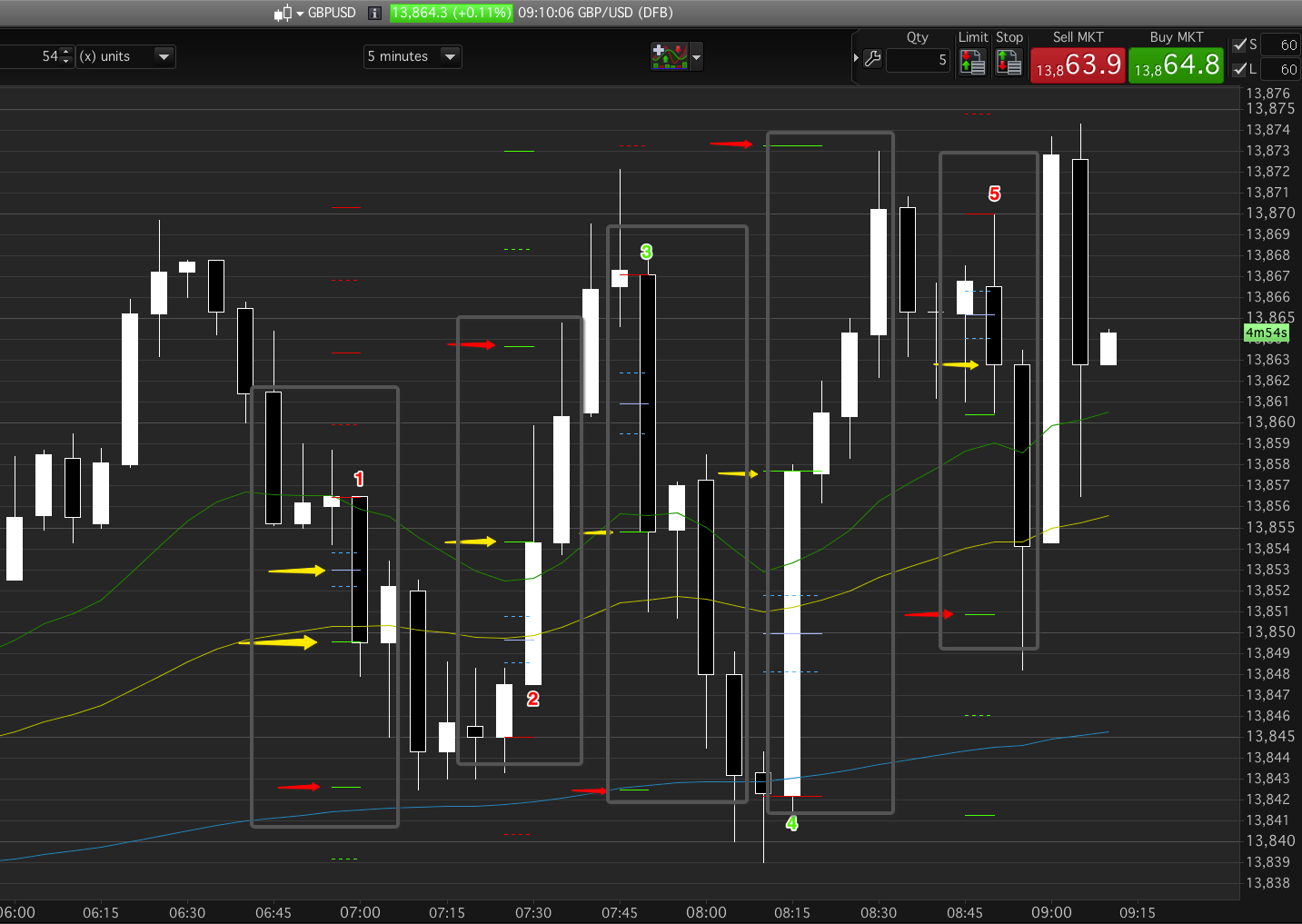
    The example below provides a 30 pip trading range (TR) before significant news at 9.30am. The close of bar 1 gives us our first opportunity short. At this stage, we are not sure of a trend or TR therefore as there is doubt we take the scalp. On reaching the scalp target, we have three pushes down and hence probably a reversal to establish the TR. The fourth entry at the close of bar 4 did not reach the target. We exited on-market in this instance at the close of the third bull bar after entry. Bar 5 short was interesting. An excellent signal and as the bar was small, we took the measurement, unusually, from top to bottom including the wick. However, the institutions also liked this signal as the price, although showing a small PB, raced down and we did not get our entry.

    Yellow arrows indicate entries and red arrows exits.

  • Market cycle

    With my previous styles of trading I had some great years, and the occasional shocker.

    The great years were linked to trending years, that’s where the market consistently moves in one direction.

    However, the market spends about 80% of the time in a trading range. This is where the market bounces up and down, seemingly erratically, between levels.

    A trending strategy, used when the market cycle is in a trading range, does not work.

    The market cycle of trend and trading range is evident in all timeframes.

    Understanding the market cycle, and applying a strategy for the part of the cycle that we are in, is the first key to consistent profitable trading, or more accurately the control of losses.

    Some traders will trade many markets and watch for one to provide the cycle that they prefer. Momentum traders are an example.

    Other traders, like us at present, watch one market (or a few) and have strategies to trade that market no matter what its cycle.

    It does not matter which method is used. What is important is understanding the market cycle and using the appropriate trading strategy.

    That understanding, I have to say from personal experience, is the only time the ‘shocker’ can be eliminated.

  • Retail traders stay out!

    What a week….and, no, we didn’t make a killing on the pound but nor did we lose anything.

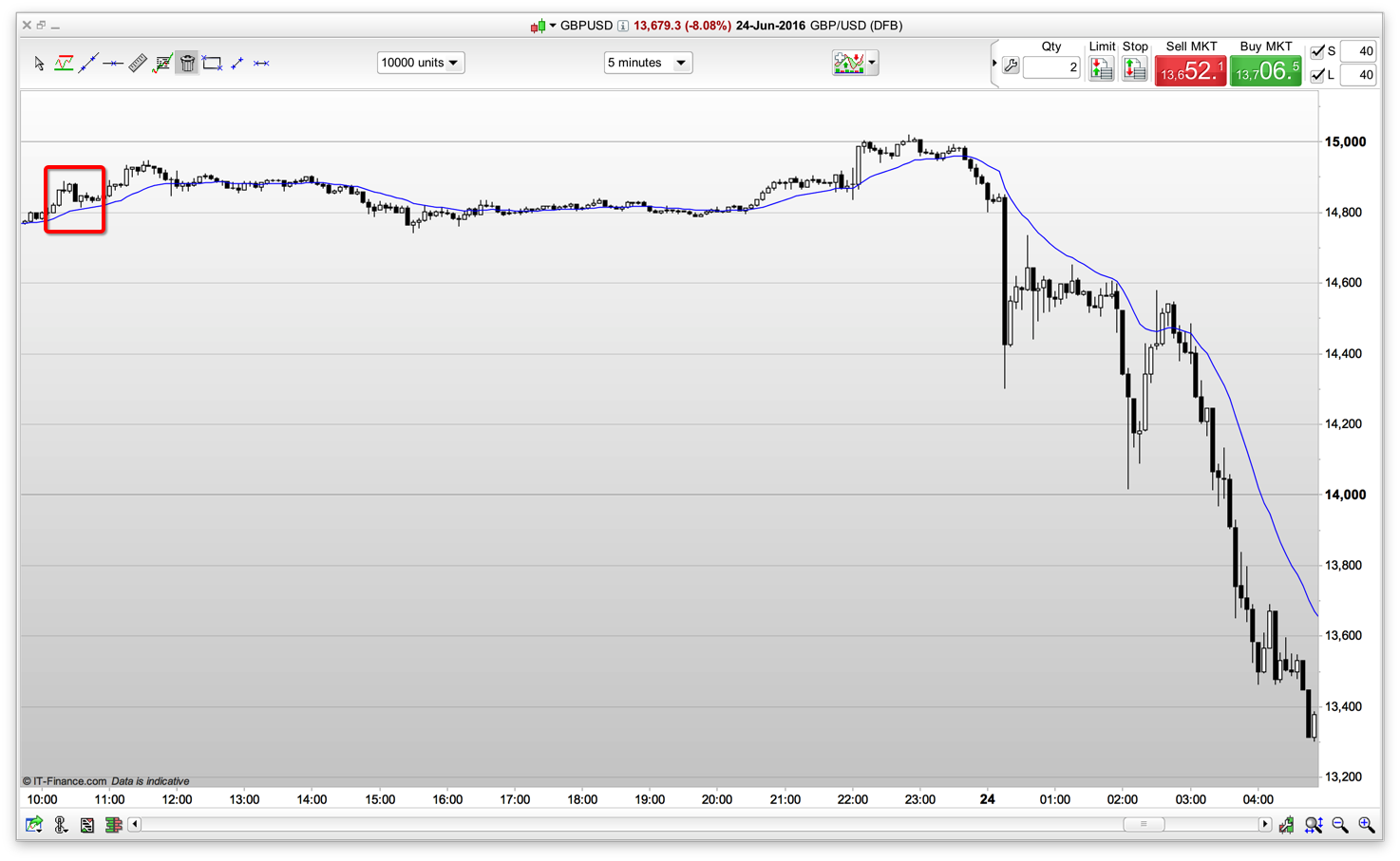
    Retail traders (people who trade their own money) were strongly advised – and correctly so – not to trade the early morning of the vote results. Here’s why:
    Snip20160625_1

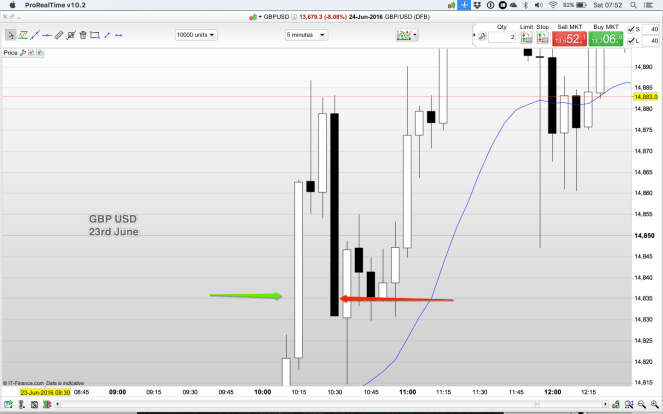
    Firstly, a trade we took late morning of the day before the vote results, the 23rd.

    When you see a chart after the event you wonder how you didn’t realise that it wasn’t going to go up. We went short (to say the price was going to go down) at the green arrow. One of our strategies is to short at the top of a ‘trading range’. The green arrow was the top of a wide trading range.

    The price, however, broke out long. Our stop, as per our strategy, was equal to the height of the trading range which was over 65 pips. The break-out long went over 50 pips before it pulled back, very suddenly, to give us a break-even out.

    I mention this to put things into perspective. Usually, in GBP USD, our stops are between 20 and 40 pips away. Even early on the 23rd we were up at over a 60 pip stop. Not only that, margins change so that the leverage that you get to know is now different which means if you get it wrong your whole trade can be cashed out very quickly by your broker. Spreads (we mentioned these a couple of blogs back) go through the roof and, most importantly, we have the great probability of slippage where, simply put, you can ‘lose your shirt’.

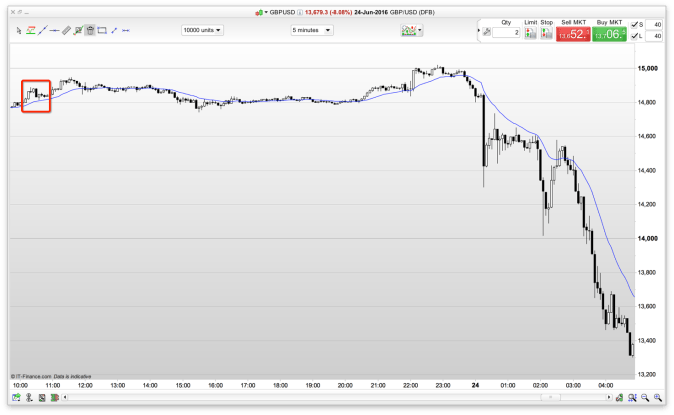
    We do not trade the monthly FOMC report because price can bounce 150 pips one way and, often, immediately reverse over 150 pips the other way. The early hours of the 24th the market moved over 1,700 pips with over 500 pips of pull back.

    Trading is a ‘zero-sum game’ which means that one person’s gain is another person’s loss. Institutions lost many billions the other night and retail traders trading could have blown out their accounts and more. If you use a retail trader that made money through the big move down then get rid of them as they are gambling and next time might not be so pretty.

    In the chart below, to put things into context, the red box was the time of the large bars shown in the chart above.
    Snip20160625_2

    Gold

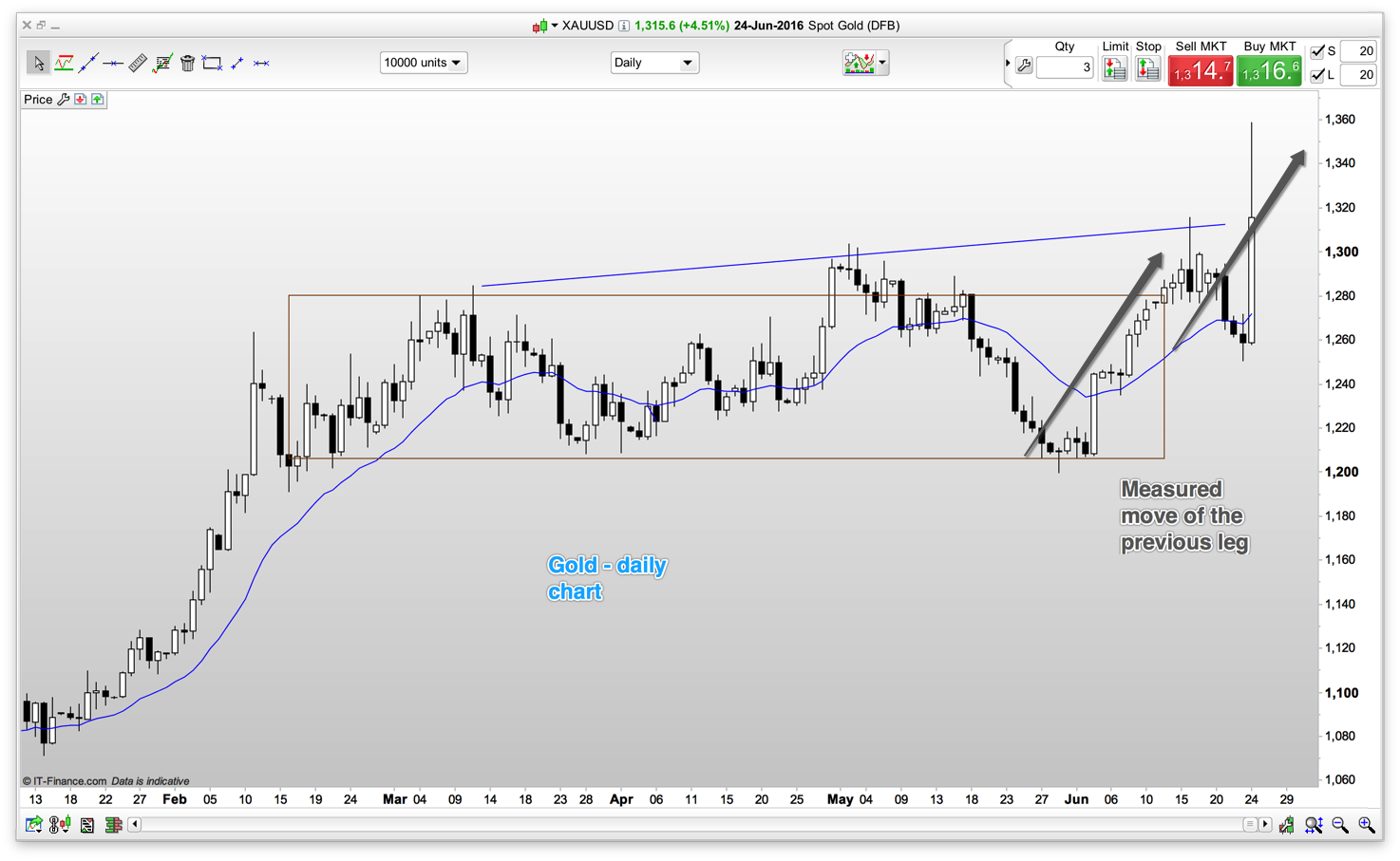
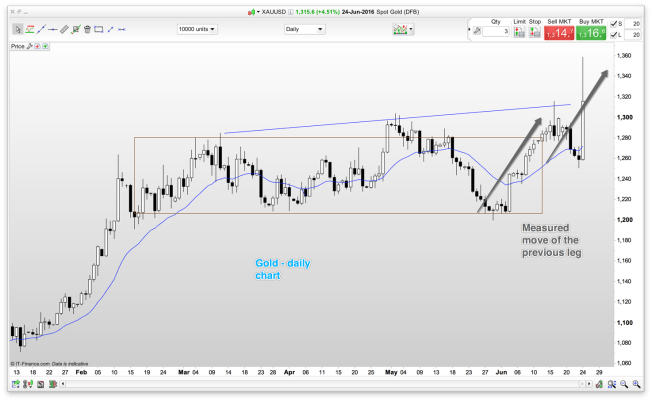
    For the next few weeks, due to the expansion of our family business coming on-line, I’m only trading between 8am and 1pm. This allows me time to trade the currency pairing GBP USD only. For the time being I’m monitoring the commodities. Gold moved up to an exact measured move of the previous leg. Something James had spotted – and I’d relayed the possibility of, a few blogs back – and thus providing a great short opportunity. Over the next few days we may get a second (and therefore more secure) opportunity to short gold. But I need more evidence that the price will not go up further.
    Snip20160625_3


  • Weekly Diary – Slow Trader Fund 14th November 2015

    As the week progressed the trading opportunities in the 5-minute chart EUR USD went from frustration to good to ideal.

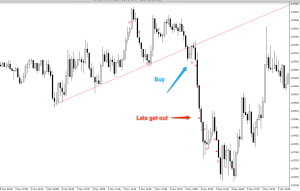
    As the week started good ‘scalp’ opportunities were taken within a tight trading range (shown by the thin red line below). However, on a final-buy (shown by the blue arrow below) I got it wrong; not with the trade, as this happens and I’m happy to take a small loss, but wrong because I left it too late to exit. This took away all that days good work, and a bit more. Frustration.

    Snip20151113_18

    Trading is such that I need to be 100%, or, sensibly, I don’t trade. The edge is too small to do otherwise.

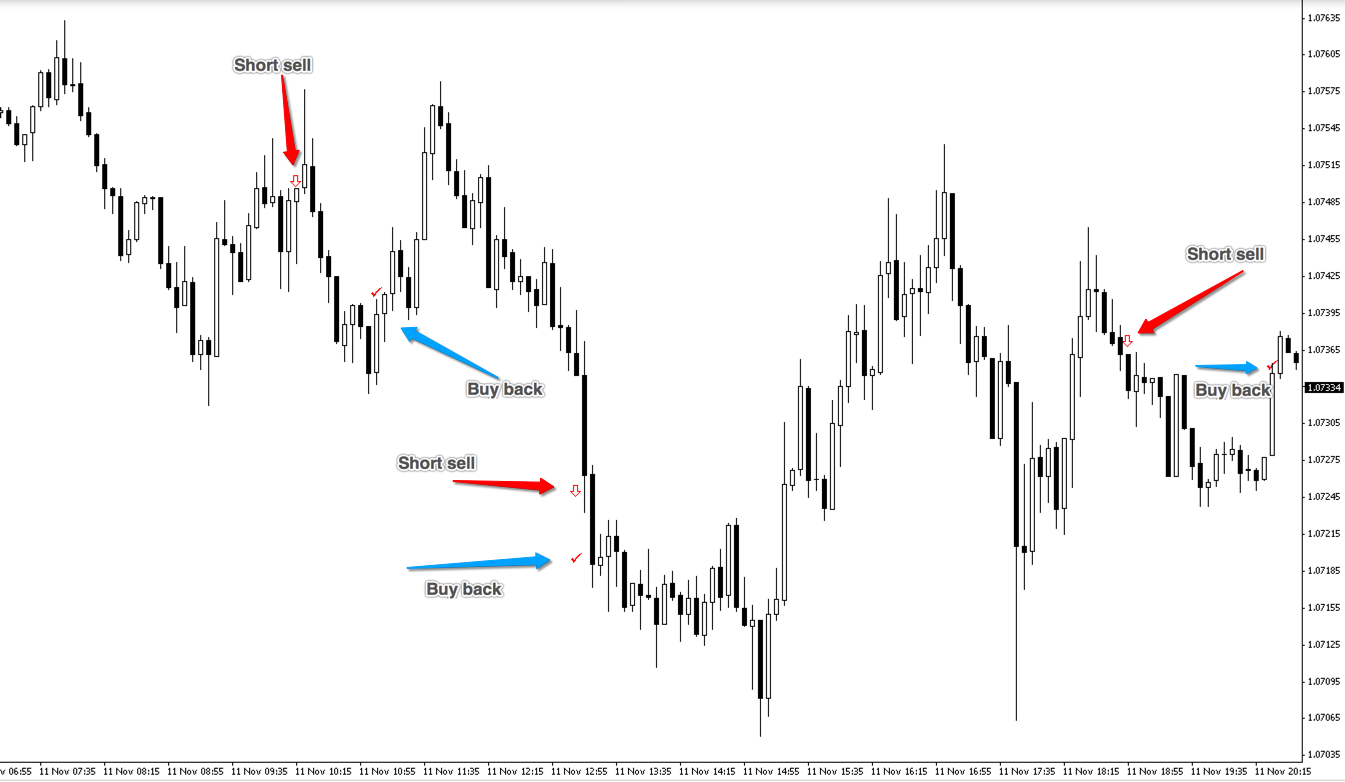
    The middle of the week, shown below, was cautious but good with a few successful short sells and no losses: a short-sell is a trade that profits from the market price going down.

    Snip20151113_19

    The ideal trade came with a ‘swing’ trade at the end of the week.

    Snip20151113_20

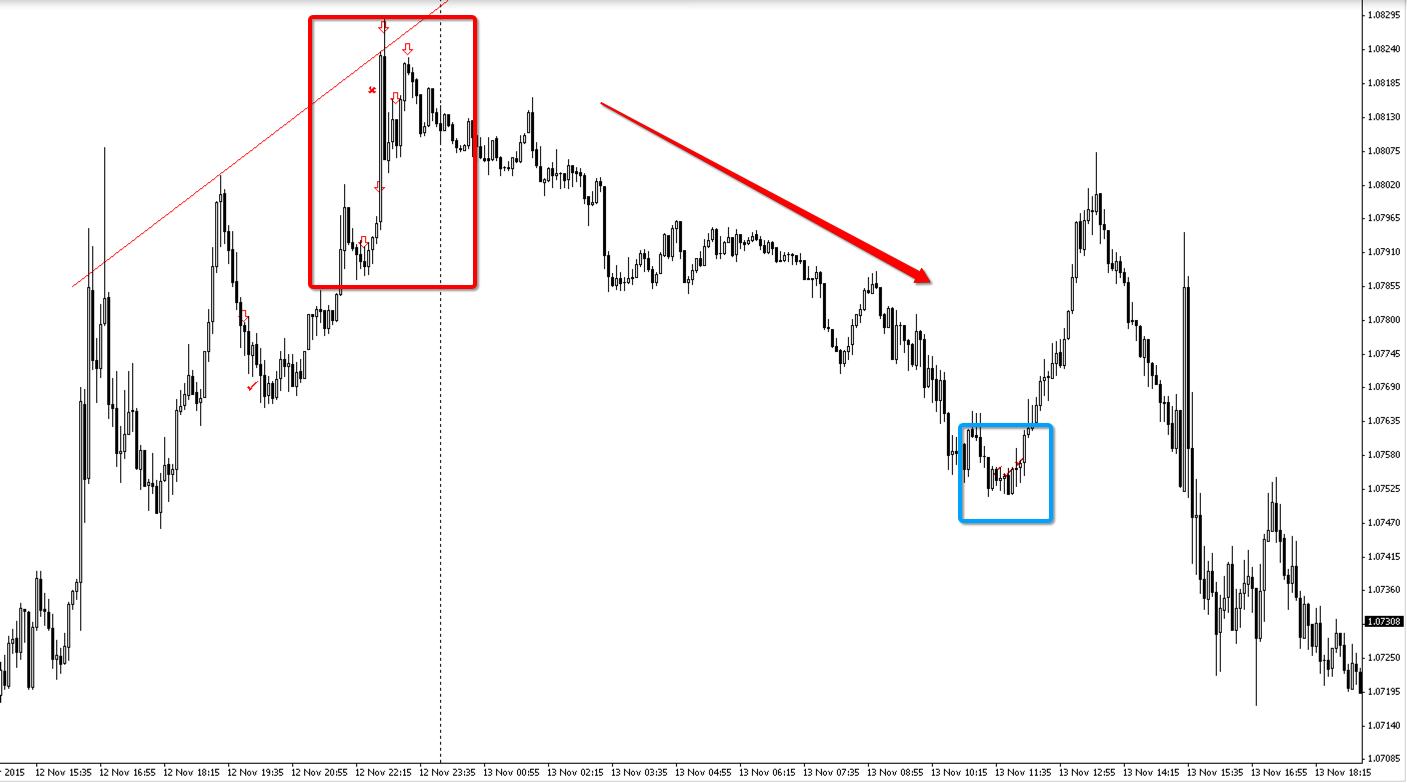
    Late in the evening the EUR USD chart provided three pushes up, usually a sign of a final move, with the final move up being an exhaustion bar (a bar that is usually bigger than recent bars). This provided the high at the red box above. I took a short sell near the high with a buy back at the blue box. This more than made up for the error early in the week.