Tag: price action

  • Trade management, a skill

    Trade management is a skill and tricky to achieve, the first thing in the morning! The trade is from 8.15 am 16th February 2018.

    The chart below shows a possible wedge, three pushes down marked by the red arrows. A strong bull-bar, the close of which is characterised by the green box, provided a reasonable probability of an entry-long with a target back up to the previous high.

    We enter (the green box) long. The follow-through, however, is somewhat weak. Until we get the bear bar, the close of which is marked by the red circle. This could have been accepted as a small loss exit position.

    However, we hold. The trade is expected to go back to the low of the day. The risk is a breakout short.

    At the price action long, shown by the green horizontal arrow, we scale-into the trade. Our target is a breakeven on the original bet and a small profit on the scaled-in take.

    To scale-in improves probability but is not for the beginners.

    A screenshot of the trade live.

  • Price action is all well and good, but context counts more

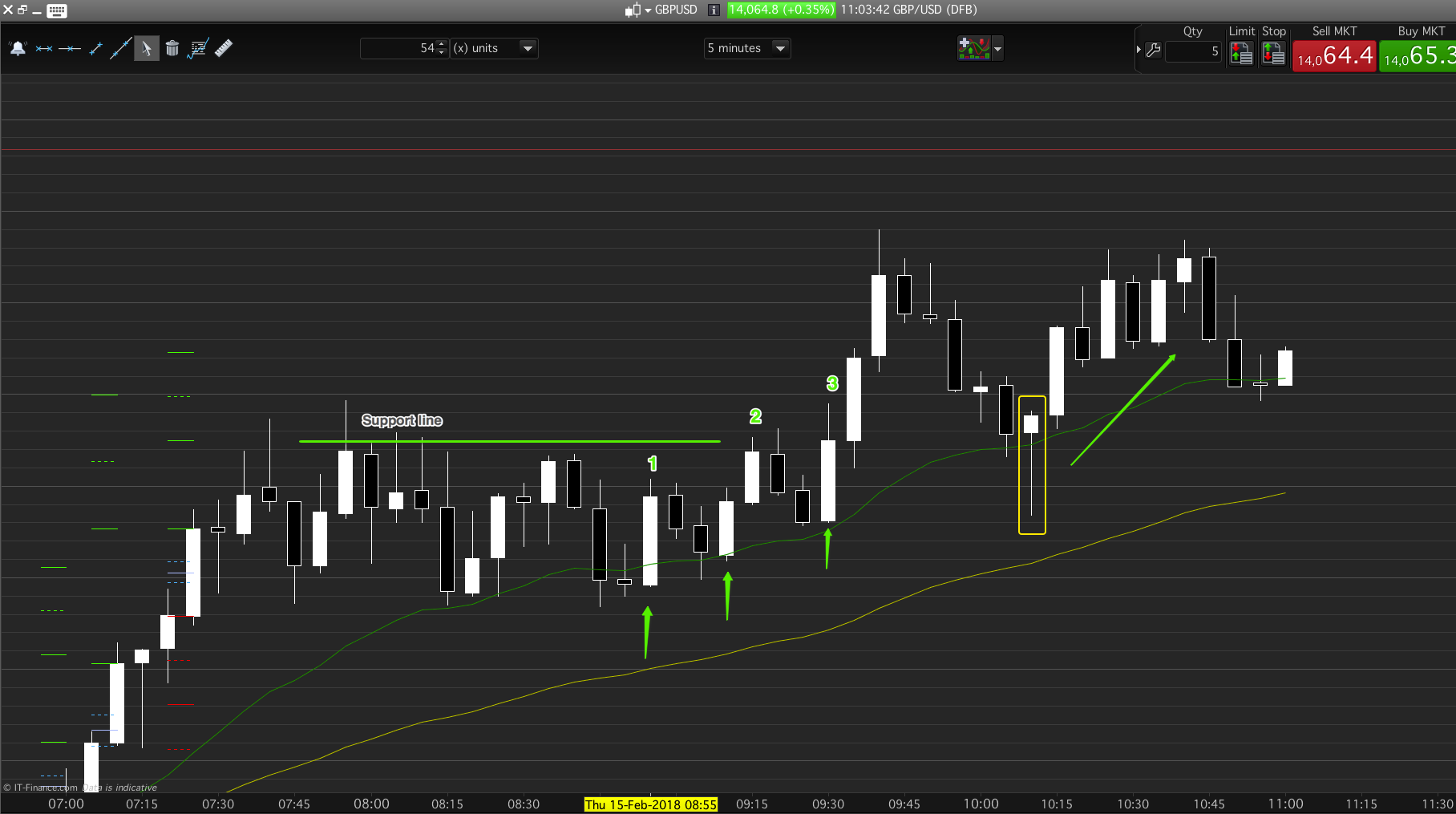
    10.45 am 15th February. After the tight channel long the market went into a narrow trading range for a couple of hours.  The close of bar 3 provided the first opportunity long as the close was slightly above the support line.

    However, we considered that bar 3 was the third push long, an embedded wedge, and therefore not a likely trade. In hindsight, computers saw this as two pushes down with higher highs and higher lows. The market went up after bar 3, without us!

    Our next opportunity was the price action provided by the pin bar marked by the yellow box. The close of the pin is above the support line (and at the 21 EMA) and gave a 60% to 70% chance of a trade long, at least to the top of the previous high and a 15 pip profit; which we are happy to say, it did.

  • First trades of the day

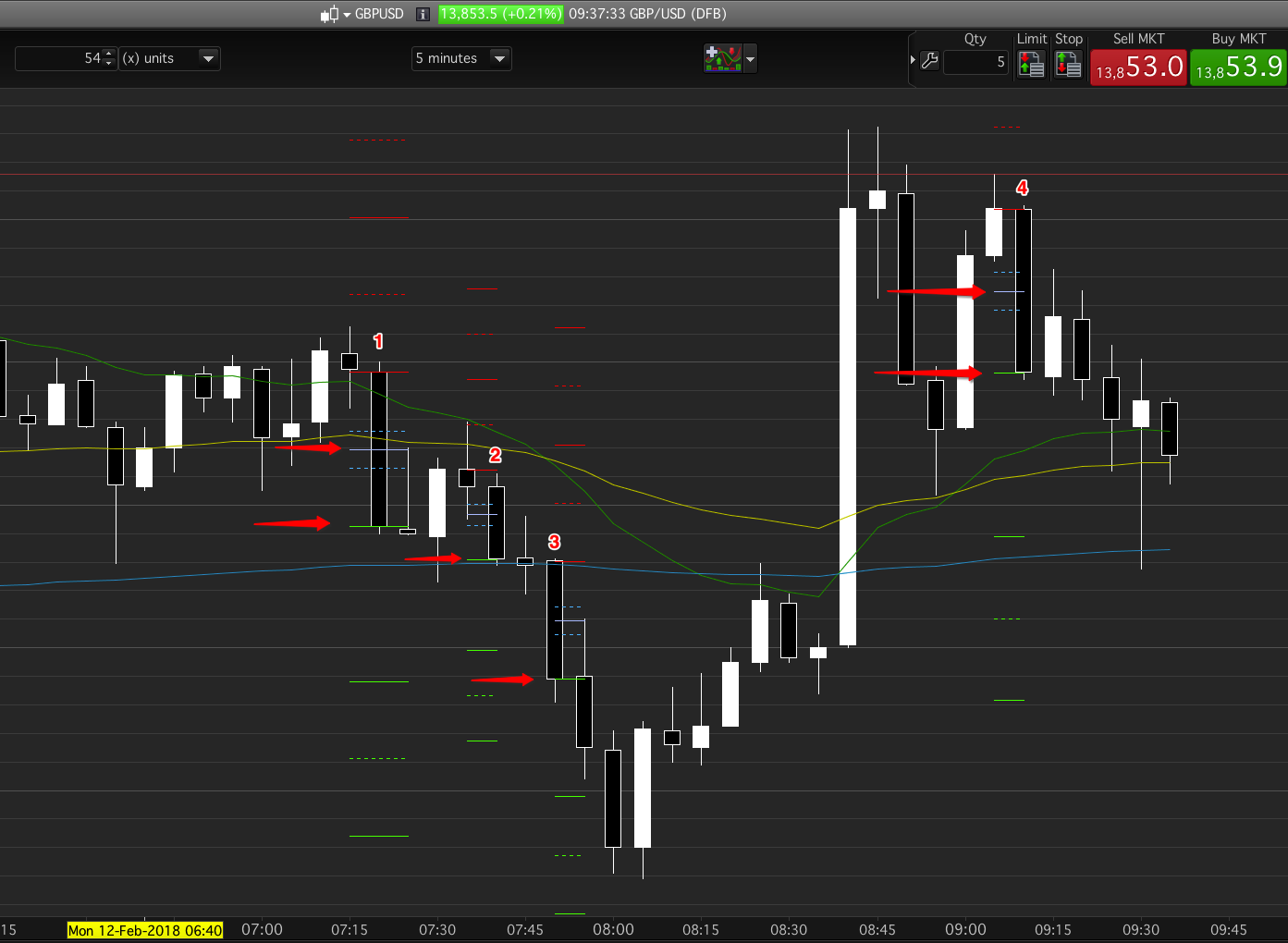
    First trades of the day can often test our resolve. Bar 1 below was our early trade this morning (12th February 2018). The London market is starting, and this can introduce volatility. Moreover, we don’t feel settled into the chart, we have a possible wedge that could take the price long and as the day has no news to mention we could be in for a trading range day.

    We place our limit order short at the close of bar 1 and at the midpoint of the same bar. The next bar, a pin bar down but not a new low, is not the follow through we were looking for. We exit on-market for a break even. Bar 2 and bar 3, on the other hand, provide confirmation of reasonable probability of at least a scalp short so we take our limit order shorts at the close of each; the midpoint pull-back limit entries were not activated.

    Our initial trade (from bar 1) if we’d held it would have provided 27 pips of profit. Bars 2 and 3 entries combined provided 17 pips of profit.

    Some traders would have taken the first bull bar long after bar 3, however changing trade direction that quickly is difficult. Bar 4 was our next opportunity. By now we were in the groove and entered at the close of bar 4 and at its midpoint. The subsequent scalp provided over 28 pips of profit.

    Short entries were taken at each of the red arrows.

  • The twenty minuters

    … “Why are you called the Twenty Minuters”? Was Captain Darling’s question to Lord Flashheart in a Blackadder series.

    Major Bill March, a historian with the Royal Canadian Air Force, is quoted as saying of the early pilots “they used to call themselves the 20-Minute Club because the life expectancy of a new pilot in combat in 1916-17 was 20 minutes.”

    I understand that in the early part of the war pilots were being sent into combat with less that 9 hours flying time – basically, they knew how to take-off. But of course, we all know that there is a lot more to it than that, being able to land is probably optimistic, but useful if the need presented itself.

    In financial trading, many strategies in price action trading are sold through seminar attendance, or online packages. But we are sold the equivalent of the take-off lesson only.

    And actually that is fine. To know how to apply such things as a morning star pattern (and its many siblings), maybe throw in a good understanding of trend (much more difficult than it sounds), the use of the important support and resistance including pivot points, round numbers, possibly fibonacci levels and moving averages, then we are ready for trading action.

    But only in none intra-day trades. Meaning daily or weekly bars only. If we stay with that we have a chance…sort off.

    The problem is that we encourage ourselves, and possibly by the seminar or online package, to dive into the intraday bars, the ‘exciting’ day-trading stuff.

    This, however, is very wrong. At this stage we are not (and maybe never will be) equipped to deal with lower time frame trades. We may get away with the 4-hour bar chart and, at a pinch, the 1-hour, but moving lower with the relatively limited knowledge and experience we have gained we risk joining the traders equivalent of the twenty minuters.

    I trade the lower charts and I wish someone had told me this those many years ago, it would have saved me a lot of money and frustration. There is an easier way than the one I chose: simply never come below reading daily bars (New York close, of course) until we’re ready.

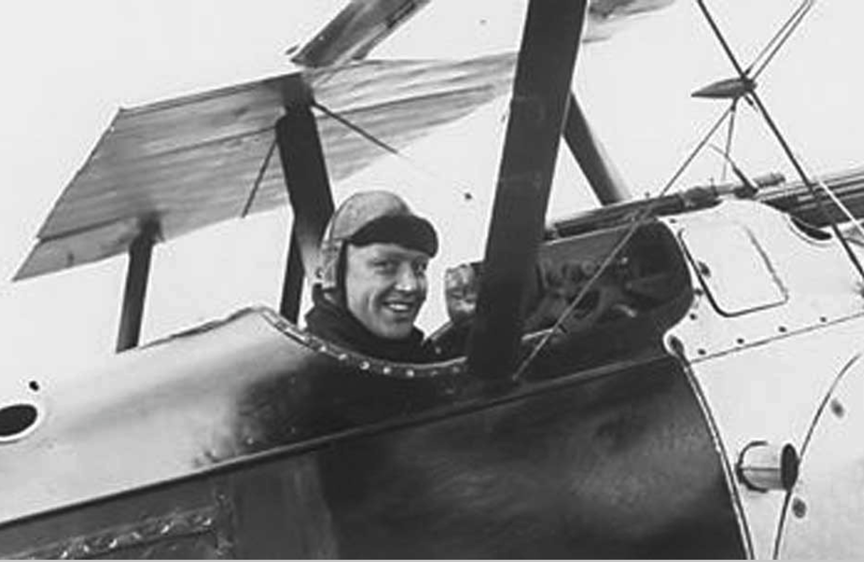
    In financial trading we want to be like this chap, he looks like he knows how to land!

  • Trade by rules, not emotion and intuition

    Those of us that want to technically trade the financial markets for a living, or simply make a profit doing so, have undoubtedly invested a lot of time, money and emotional effort into the process.

    There are, however, certain aspects that, no matter what our chosen trading method, seem to be hurdles for us all.

    Trading, for example, is full of contradictions: we need to hold our winning trades, but we need to know when to take profits; we need to make a traders equation, but we need wide stops; and we need to wait for a clear signal, but the so-called clear signals often don’t work.

    A few trading conditions that I struggled with, and still do from time to time, include: not holding the trade all the way to target; entering on a whim of a signal, or worse no signal at all; and, my unfortunate favourite, trying to reverse a trade too early.

    The latter is probably the single reason most traders struggle. I have an example trade from yesterday where (this time) I correctly held the trade from the currency pairing USD/JPY.

    Firstly, I have to say that context is a big part of my trading strategy. When I show these snips we are not showing the overall context. That is: what price was doing leading up to the few bars we show on the chart. Five minute bars in this case. In this instance over the last two days the market had been in a steep descent, or bear trend.
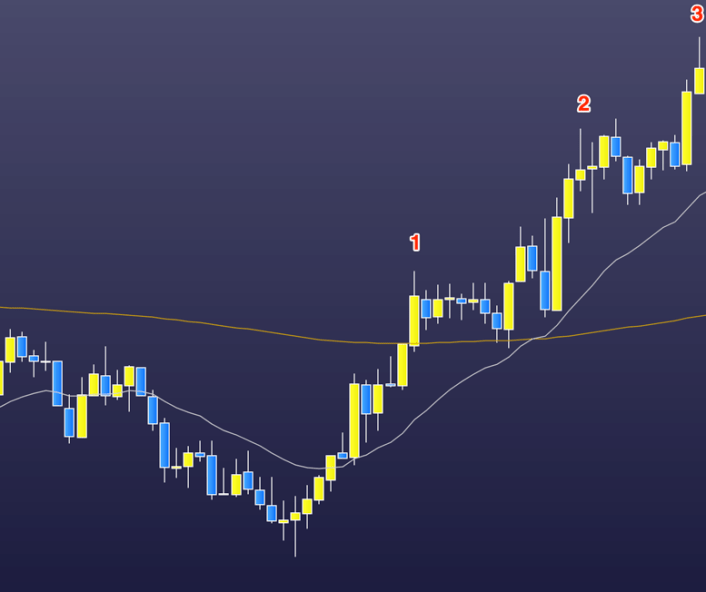
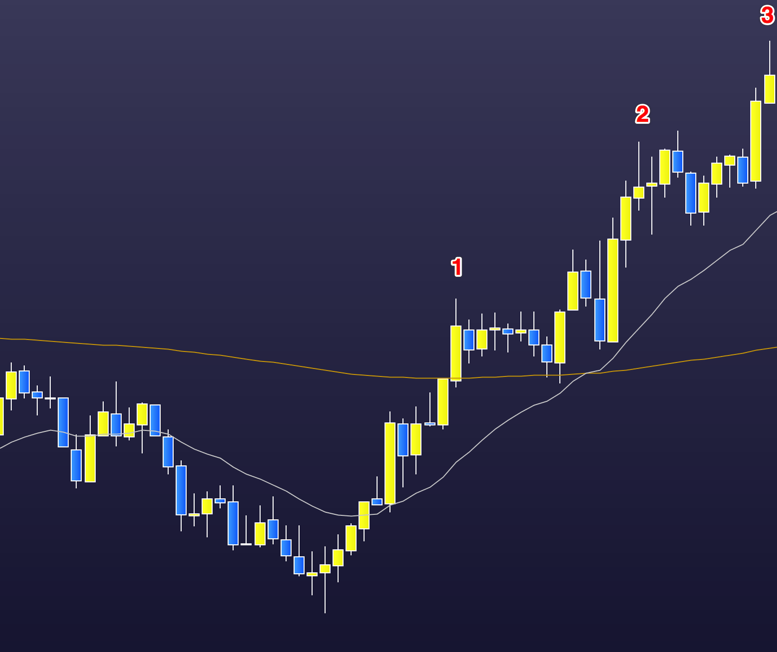
    We can see that the market turned bullish and went long in what seems to be three pushes (marked on the chart). After three pushes the market often reverses. For me the market was always in long after the 1st push and I looked for opportunities to get long.

    At this point a novice trader, influenced by the prior two-day bear market, and not trading in the moment, would be entering short at the top of both push 1 and 2 hoping for a resumption of the bear.
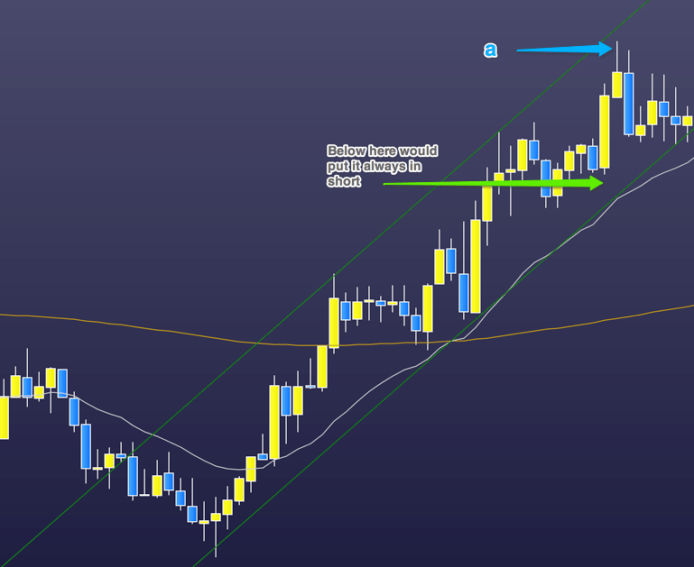
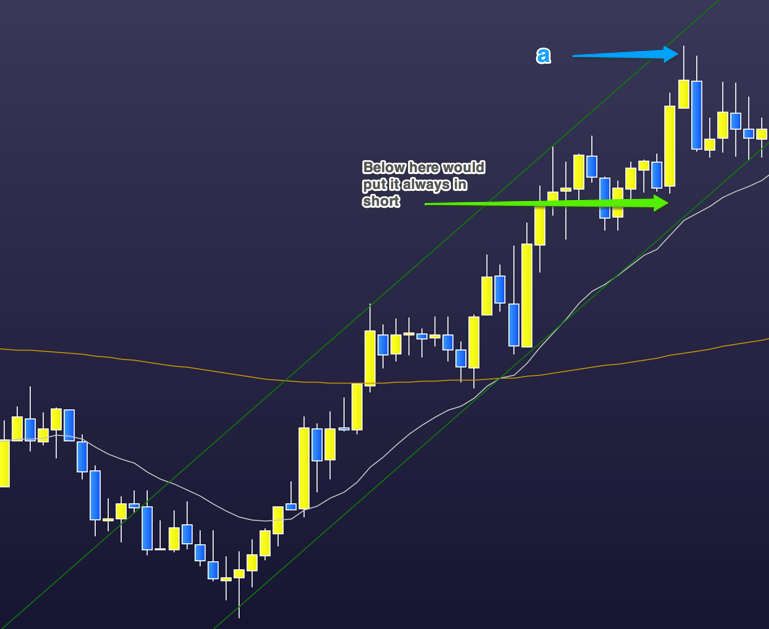
    I exited my long at the blue arrow marked ‘a’. Choosing the exact exit from my long position was, of course, fortuitous. I thought, correctly this time, that price may reverse early and before price could hit the green channel line which I’ve drawn.
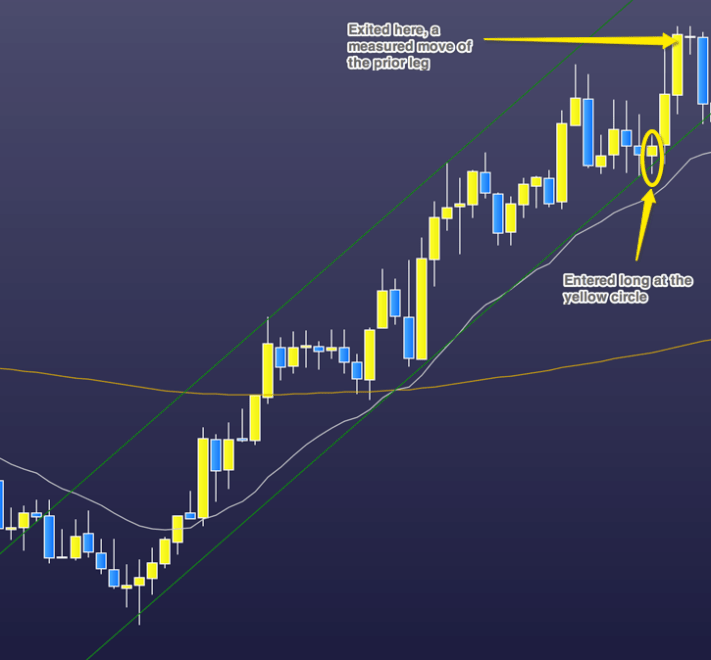
    However, price did not pull back as expected and at the yellow circle, which I’ve marked on the chart, I re-entered long. I exited that long, at a measured distance of the previous leg, for a reasonable additional profit. This turned out to be a ‘final flag’ long.

    Reading the chart correctly, with the whole chart available, always seems obvious. However, reading bar by bar in a live trade is another thing altogether.

    We are wary about entering long because of the steep bear trend on the higher time frame chart; and, to continue long when the bars are in the top right hand corner of our screen, provides its own psychological block.

    To trade, as in this example, is often counter intuitive. Whether we use price action, indicators or a combination of both we can only make a profit if we trade by (expert) rules and not by emotion and intuition.

  • The stabilisers have to come off, eventually

    Who takes up retail financial market trading? I initially imagined that it would be young adults, the ones we see on the sports betting adverts, but I was wrong. It’s primarily professional people: engineers, doctors, dentists, lawyers and well-to-do retirees. But unlike our usual work, we struggle to be successful at financial trading.

    Because, unlike our usual work, we are now dealing with uncertainty; and in this world, because we don’t understand the future, it is not possible to work rationally. To overcome this we look at the future by naive projection of the past.  We are now in a world where 60% certainty (if we’re very good) is as good as it gets. We therefore look to a method and indicators to help make what is irrational seem more rational.

    That brings me onto the decision of how to trade. The ‘how to’ question is probably one of the most difficult and important decisions a financial trader makes. However, as with choosing a career when we’re young, we do not have the experience to be sure we are making the right choice. Therefore, we are overly influenced by those around us.

    In trading we tend to go with the method that we learnt from the first seminar we attend. We try that to the point of financial exhaustion and either quit, or if we’re particularly determined, we will venture to try another seminar and another method. And so the cycle continues until we achieve expert or get lost in the ‘dip’ somewhere.

    With a little thought it does not need to be so difficult. We first need to find the broad category of trading method that suits us. If we stay away from the ‘get rich quick’ merchants (those advertising the secret or ‘the one thing’) then there are a lot of excellent tutors available.

    We do need to find that broad category first however: no point in learning chess when what we really enjoy is the simpler pace of draughts (checkers). Once we have that broad method that we determine is the one for us, we can then go to work on the finer detail.

    It took me a long time to find ‘price action’ as my prefered trading method. I notice also, looking through the internet, at great beginner introductions to price action that are available. Many however provide confluence ideas of price action with indicators: moving averages, Fibonacci retracement, stochastic overbought and oversold to mention a few.

    That’s fine, we all start with all of these; they’re supports and we feel, and were told, we would be foolish to attempt to trade without them. However, price action is much more than this (or I should say much less because with true price action indicators are a distraction at best). Once price action is learnt we can deal very well with the irrationality of it all and we can strip away the supports. After all, even Bradley Wiggins, probably earlier than most, had to take the stabilisers off at some point.

  • Sterling’s spike down – from a traders perspective

    You will probably have heard on the news that Sterling (GBP) spiked down massively.

    This happened 5 minutes after midnight yesterday morning. The reason is speculated.

    Technically, from a 50 year – or so – chart it is entirely expected for sterling to drop at this point. Indeed, we would consider a drop down to 1076, rather than 1118 that it did reach, appropriate. But it’s easy for the technical trader (or anyone) to say that after the event. And certainly it wouldn’t have been expected within a 2 minute period.

    Here’s how it looked on a short-term chart for GBP USD.

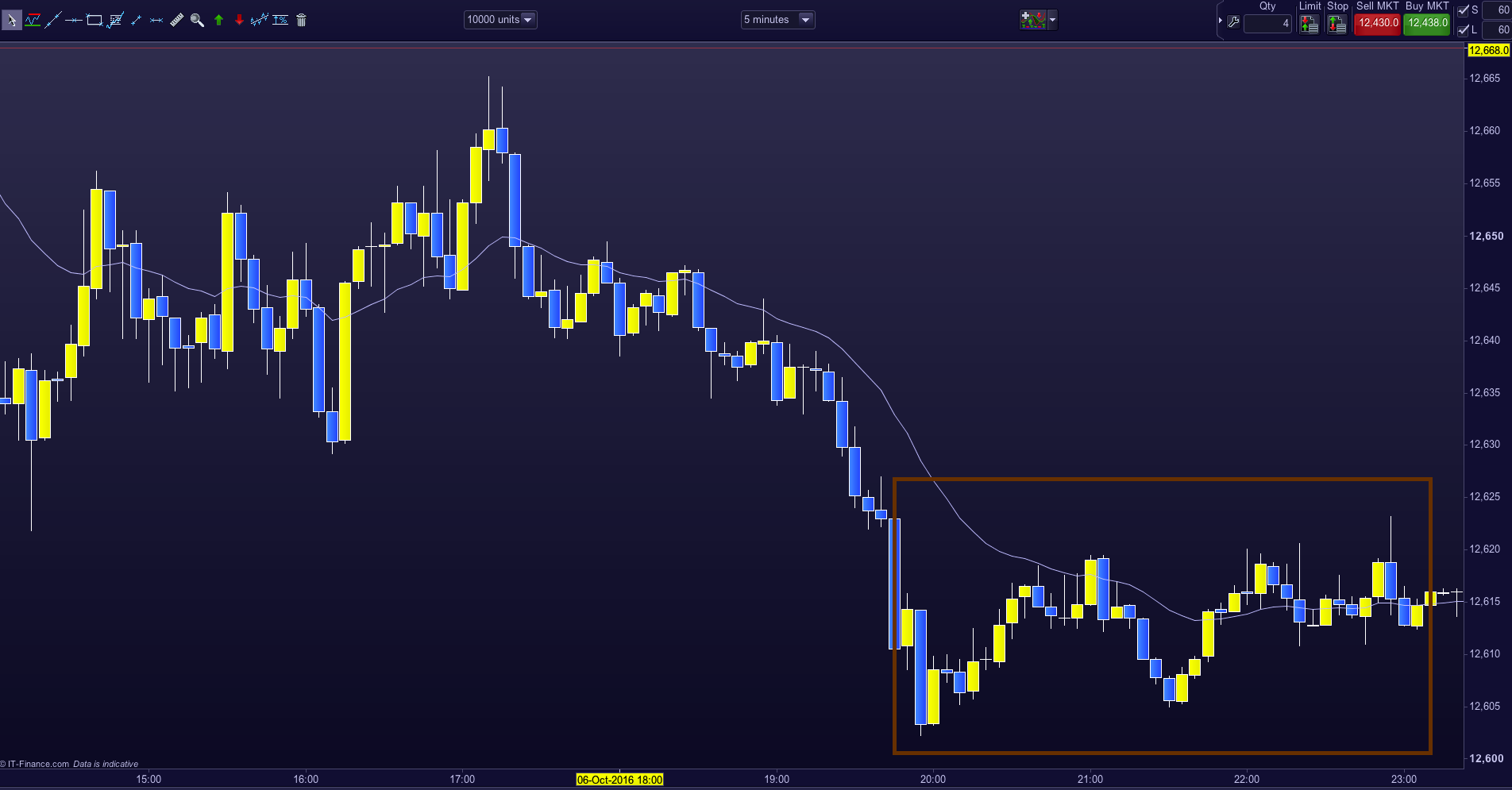
    Bars on a chart are normally represented relative to the biggest bar. Here we can see the 5-minute bar chart before the dip.

    snip20161008_1

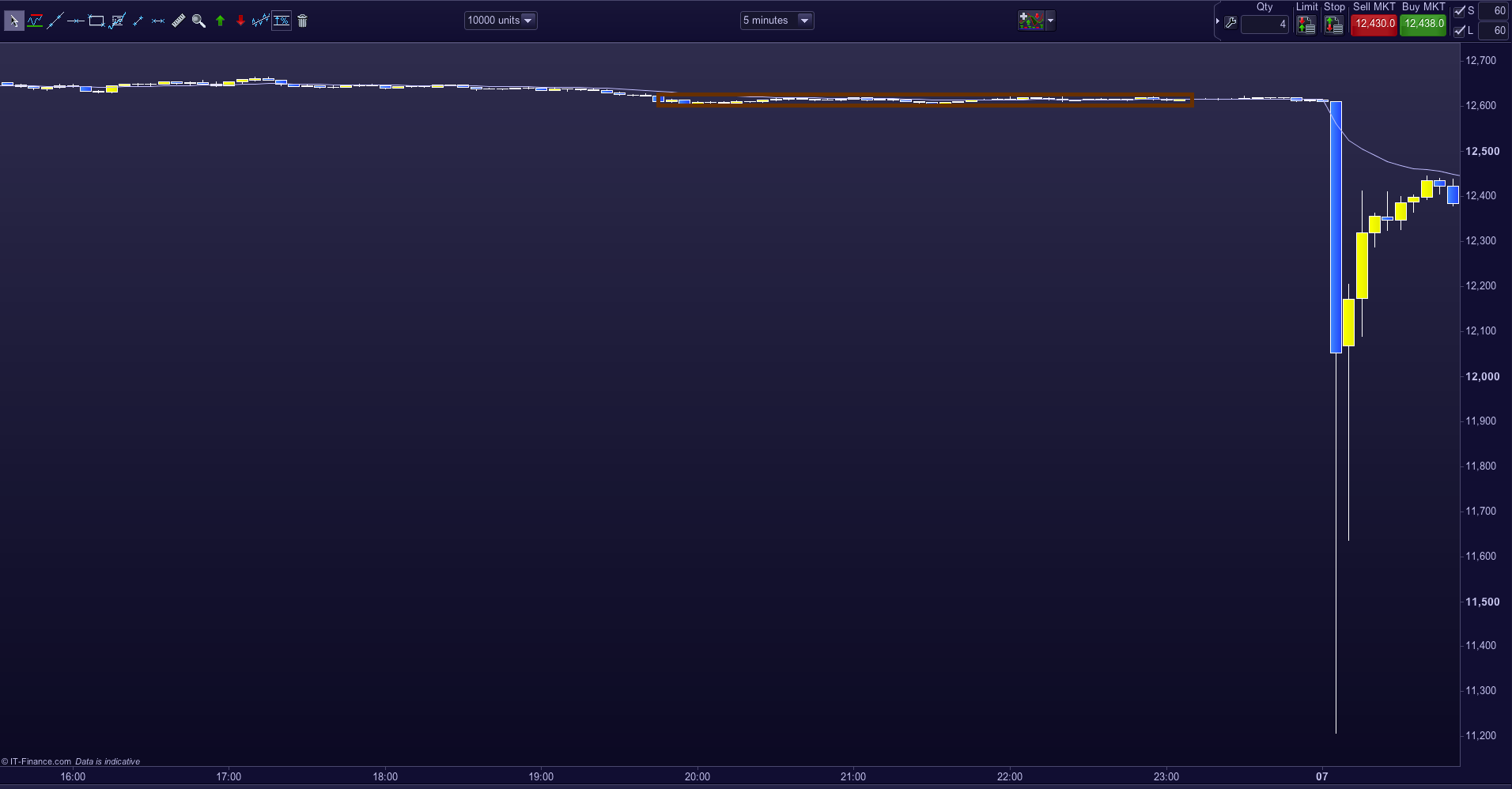
    In contrast, here is the same chart moved forward in time by about an hour. The bars in the reddish box are the same bars on both charts – and provides an idea of how far the dip extended from the perspective of the short-term trader.

    snip20161008_3

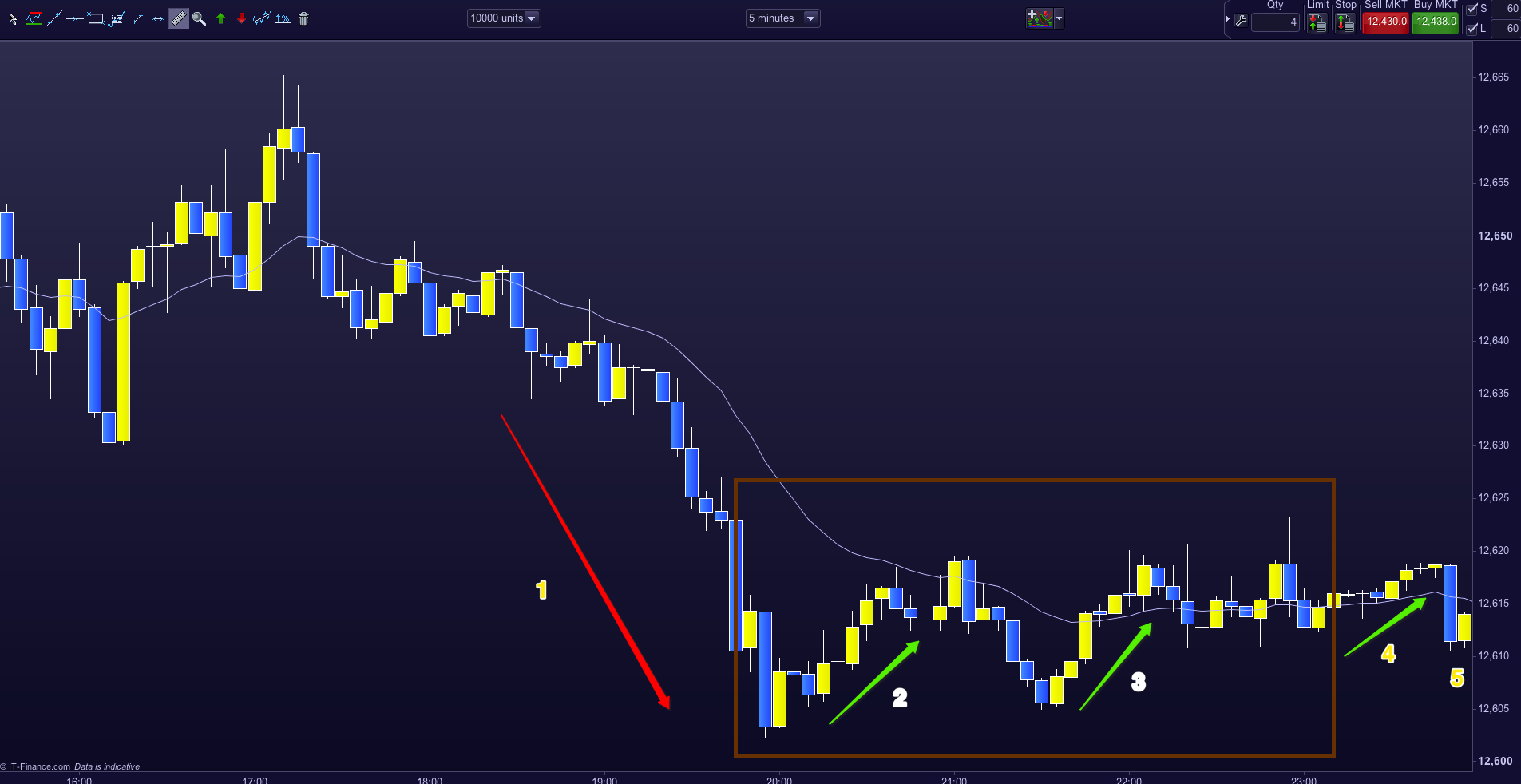
    If a (competent) short-term trader were trading this chart at the time how would the trader have fared? Okay, I think. here’s why:

    snip20161008_4

    The red arrow (1) indicates a clear downtrend and therefore only shorts (price going down) should be considered. Without going into price action talk the green arrows 2, 3 and 4 show that any significant attempt at a pull back is weak. The blue bar (5) is a definite trend bar short, not least of which it closes strongly down and lower than the previous two dozen bars. I would enter short here, or more likely, because of prior price action, before bar 5 formed.

    Ten minutes later price dropped 1,400 pips in 2 minutes. However, it’s all meaningless because if I had traded the drop I’d have made 30 pips (60 pips at the most) as short-term trading is precise and that is where my pre set target would have been.

  • Keep it simple and adapt

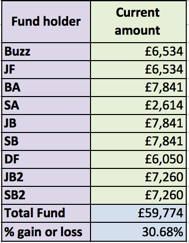
    We are up 30% since the start and 21% so far this year.

    snip20160924_2

    Over my holidays I read all eight trading books by Laurentiu Damir. Seven of which are short e-books written about four years ago. He teaches simple, conservative trades. His more recent book ‘Price Action Breakdown’ provides a good trading concept.

    Laurentiu recommends the higher timeframe charts – such as 4-hour or daily charts. This, as he explains, is because of the effect that multiple news events throughout most days has on the lower (such as 5 minutes) time frame charts.

    Laurentiu teaches reading a chart that is a time frame appropriately above your price action chart. For example, He would take the ‘bigger picture’ from the daily chart but use the 4-hour chart for price action set-ups.

    We use (and reading between the lines I think Laurentiu does too because trading is what he does) the 1-hour chart for market cycle and the 5-minute chart for our price action – and we keep a good eye on the news events that can affect us.

    As Laurentiu explains: the thing with trading is that all of this is a guide. Flexibility based around a solid concept is key. It may be the 1-hour chart but on the day it may be the 30-minute chart. Price action may be 5-minutes but again this may be from the 15-minute or even the 3-minute chart. It’s whatever fits.

    We cannot trade by numbers and be successful, we have to know and understand a lot and, of course, practise a lot – then keep it simple and adapt.


  • Weekly Diary – Slow Trader Fund 21st November 2015

    What makes an outstanding tennis player, card player, chess player…? Its many things but removing ego and emotion are high on the list. I was lucky to watch some of the World Tennis Finals live at the O2, London, this week and the very best (Federe, Djokovic, Nadal) limit their emotional highs and lows when playing. Trading is no different. I have to leave emotion and ego out of it. When I analyse my errors this week all but one are due to emotion. The emotion of over confidence, usually after I’ve had a good win.

    One way to limit emotion is knowledge. Real understanding of how to read the market through price action. I trade for several hours per day but back test trades each day for a similar period.

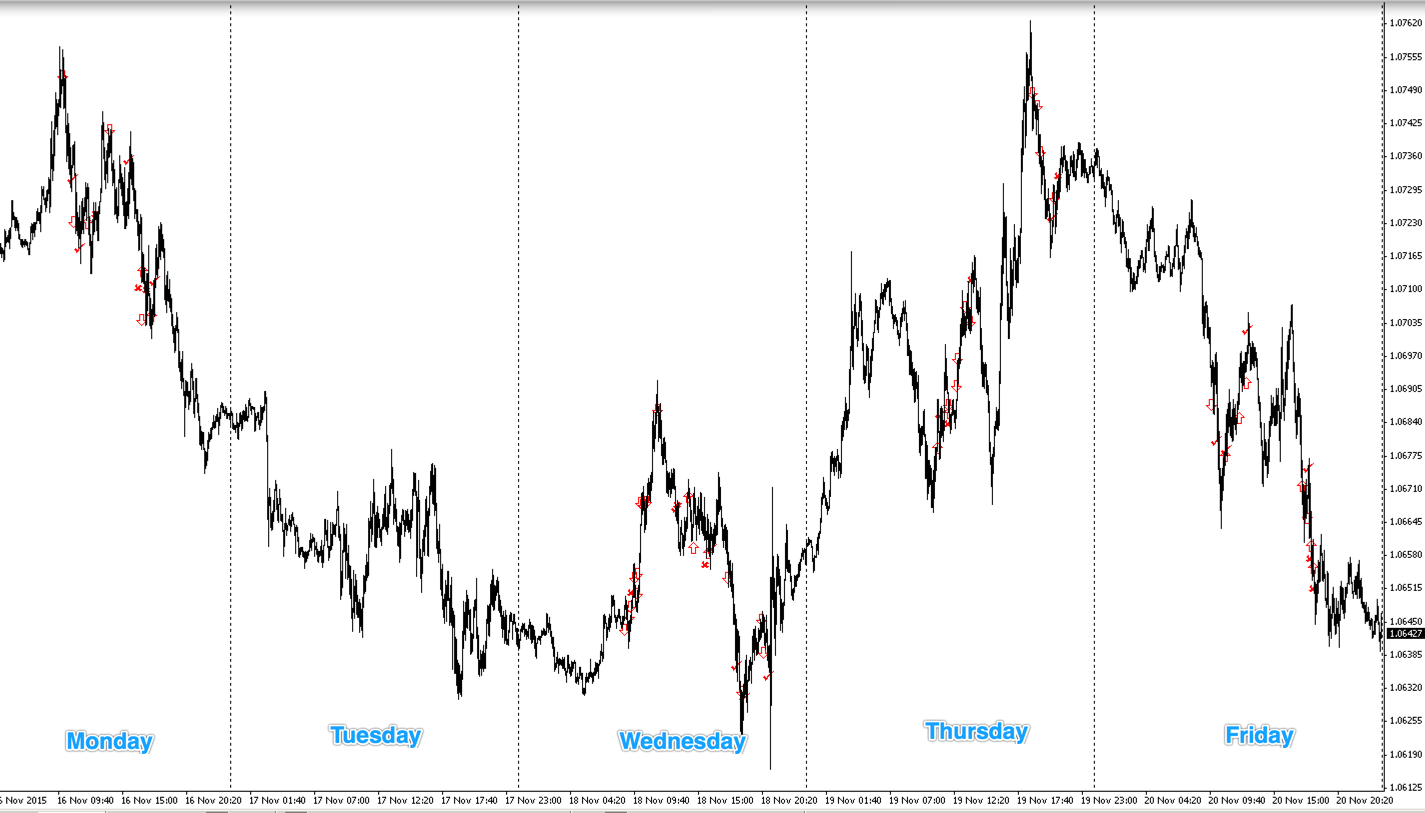
    Here is a blown out chart of this week on the EUR USD 5 minute chart:

    Snip20151120_23

    As we can see from above, each day provides many opportunities for success if we’re reading the chart correctly – or losses if we’re not. If we’re patient, balanced, calm, focused, not distracted and we really know what we’re doing then there is a chance of winning. But bring emotion into it and it can all go wrong very quickly. Sure that happens to the best of us from time to time. If it does, walk away. Go and watch tennis. Actually that was not the reason I went to the O2, I go most years. But trading the next day, or indeed after any short break, I need to start back slowly. Sit back, take a long look first before trading. The edge is a precious and small thing, it needs protecting.

    Why is trading difficult? Because there is so much money involved it attracts the very brightest. And, as with chess or all the games mentioned above, we are always matching up against someone. When we take a trade there is always someone (or more than likely some sophisticated computer algorithm) that is taking the opposite trade. That is how it works. Therefore to win we need an edge that is preferably unemotional.

  • Price action or fundamentals

    As previously mentioned, I’m presently focused on trading 5-minute charts EUR USD. To master price action trading, and with a low time chart such as the 5 minute, takes all my undistracted concentration. I think that, most, professional traders use price action. Some may voice that they also use fundamentals and certain indicators, but when it comes down to the profits it’s usually price action, in some form, that’s responsible.

    My trades on the 5 minute charts last from a few minutes to usually no more than an hour. Therefore, fundamentals have no influence. Although some traders consider fundamentals, they are generally the ‘go to’ consideration of the investor rather than the trader. An investor can be considered as a longer-term commitment, a duration where the fundamentals have time to take effect – many months to years. I studied fundamentals for several years. However, I now feel that even the highest term charts, such as weekly’s or monthly’s, are (primarily) influenced by price action and therefore ‘technical’ rather than ‘fundamental’ reasons. That is because price action is a measure of psychology in the market – such as: fear, greed and confidence.

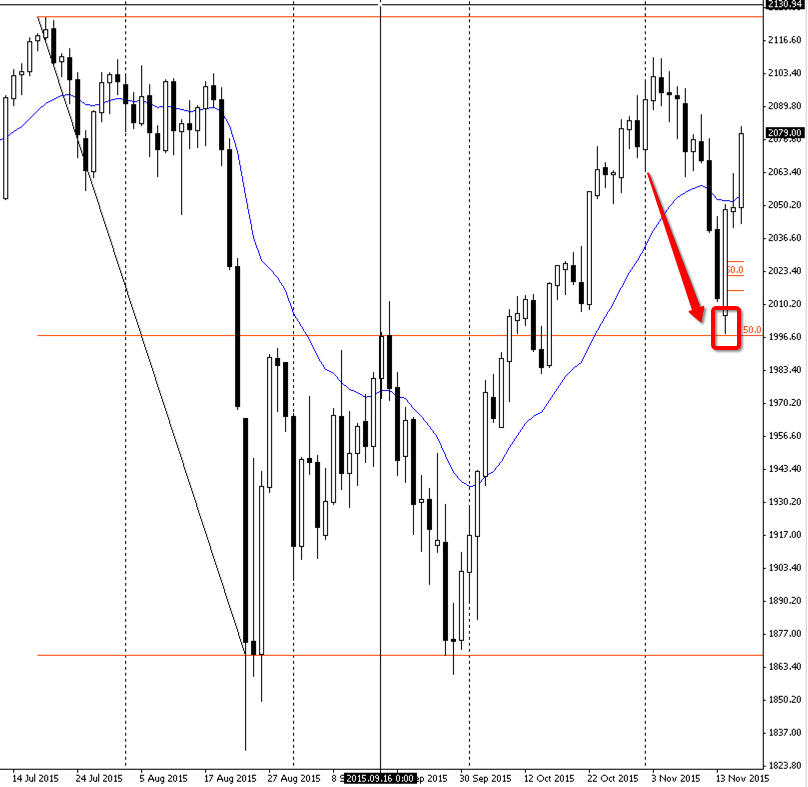
    Notice below how the recent attacks in France effected the S&P 500. Notice also that the drop, before the S&P’s quick recovery, bounced off a 50% retrace line. A line that I had drawn on the chart several weeks ago. This is a part of price action, the context, and is known as a measured move. Often this measured move is exact – whether it’s a 5 minute chart or a daily chart as the one below. The news (France) moved the market, but price action told it where to go too.

    Snip20151118_22

  • Context

    There are many ways to trade. It is not important which trading method we choose as long as it works for us.

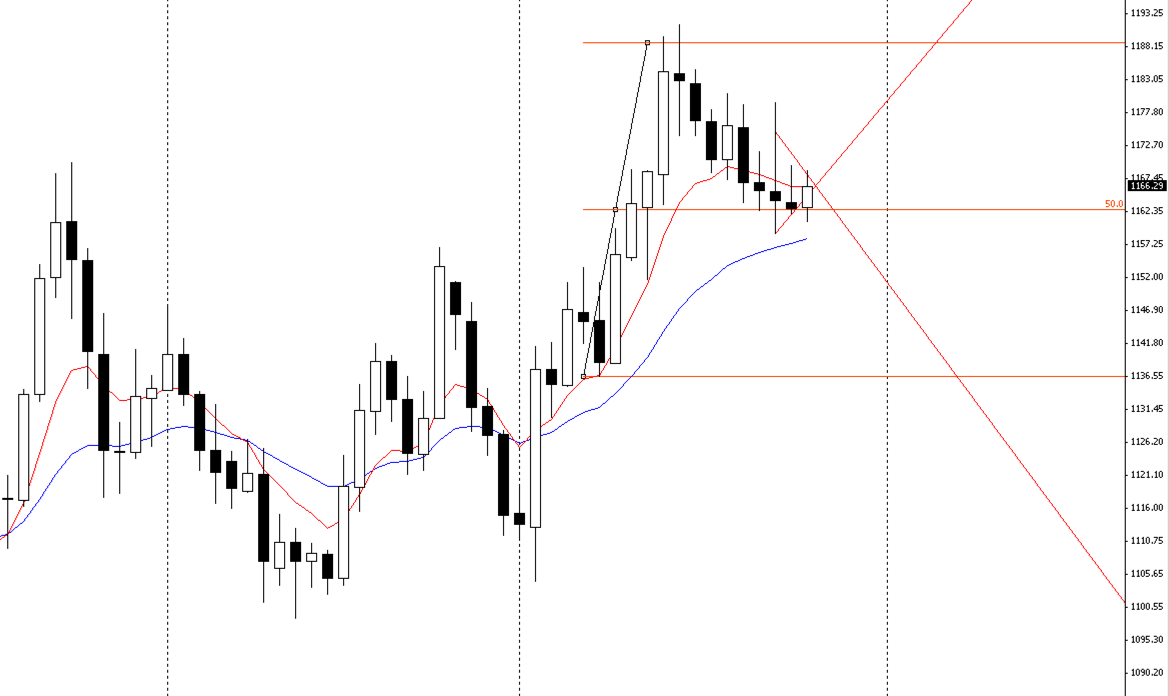
    My own method comes under the general name of ‘Price Action’. Simply, this requires the ability to read raw chart information and can be used on all timeframes. Here’s a couple of charts: can you tell the timeframe?

    Snip20151027_7

    Snip20151027_8

    The top chart is a daily candlestick chart of Gold, and the bottom chart is a 15-minute candlestick chart of Silver. The point being that it is not possible to see a difference in these charts without the timeframe along the bottom. Price Action works similarly for all timeframes.

    It is good, however, to ground ourselves on a certain timeframe and use only the neighbouring timeframes for clarification. For instance, if I were to use a daily chart to find a trade then I may venture to a weekly chart for guidance and possibly to the 4-hour, or even 1-hour chart, for final confirmation. But probably no lower. Equally, if I were trading from a 5-minute chart then the 15-minute, or possible the 1-minute, chart may provide some price clarification.

    On another point, the distinctive parts of Price Action are: firstly, knowing the meaning behind each of the candlesticks …yes, they individually tell a story and the greater the timeframe the more defined is the story. Secondly, and more importantly, is the need for context – that is the story that is told by a stream of candlesticks. We may take a trade based purely on context but we would never take a trade based only on the distinction of a single candlestick. Too many trading methods and seminars base their teachings primarily on the story a single candlestick tells, where the real ability is in reading the stream, the context.

  • Slow Trader Diary

    Slow Trader fund up this week to + 5%.

    To report the fund each week encourages trades to be cashed too early to show a profit. That is silly. Therefore, I propose that the fund be reported, whenever possible, the first Saturday of each month.

    The diary of trades taken, good and bad, and those trades that are on the radar, will be discussed each week as usual.

    These are considerations coming up:

    Crude oil (WTI)

    Snip20151017_8

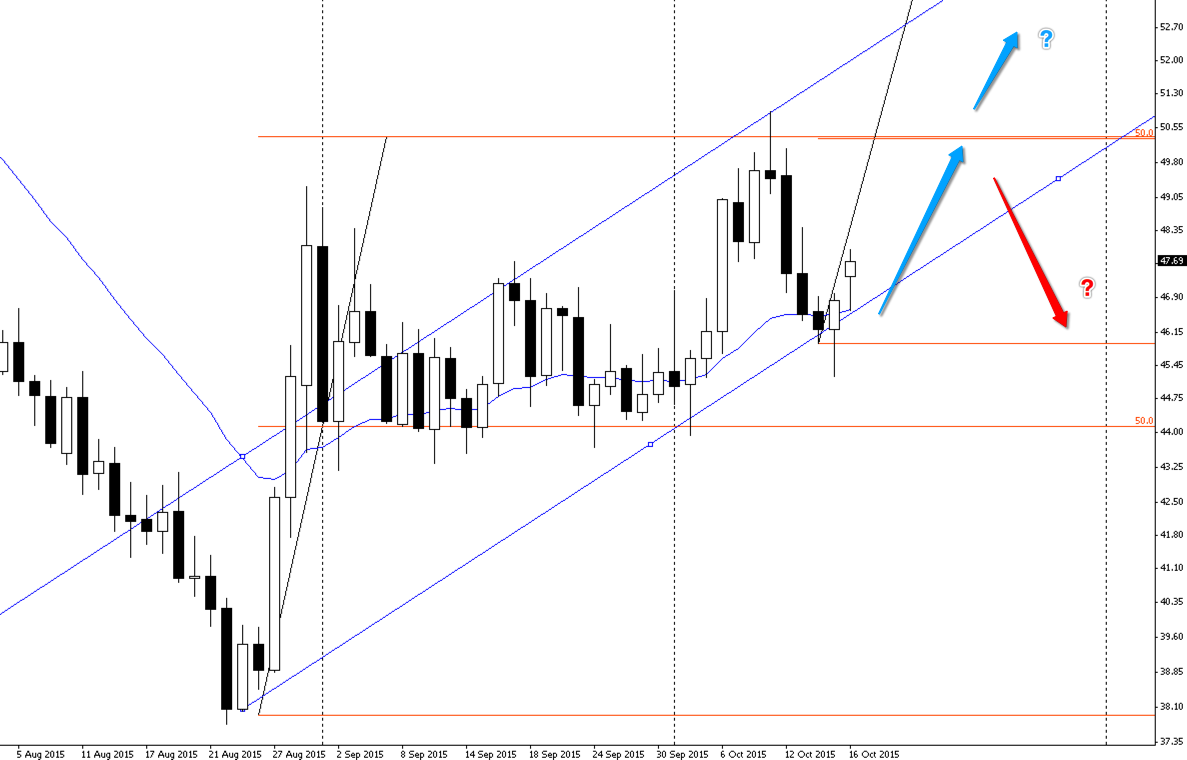
    We have a buy signal on the daily chart shown above. A 60% probability of WTI climbing to $50. After that the price may descend into a trading range, or may continue climbing for a measured move up to about $55. Whether we hold or not at the $50 line will depend on price action and momentum when, and if, we get there. Also, the COT is in our favour for this trade.

    Gold

    Snip20151017_11

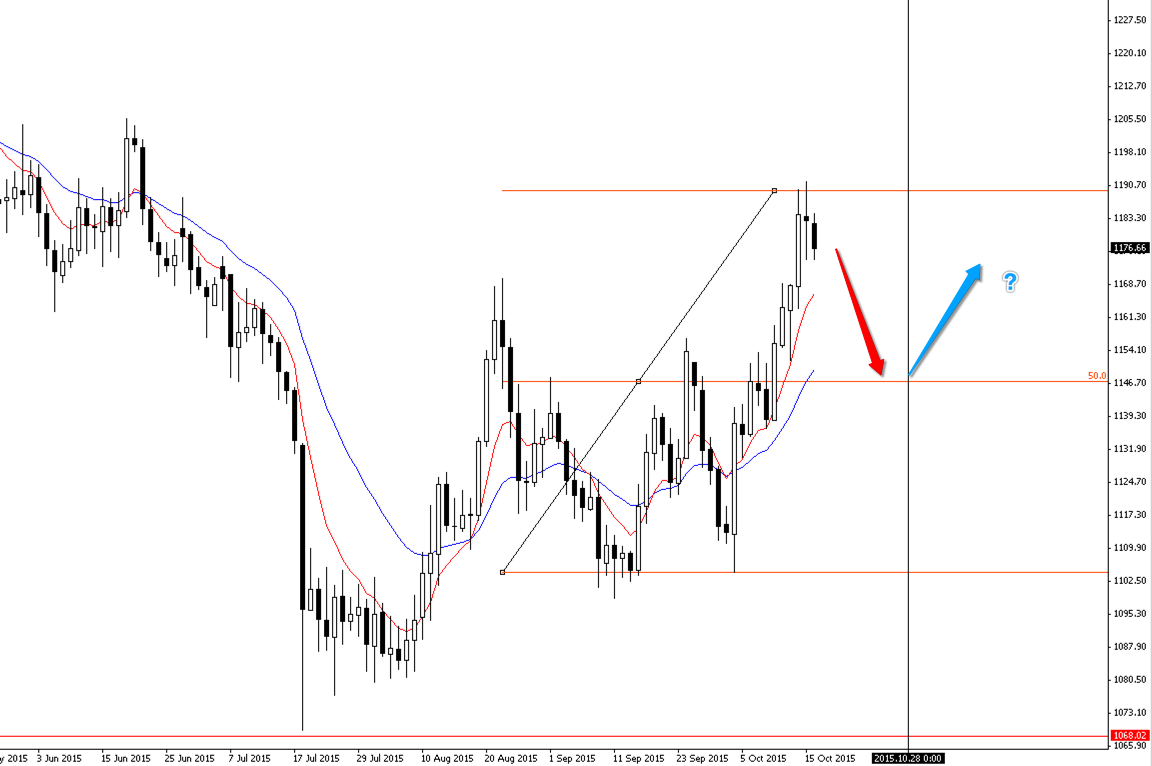
    Gold has provided a measured move up, in agreement with the COT. After a breakout on 2nd October, gold is now in a short term bull trend (a bull channel on the daily chart). It has reached a resistance level, however, and the likelihood is that price will fall back slightly (XAU USD) to $1150. Possibly forming a trading range just above its 5-year low. If this happens, we will look for a buy opportunity if price action and the COT agree.

    S&P 500

    The S&P 500 has broken above the resistance level that we discussed last week. The ratio has now swapped to 60% probability to the price climbing. Indeed, a new high could result in the coming weeks.

    This positiveness in the S&P puts a good light on stocks within the index. We will look for opportunities to buy ‘fundamentally’ good stocks as and when they provide price action buy opportunities.

  • Slow Trader Diary – week 38

    First diary post after being away for some three weeks.

    We are 2% up overall. The only trade left open while I was away was gold. And, although we are still open in gold, its current position nudges us into the positive.

    Let’s review: A while back, October last year, as you know, we took a double hit when the market dropped and then dropped again against all indicators.

    This brought me to change my trading technique. I went from indicator based to price action based. How to best explain these? Indicator based is like painting with numbers; it’s never going to be independent but is generally steady. Price action is blank canvas stuff.

    To get good at price action is like the artist. It doesn’t happen overnight. There is a lot of effort and practise put in along the way. But, as with the results of an artist over a paint with numbers person, the results can be outstanding.

    Lets do some sums:  if we start with £100 and gain £2 that’s obviously £102, a 2% gain.

    The simple mathematical issue with losing money however is this: if we start with £100 and lose half (50%), making our new amount £50, then to get back to our original figure of £100 we need a 100% increase.

    To be clear, if we lose 50% we need to do 100% to get back to the start.

    Sorry for the oversimplification, but I feel that we all forget about the importance of not losing money (particularly when trading or investing) because of the doubling effect shown above.

    And that is what I have had to do with price action since October. Where a 2% increase for the investor is unexciting, for me, the trader, it has been because I’ve had to nurture the fund up with a large increase to get back to the beginning.

    I love the price action way. So much so I managed to get about 50 hours of price action concentrated practise done through dedicated modules while I was away. That’s the the same as a pilot having to do time in a simulator. It’s necessary.

    I continue to run the fund primarily with daily signals reported weekly.

    Of note, I have three separate funds: a small fund for the grand kids (something most of you are looking towards slow trader to do) which I use weekly charts for; Slow Trader fund with which I use daily charts; and, a personal day trade account with which I use 5 minute charts.

    Price action works the same on all charts regardless of the time frame. I would not have more than one fund account on the same timeframe, too confusing and with intraday (day trading) is absolutely necessary. But separated this way they work well together.

    Next post: what makes it investing, trading or gambling?

  • Slow Trader Diary – week 31

    Here are our cashed-in trades for week 31: Healthcare Partners Inc + £89, GBP/USD + £687

    IG is our broker, costs for the week were – £25.17

    Lets take a look at GBP/USD.

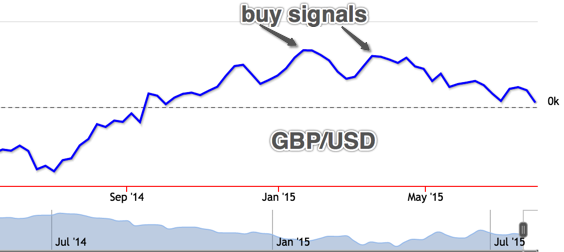
    Conditional: this is a graphed COT (commitment of traders) report giving us a buy condition.

    Snip20150801_2

    This graph represents several months so gives us the condition only, important as that is. From left to right, the first arrow is against the trend. Therefore we would not take that as a positive buy opportunity. However, the second arrow, and second buy indication, is good as it is with the recent trend. The buy condition should remain if the blue line on the chart continues to descend to a new low.

    The COT report is completed for the previous week on the following Tuesday and is published on Friday. It is therefore about two weeks old by the time we get it. However, it is like the oil tanker analogy where you move the rudder but it takes several miles to turn. Often that is the case with the COT. Even though it is old information it gives us a solid hint at the conditional.

    Once we have the conditional we need a matching recent trend. I’ll talk more on the (elusive) trend in follow up blogs.

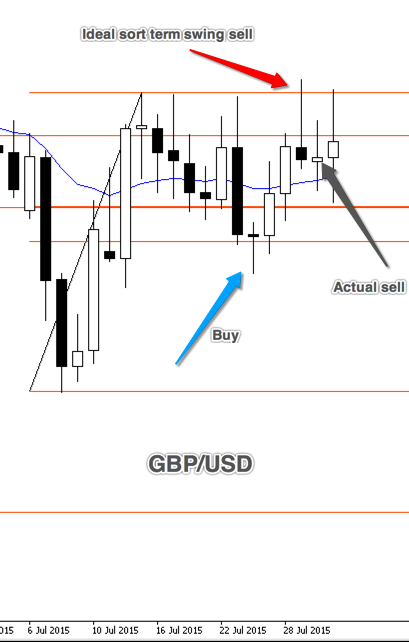
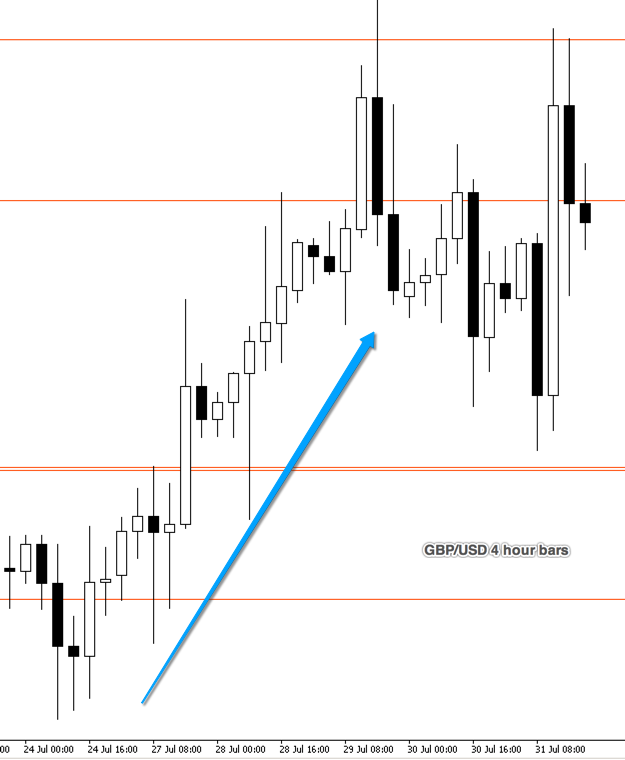
    After trend we concentrate on price – in other words a buy signal. Here is our buy signal for GBP/USD this week. The first graph is in daily bars and the second is the same trade from bottom to top but in 4-hour bars. The second chart gives us a different view as to the dynamic of the trade.

    Snip20150801_3Snip20150801_4

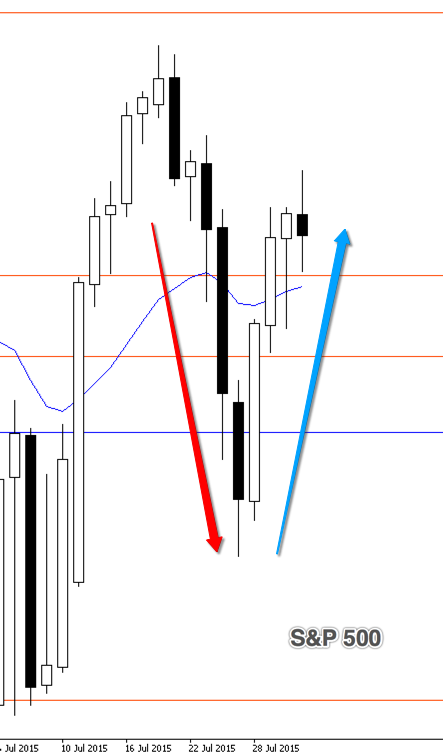
    Moving on. You may have noticed the S&P. Here it is today:

    Snip20150801_7

    Knowing what the S&P is doing is not a trading conditional for individual stocks (or shares in the case of the FTSE). That would be too broad a statement. Interestingly, the movement however of the S&P was more or less mirrored by the stocks on my short list. Even being confident of the future movement of my selected stocks I still missed most of them. ‘How is this possible, B’? I hear you say.

    This is an example of what happened.

    Snip20150801_8

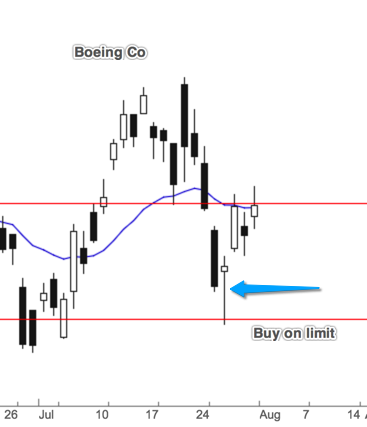
    This is Boeing, We notice by the date that the bottom (blue arrow) coincides with the predicted bottom of the S&P. This pin, at a 50% retrace, is a great buy signal. (Again, we will cover price in more detail in future blogs for those that are interested).

    If we choose to: buy on market, that is buy now at current price – or buy on stop, that is buy at a higher future price – or buy on limit, that is wait and buy at a lower price – is a judgment call. And one, on this occasion, I got wrong. You will notice that the bounce was so hard that after the pin the next days opening price gapped up. Only a buy on market would have worked. I went for buy on limit and missed it. “C’est la vie.”

    This was the same this week for four trades that I set.

    For the coming week we are keeping a sharp eye on gold. The commercials (that is the COT report) are warming up nicely to a buy signal. Beware of the trend however and remember, as well as recent trend, we also need price or more accurately price action. But more on this later.