Tag: Slow Trader

  • Slow Trader Fund

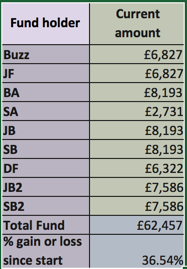
    Our Slow Trader fund has sat on the fence for a few months waiting for me. Not being a boom and bust trader, I have traded small whilst developing our ‘probability trading’ technique.

    A level of profitability through consistency has to be achieved before increasing trade size. The technique provides that, now it is up to me.

    It may seem a bit odd that I’ve moved away from trading a market, US stocks, that has increased this year as an index 20 percent or so. UK shares not so much at 6 or 8 percent as an index.

    To day-trade profitably I need to give it (day trading) all my attention. Having trades open in other areas and time frames were definitely a distraction for me.

    Why have I chosen day trading despite the many stories that tell us not to trade this way? Bizarrely, it is control. As a ‘probability’ trader, we accept that we are trading a market that is random. In other words, we accept that anything can happen.

    If we except that anything can happen, then we accept the risk. We accept that the market is only about a price that can go either up or down. In ‘probability trading’ we also accept that certain effects happen when lots of traders trade. Things happen that can give an observant trader an edge.

    Despite the simplicity described, it has taken me a couple of years to combine price action trading and money management, specific entry and exit techniques, and group it all together, test it exhaustively and call it probability trading.

    Fund contributors that think the share market, and particularly the US stock market, are to continue climbing throughout 2018 ought to withdraw their funds from Slow Trader and head that way.

    After all, that is the market, with you, that Slow Trader originally entered.

    If you stay in the Slow Trader fund, and to do so you don’t need to do anything else, you become part of a probability day-trader fund. Our advantage: we are not concerned about a good or a bad year for stocks and shares; we trade a currency pairing in the short-term, with an edge; with (to quote Mark Douglas) rigid rules and flexible expectations.

    We have developed a day trading strategy that allows us to take money consistently – day in, day out.  We scale-up though when we’re ready.
  • ‘slow trader’ moves to day trading

    I am taking our ‘Slow Trader’ hedge fund out of commodities and any medium or longer term trades. We are going fully into day trading and trading a single item – which at the moment is the currency pairing GBP USD.

    (Medium term trading of commodities is an excellent way to trade, but we need to focus 100% of our efforts and, for us, that is day trading).

    It is not possible to day-trade until a trader reaches a certain stage in his or her ability to read and manage in the lower timeframe charts. I think that we are close enough now to this ‘stage’ that we can touch it.

    To believe that it is possible to day-trade the lower charts is like asking some of us (non athletes) to run a 4-minute mile. If we did not know better, because we can watch the olympic games, we would quickly conclude that the 4-minute mile is unachievable; we would probably give up and defend our egos with comments such as ‘it’s not possible’.

    For those that do achieve the 4-minute mile (incredible as that is) they will get nothing from it other than personal satisfaction. That is because all the wins, the glory (the profit) is being able to go a few seconds under 4 minutes.

    In our day trading we feel that we are now achieving the equivalent of the 4-minute mile. We are now day trading where we can almost guarantee a break even at the end of the week. A shout of ‘well, yippee for you’ is justified, but all the work goes into the foundation. To push the running analogy further – once we see ourselves achieving the 4-minute mile, only then can we believe that we can get a few seconds under.

    Why favour day trades over medium term trades? For us it is because day trading is clear and finite. Trades are completed before the end of the day, and certainly not carried over a weekend. You are not waking up to a real shocker. In Andrew Tobias’ (updated) book ‘The only investment guide you’ll ever need’, he explains how he was in a hedge fund that after 5 years increased his fund 4.5 times – soon after 5 years it was at zero. And that is the thing with hedge funds, the unpredictable explosive nature – both up and down.

    My aim is different to this. I want to increase our fund in a regular (almost predictable) way, week on week. The hard work has been done, all we need to do now is manage those extra seconds.

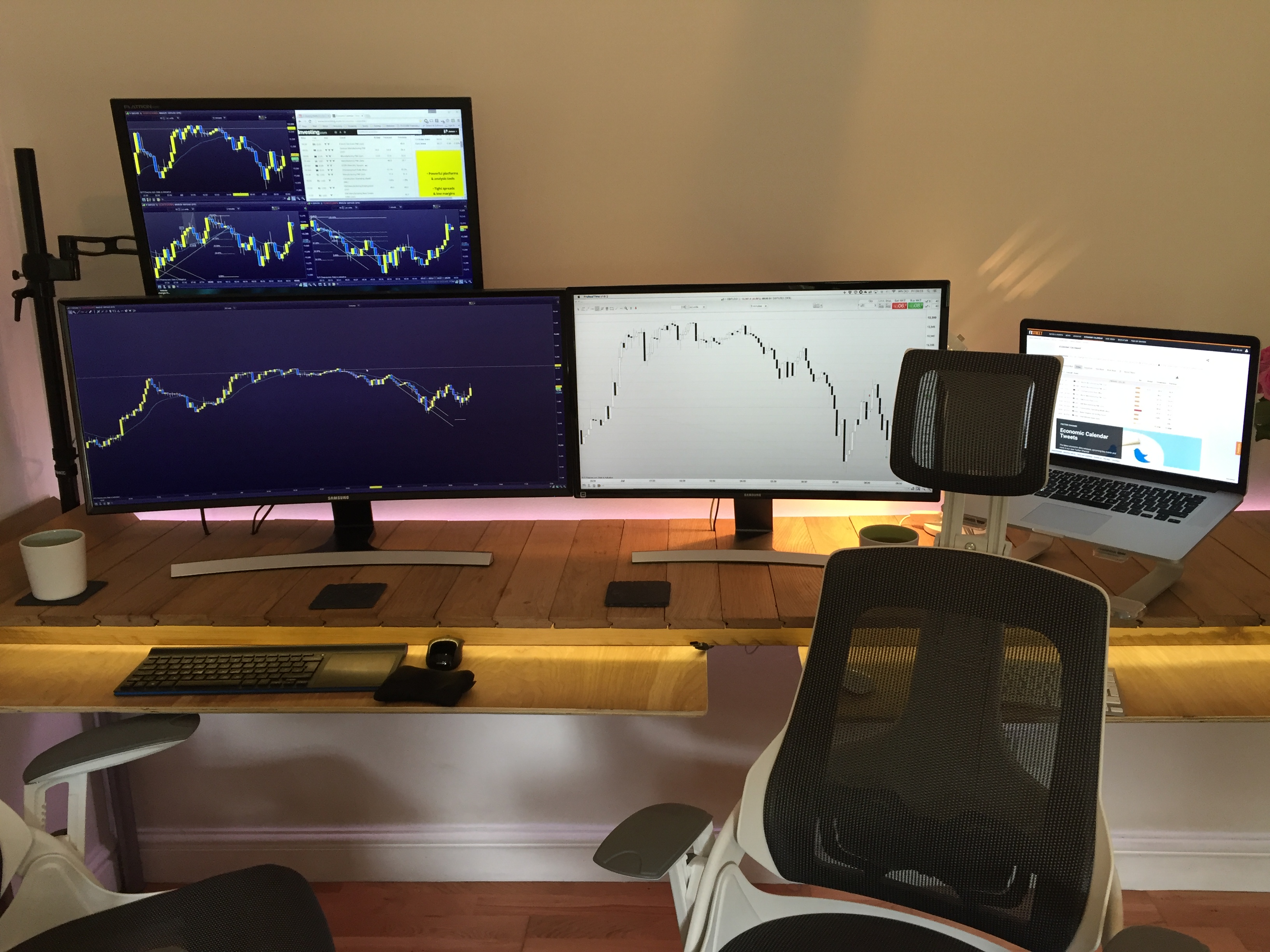
    Our trading desk:

    IMG_1321

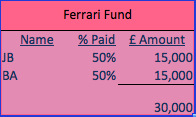
  • Ferrari Fund, 17th November 2015.

    Ferrari started 17th November 2014.

    This fund, similar to Slow Trader, will be run as a hedge and will concentrate on FTSE 350 and S&P 500 equities.

    Ferrari will also buy and sell commodities via ETFS.

    As with Slow Trader, this fund is closed to new investors until its anniversary.

    Screenshot 2014-11-25 12.59.16