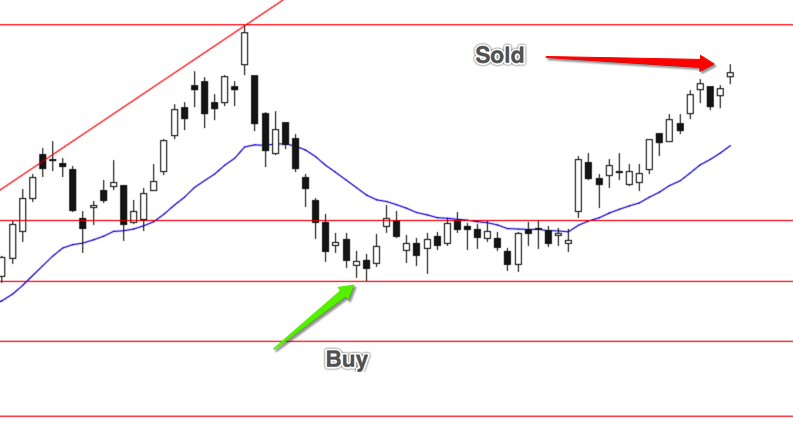
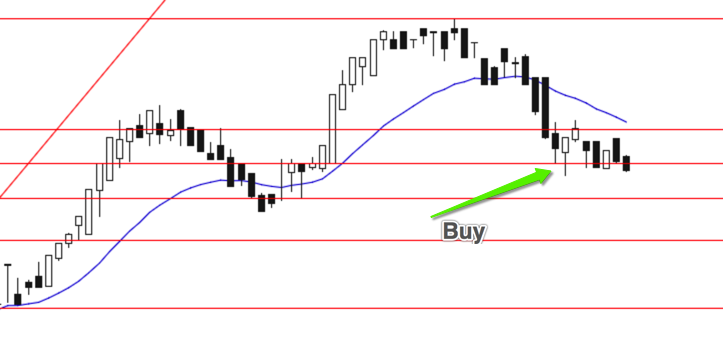
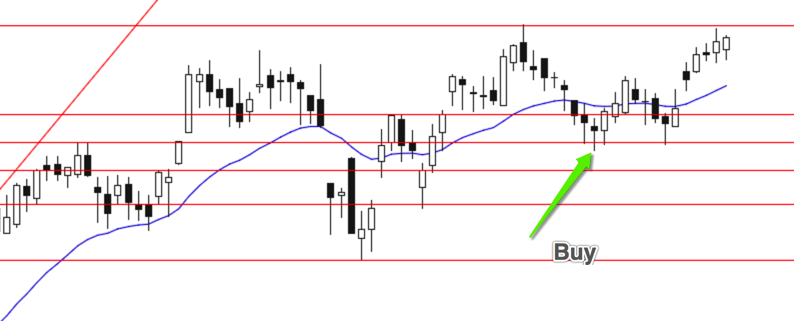
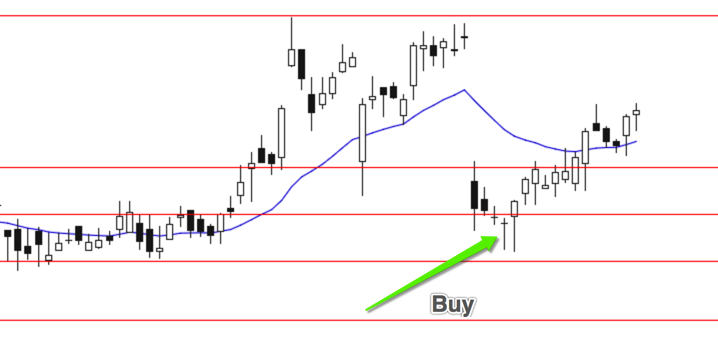
Tag: DFB

  • Slow Trader Diary – week 32

    No trades cashed-in this week.

    We also had no costs against us.

    This week we entered Pace PLC and DTE Energy Co, both on a December quarterly trade.

    We are mostly short term swing traders: so are our trades taken as DFB (Daily Fund Bets) or quarterly futures trades?

    The DFB gives us a tight spread (the difference between the buy and the sell price) but has a daily interest cost. A quarterly futures bet (near, mid or far quarter) has a larger spread the more distant the quarter but carries no interest charge. So which one to take – a DFB or a future quarterly – depends on time. In other words, it depends on the duration we think we will hold the trade.

    Currency pairs (FX) can only be traded through a DFB. With shares and stocks, however, we have the option of a DFB, or a quarterly futures trade; I will look to take a mid quarterly trade where possible.

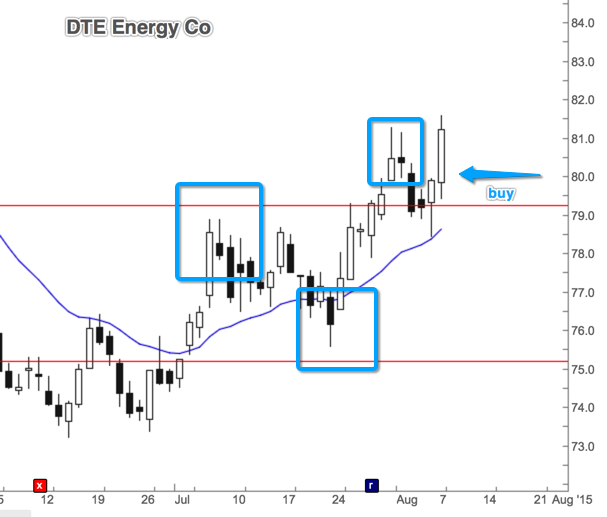
    Here is our trade with DTE Energy Co:
    Snip20150808_13


    DTE Energy is conventional electricity. Our conditional is simply a consistent ten years of positive earnings per share (EPS) percentage growth. As for recent trend, the stock is trending up which we can see from higher highs and higher lows. The 21 day moving average supports this. Our price, for us in this example, as there are many personal ways of determining price, is the confluence of a support line (a 61.8% fibonacci retracement line to be exact) and the pin bar the day before. We took the trade on limit, which meant the price did come down to a more favourable price before we bought automatically. We have set a target limit at 90.67. That gives us a risk reward of nearly 4 times.

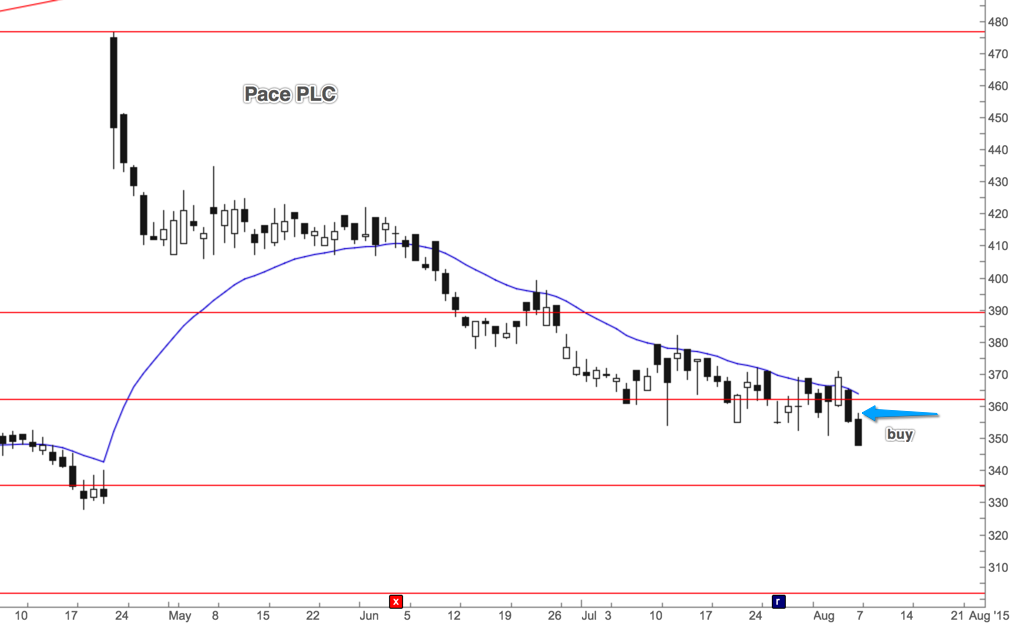
    Here is our trade with Pace PLC:
    Snip20150808_14

    Pace PLC is telecommunications equipment. This trade has gone against us slightly and I’m not happy with my decision to take this trade. Our conditional, again, is ten years of positive EPS percentage growth. However, it is the trend that is our weak link. Over the last 18 months, except for a large gap up, the trend is down. This is made more so with the drop in price yesterday. A closer look at the recent trend confirms this. Our price, a confluence of support level and price action is fine but is secondary to the trend. Also, our price action, being the pin, in hindsight, is black where a white pin would have been preferable. I will tighten our stop to minimise any loss and if we get a rebound I will sell early at, or close to, break-even price.

    No buy or short signals in FX this week. FX requires a regular watch so as not to miss the opportunities. By regular I mean a once daily detailed review of daily bars. This can be done, because of the timing of the FX New York close daily bars, at 9pm or 10pm, depending on UK/US time difference; or, as is my preference, early, before 7am, UK time. Then a look every 4 hours where possible, to match the 4-hour bar close times. However, I find that as we get close to a buy or short opportunity the best way is to set an automatic (ambitious) entry.

    Particularly looking this coming week for a buy opportunity in GBP/USD.
  • Slow Trader Diary – Week 26

    One step forward, followed by one step back. Or was it the other way round?

    When trading (or managing) a leveraged fund there is no hiding. Unlike ‘normal’ funds where poor investments can be ignored under the (incorrect) pretence that the share price will eventually return.

    Often it doesn’t. And the loss is rarely admitted to – how many pension funds still hold Lloyds Bank since before 2008? The theory being that the offending share investment is not a loss until it is sold at a loss.

    Peter Lynch – arguably the most successful fund manager – in his books, tells us of investments he still holds today – from decades ago – that will never recover to previous values.

    A leveraged fund on the other hand, is brutal. If you go down a fraction you sell. You take your losses early is the mantra. Your failure is known right away. And you will have failures. Its part and parcel of the game.

    Here are my failures (and win) this week: failure plural, win singular.

    Firstly, we paid £24.79 this week in long interest. This is a charge IG make for carrying DFB (Daily Fund Bets) over one day. Day traders – those that don’t carry trades past one day – would have nothing to pay.

    FX AUD/USD – £480 loss. Not my finest hour.

    Halliburton – £558 loss.

    Snip20150627_10

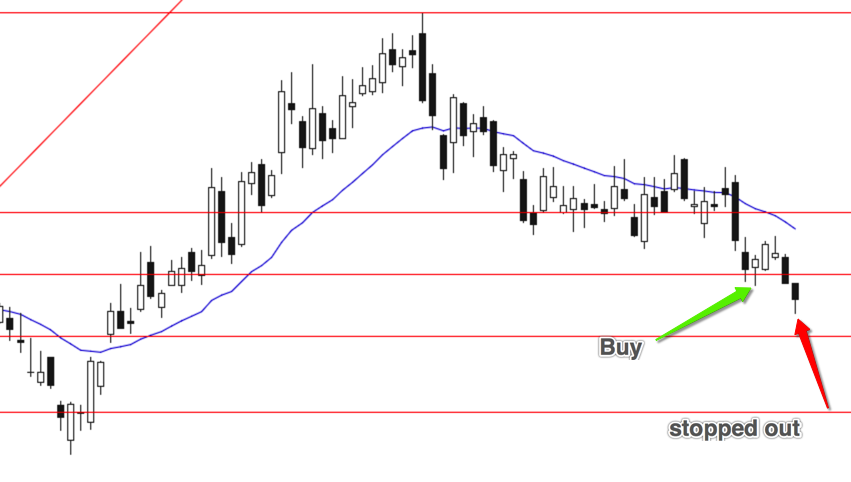
    We bought at the green arrow. Perfect, a 50% retrace and good price action. However, I (foolishly and unknowingly at the time) broke my rule of going against the trend. It was only clear to me after the share price went lower and stopped out that we were, indeed, trading against the recent trend. We had a lower high. Okay, it could be argued that the lower high was slightly hidden until the next move…? But still not a good trade.

    Under Armour Inc. + £667.

    Snip20150627_11

    This had everything we required. Trend, retrace and price action. The target price was set at purchase. This was a 3 to 1 trade. Meaning that we made 3 times more than our potential loss.

    Should I have set a higher target? Maybe. Only time will tell. The target was my call at the time. And I still stand by it. We are short term traders after all. If a new high is made another buy opportunity will always present itself.

    Trades we are currently in:

    CLS Holdings. – 51.7 points down. We had sold this share at break even and bought again at a lower price. Not a great strategy to chase a share price down looking for a buy point. However, the chart and the fundamentals are good.

    Snip20150627_12


    ITV PLC. + 12.3 points up.

    Snip20150627_13Our target is a new high with ITV. Fundamentals are good too.

    Moneysupermarket.com + 15.9 points up.

    Snip20150627_14Our target is to simply match the previous high with this one. The big drop down, shown on the chart, leaves me a little nervous to take this share to a new high. Also, we have moved our (non guarantee) stop up. For a share such as this – one that has large moves – a guaranteed stop would (in hindsight) have been a good option.

    Monster Beverage Corp. + 1137 points up. Don’t be confused by the amount of points. As US stocks are often much more expensive than UK shares we have large points movements in our US trades. However, in the tradition of good money management, we have a trade amount that matches the risk. For Monster that, in this case, is 0.7 pence per point. (In the case of Moneysupermarket, for example, it is £20 per point).

    Snip20150627_15

    Pace. – 9.1 points down. This is a funny share chart and one that I will look to exit.

    WPP. + 2 points. WPP is now trending down, so I will watch very carefully when the market opens on Monday to sell this share.

    That is it for this week. As usual, I will post the fund position overall (which is done monthly) in the new month, probably next week. Have a great weekend.

    B


  • Open a Slow Trader Fund

    How our fund works and what it costs.

    Trading cycle: from buy to sell (or sell to buy if we are short) is anything from a few days to a few weeks.

    Lets say you have £30,000 to trade. In this example, we will trade no more than £600 on any one stock or share. And during any one cycle we will trade some 10 to 15 times concurrently.

    Our strategy is to find intermediate trends. We get that right about 8 times out of 10. That sounds okay, but is spoiled by activation of our stop loss by larger than acceptable fluctuations in the share price; and by spikes in share price, including so-called ‘tree-shakers’ – don’t forget the hoops and loops – they can also be devils! The last two I made up, but you get the idea.

    However, where the spikes and the like are going to affect us a couple of times a year, to our advantage, we will have occasion to surf an intermediate trend. Hopefully, two or three times a year. In other words, we will stay in a trend for more than one cycle. Maybe for several cycles, and this is where the true profits are. Such a trend, even with one trade, can pay for all those pesky spikes and whatnots in one go.

    Our operation is three fold:

    1.   Find correct entry and exit points primarily from stocks and shares within the S&P 500 and FTSE 350.

    2.   Trade with regard to the share value or, as Warren Buffet calls it, the ‘margin of safety’. In other words, if we are taking a long then we want the share to be undervalued. Conversely, if we are taking a short we want the share to be overvalued.

    3.   Trade within our money management criteria.

    Trading vehicle:

    Our trading vehicle of choice is a spread betting account. We use IG. Unlike a normal share trading account, a spread betting account is tax-free. (Many people use these accounts to bet rather than trade. Those that bet, I have read somewhere, lose some 8 or 9 times out of 10).

    What it costs you:

    As the account is leveraged we pay a fee when we trade over a single day. This is called a daily fund bet (DFB). A DFB is our trade of choice due to the trading time frame we follow. To help cover this we deduct 2.5% of the final fund amount.

    Also, we deduct the same percentage of profits up to a maximum of 20% (For example, if profits are 15% we will deduct 15% of those profits. If, on the other hand, profits are 50% we will deduct only 20% of those profits).

    In other words, let’s again say your fund starts with £30,000 and, after one year, is at £50,000. Your costs are: £1,250 (to help cover the DFB), and £4000 (which is 20% of your profits). What you would get back is £44,750 (£50,000: less £1,250 less £4,000).

    For buy (long) trades IG charge the one-month LIBOR plus or minus 2.5%. This applies for sell (short) trades together with a borrowing fee. Dividends are credited if long and debited if short. For simplicity, we deduct a flat 2.5% of total end-of-year fund. This is less than the true costs to us and therefore in the case of an account that finishes even, or slightly above even, this will normally be a loss to us in terms of costs.

    How long does the fund run?

    A fund runs for one year. Two months before expiry you can decide to cash-in or rollover. In either case costs are subtracted annually.

    We can trade only 4 funds not including our own. A fund can be made-up from a group or from an individual. Each fund is to be a minimum of £30,000.

    A margin call is not your responsibility. However, your attention is drawn to the disclaimer page in slowtrader.com

    Note: Slow Trader Fund, 23rd July 2015, only has the DFB 2.5% charge. However, going forward from 23rd July 2015 the profit charge will also apply for those that wish to rollover and or place additional funds.