Until now we have traded the commodities: gold, silver, copper, crude oil and USD/CAD on a weekly basis. That is referring to weekly charts and a weekly COT report. We have also, as discussed last week, considered introducing the fund to intraday trading.
Each of which (weekly and intraday) are rather on the extreme. On one hand, we have the overly slow weekly chart market, and on the other, the rather demanding intraday market.
The balance for the fund is daily charts. Why? …weekly charts are emotionally difficult as we see good profit generated only for that profit to disappear as we remain invested in order to reach our target. There is no compromise here, because to take profit before a target, unless our premise changes, does not provide a traders equation (that is: the trade had more risk than reward). Over the longer term this would be a losing strategy.
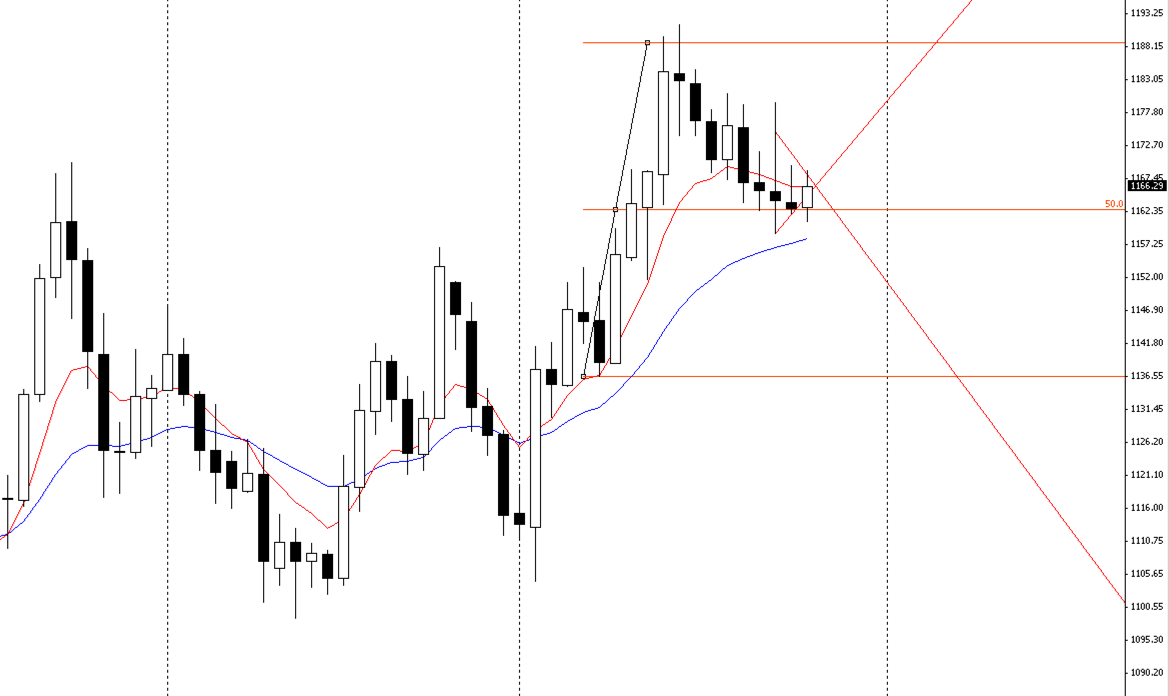
Gold and silver have emphasised this over the last few weeks where they dropped in price to provide us with good profit potential, only to extend higher than I considered.
Daily charts, rather than weekly charts, usually means tighter stop positions and therefore lower risk, but in contrast our targets are shorter. Timing wise we are in trades for a week or three rather than several months.
The COT suits the weekly charts, but often goes against my daily chart readings. This of course happens at all levels of chart, for example, the difference between the daily and the 4-hour chart or between the 5-minute and the one-minute chart. However, I report weekly and to have a profit at the end of one week only to know that profit will go away as we wait for the bigger (targeted) profit seems emotionally foolish.
With moving to daily charts, our targets are closer and therefore we can take profit more regularly (if available) and wait for the next entry. This means that we will occasionally miss the big move – but trading is rarely perfect.
This week we took profit from our short in gold as it sank from its high of the previous week – and before Friday’s monthly non-farm payroll brought it up again. Also, we took profit from a short in crude oil as it came down over the week and from our long in USD/CAD as, conversely, it climbed nicely over the week.
 Slow Trader